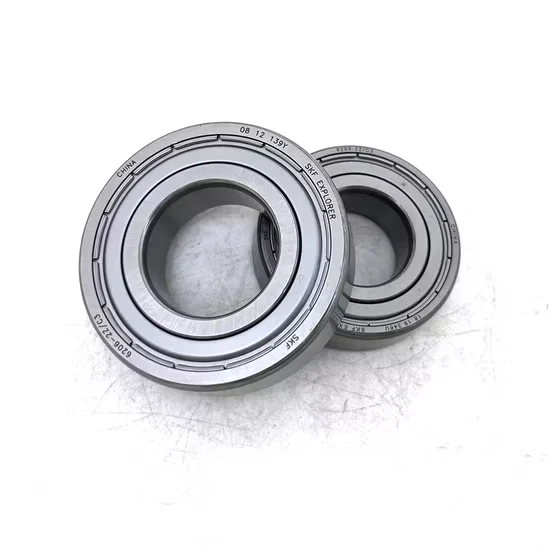
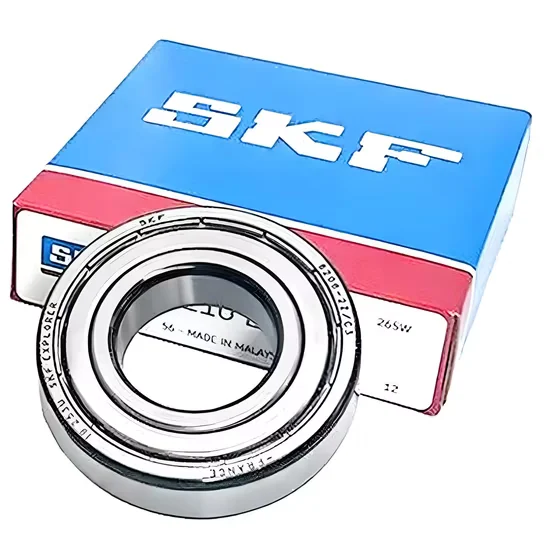
Genuine SKF Bearings for Pump OEMs | Wholesale Supplier
- Buying Guide
- Sep 15, 2026
- author
Cheaper bearings do not save money; they multiply total lifecycle costs.
Sourcing genuine SKF bearings for pump OEMs requires strict traceability and lifecycle cost analysis to prevent catastrophic failures caused by counterfeits. Procurement managers must prioritize verified supplier legitimacy and ISO-compliant dimensional tolerance checks over initial unit price to ensure operational reliability.
The humid air in Sumatra’s palm oil mills carries a distinct scent of crushed fruit and heated metal, but for me, it also smells like burnt grease. Early in my career, I watched a critical extraction line halt because the main pump seized. The maintenance team had replaced the spherical roller bearings with what they believed were cost-effective alternatives. Upon disassembly, the rollers showed dark pitting and micro-fractures consistent with substandard metallurgy. The bearing failed within months, causing downtime that cost ten times the savings from the cheaper parts. This experience reshaped my approach to industrial sourcing. It is not enough to buy a part number; one must buy the assurance behind it.
For pump manufacturers and distributors, the market is flooded with look-alikes. Identifying authentic components demands more than a visual check. It requires a systematic verification process that links physical specifications to documented provenance. When evaluating SKF bearings for pump OEMs, the focus must shift from simple acquisition to comprehensive risk management.
Why Visual Inspection Fails to Detect High-Quality Counterfeits
Most buyers believe they can spot fakes by looking at the packaging or logo clarity, but sophisticated counterfeits replicate these superficial features with high precision.
The real differences lie in the internal geometry and material purity. A fake bearing may have a perfect laser-etched logo, yet its internal clearance might deviate from ISO standards by microns. In high-speed pump applications, this slight deviation causes uneven load distribution. Over time, this leads to premature seal failure and leakage. I once inspected a batch of bearings destined for a chemical processing plant. The outer rings looked pristine, but a simple dial indicator test revealed irregular runout. These units would have caused immediate misalignment issues upon installation.
Counterfeiters often use lower-grade steel with higher inclusion density. While genuine manufacturers employ controlled vacuum degassing to remove impurities, fake producers skip this costly step. The result is a bearing that appears functional during static testing but fails under dynamic loads.
To mitigate this risk, procurement teams should not rely solely on visual audits. Instead, they must demand traceability documentation that links each batch to the manufacturer’s production facilities. When sourcing SKF bearings for pump OEMs, verify that the supplier provides full certification chains. This documentation is the only reliable shield against components that look right but perform poorly.
Specification Comparison: Genuine vs. Counterfeit Pump Bearings
Performance disparities are not always visible until the pump is under load, making pre-installation verification critical.
A specification matrix helps clarify where the risks lie. Below is a qualitative comparison based on industry standards and observed failure modes. Note that exact proprietary manufacturing parameters are not disclosed by brands, but the performance outcomes are well-documented in reliability studies.
| Feature | Genuine SKF Bearings | Counterfeit/Unverified Alternatives |
|---|---|---|
| Material Purity | Controlled inclusion density via vacuum degassing | High inclusion density; prone to early fatigue |
| Dimensional Tolerance | Compliant with ISO 15 standard classes | Inconsistent; often exceeds allowable limits |
| Surface Finish | Micron-level precision on raceways and rollers | Visible tool marks; rougher surface texture |
| Heat Treatment | Uniform hardness throughout the component | Uneven hardness; soft spots or brittle zones |
| Traceability | Full batch-level documentation provided | Self-reported or no documentation available |
| Seal Compatibility | Precise fit for standard pump seals | Dimensional deviations cause seal leakage |
In a municipal water plant upgrade project, switching to verified suppliers extended maintenance intervals significantly. The previous setup used unverified bearings that required frequent replacement due to vibration issues. After transitioning to authenticated units, the plant reported a noticeable drop in maintenance costs and unplanned outages. The key was not just the brand, but the certainty of origin. When you source SKF bearings for pump OEMs, you are paying for this consistency. The table above illustrates why "good enough" is rarely sufficient for critical rotating equipment.
How to Verify Supplier Legitimacy and Traceability
Authenticity is proven through paperwork, not promises. A legitimate supplier will provide transparent access to certification data.
Verifying a supplier involves several steps. First, request the certificate of origin and material test reports for the specific batch. Genuine products come with unique identification codes that can be cross-referenced with the manufacturer’s database. Second, assess the supplier’s storage conditions. Bearings are sensitive to humidity and temperature. A professional distributor maintains climate-controlled warehouses to prevent corrosion before installation.
I recall a European distributor who insisted on visiting our facility. He checked not just the stock levels, but the humidity logs and handling procedures. His diligence paid off when his clients avoided a batch of corroded bearings from a less rigorous competitor. This level of scrutiny is essential.
When evaluating partners for SKF bearings for pump OEMs, ask for examples of past traceability documents. A reputable supplier will share redacted samples to demonstrate their process. Avoid vendors who hesitate to provide this information or claim that such documentation is unnecessary for small orders. Consistency in documentation is a hallmark of reliability. Additionally, check if the supplier offers technical support for model selection. This indicates a deeper understanding of the product beyond simple resale.
Lifecycle Cost Analysis for Pump Maintenance Strategies
Focusing on unit price ignores the hidden costs of downtime, labor, and secondary damage.
A common misconception is that cheaper bearings reduce overall expenses. In reality, the total cost of ownership includes installation labor, potential seal replacements, and lost production during failures. A single pump failure in an agro-processing plant can halt an entire production line. The cost of emergency repairs and lost output far exceeds the price difference between genuine and fake components.
Consider a case where a mining operation used unverified bearings in their slurry pumps. The bearings failed prematurely, causing shaft damage and seal leakage. The repair required replacing not just the bearings, but also the shaft and housing. The total expense was several times the cost of using genuine parts from the start. This scenario is repeatable across industries.
By investing in verified SKF bearings for pump OEMs, companies stabilize their maintenance budgets. Predictable replacement cycles allow for better planning and resource allocation. Furthermore, genuine bearings often offer extended service life, reducing the frequency of interventions. This reliability translates into operational efficiency. Procurement managers should present lifecycle cost analyses to stakeholders to justify the investment in authentic components. The initial savings from counterfeits are illusory when weighed against the risk of catastrophic failure.
Conclusion
Authenticity is the foundation of reliability in pump manufacturing.
Sourcing genuine components requires diligence, verification, and a focus on long-term value rather than short-term savings. By prioritizing traceability and adhering to strict quality standards, OEMs and distributors can protect their operations from the hidden risks of counterfeits. Trust is built on transparency and consistent performance.
Related Applications
This article connects to the application areas below. Open one to see the bearing categories used there.