OEM Bearing Supply from China: What to Check
- Buying Guide
- Sep 15, 2026
- author
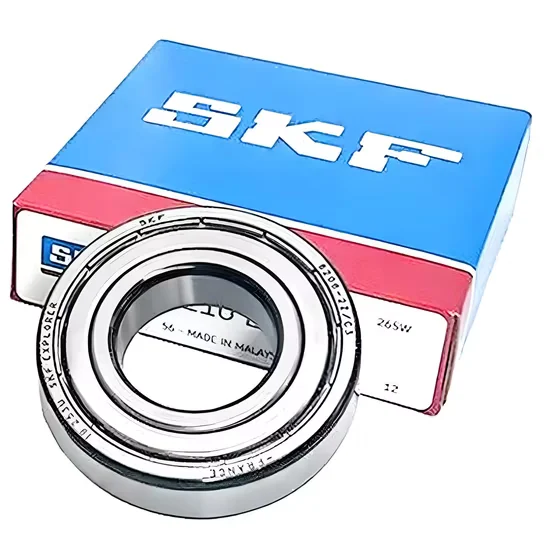
Shiny packaging is the easiest thing to fake.
To verify an OEM bearing supply from China, you must ignore the box and inspect the internal metallurgical specs. Demand full batch traceability documents, validate cage material composition via spectroscopy, and confirm internal clearance matches ISO standards for your specific load conditions. Without these three data points, the "OEM" label is meaningless.
I learned this lesson standing in a dusty workshop in Riyadh, watching a mining crusher overheat for the third time that month. The maintenance team had replaced the spherical roller bearings with units labeled as premium OEM parts from a Chinese supplier. On the surface, everything looked perfect. The boxes were crisp, the logos were sharp, and the grease smelled right. But when I tore down the seized unit, the truth was hidden inside. The cage material was wrong for the high-temperature environment, and the heat treatment hardness was completely off spec. It was a fake disguised as a genuine part. That disaster shifted my focus entirely. Now, when I evaluate an OEM bearing supply from China, I do not look at the branding on the carton. I look at the hard data and the real metallurgical specs that dictate performance under stress.
This approach is critical because the market is flooded with counterfeits that pass visual inspection but fail under load. Understanding how to dig deeper than the surface protects your equipment and your reputation.
Why is packaging inspection not enough for OEM bearings?
Packaging is easily replicated; internal specifications dictate real performance.
Many buyers assume that if the box looks authentic, the product inside is genuine. This is a dangerous misconception. Modern printing technology allows counterfeiters to reproduce holograms, serial numbers, and brand logos with high fidelity. However, they cannot easily replicate the precise metallurgical structure of the steel or the exact geometry of the rolling elements without significant investment in specialized manufacturing equipment.
When you rely solely on packaging, you are betting on the honesty of the supplier rather than the integrity of the component. In my experience, the most sophisticated fakes come with impeccable documentation and packaging. The failure only becomes apparent after installation, often leading to catastrophic equipment damage. For instance, a European wind farm operator once received a shipment of deep-groove ball bearings that looked identical to the original brand. The packaging was flawless. Yet, within weeks, vibration levels spiked. Analysis revealed that the steel purity was substandard, containing higher levels of non-metallic inclusions than specified. These inclusions acted as stress concentrators, initiating fatigue cracks far earlier than expected.
To avoid this, you must treat packaging as a marketing tool, not a quality guarantee. The real verification happens when you open the seal and examine the component itself. You need to check for consistent machining marks, proper chamfering, and smooth raceway finishes. But even these visual checks are just the beginning. The true test lies in the material properties and the dimensional tolerances that are invisible to the naked eye. This is why sourcing an OEM bearing supply from China requires a shift from visual inspection to technical validation.
What internal clearance and cage materials must be verified?
Wrong materials cause overheating; precise clearances ensure load capacity.
Internal clearance and cage material are two critical parameters that directly impact bearing life, especially in heavy-duty applications. Many failures occur not because the bearing is worn out, but because it was never suitable for the operating conditions in the first place.
Consider the case of the mining crusher in Riyadh. The original specification called for a cage made from a high-temperature resistant polymer. The counterfeit supplier used a standard polyamide cage instead. Under the intense heat generated by the crushing process, the standard cage softened and deformed, leading to immediate seizure. This is a common issue when suppliers cut corners on material costs.
Similarly, internal clearance must match the application. A bearing with too little clearance will overheat due to friction when the shaft expands under load. A bearing with too much clearance will cause excessive vibration and noise. Verifying this requires more than a caliper. It often involves measuring the radial play or using feeler gauges according to ISO standards.
| Parameter | Risk of Incorrect Spec | Verification Method |
|---|---|---|
| Cage Material | Overheating, deformation, premature failure | Spectroscopy analysis, visual inspection of color/texture |
| Internal Clearance | Seizure (too tight), vibration (too loose) | Radial play measurement, comparison with ISO tables |
| Steel Purity | Early fatigue, spalling | Microstructure analysis, inclusion rating check |
For industrial distributors and MRO operators, this means you cannot simply order by part number. You must specify the internal clearance class (such as C3 or C4) and confirm the cage material type. When evaluating an OEM bearing supply from China, ask for the material certificate for the cage and the steel. If the supplier cannot provide this, or if the data looks generic, walk away. Genuine manufacturers track these details meticulously.
How to validate heat treatment and metallurgical specs?
Improper heat treatment leads to premature seizure; require hardness test reports.
Heat treatment is the process that gives bearing steel its hardness and toughness. If done incorrectly, the bearing may be too brittle, leading to cracking, or too soft, leading to rapid wear. This is a area where counterfeits often fail because proper heat treatment requires precise control of temperature and time, which is expensive to maintain.
In one instance, a client in the steel industry reported that their cylindrical roller bearings were failing after only a few months of operation. The bearings were supposed to be through-hardened to a specific Rockwell hardness range. Laboratory testing revealed that the hardness was inconsistent across the raceway. Some areas were soft, while others were overly brittle. This inconsistency pointed to poor process control during manufacturing.
To validate this, you need to demand hardness test reports from the supplier. These reports should show the results of tests performed on samples from the same batch. Additionally, you can request a microstructure analysis. This reveals the grain structure of the steel and can identify issues like improper quenching or tempering.
While you may not be able to perform these tests yourself, requiring the documentation forces the supplier to prove their quality. A reputable supplier of an OEM bearing supply from China will have these records readily available. They understand that industrial clients need this level of transparency. If a supplier hesitates to share hardness data or metallurgical certs, it is a strong indicator that the parts may not meet the required specifications.
Which traceability documents prove authenticity?
Missing certs mean high fake risk; demand full batch traceability.
Traceability is the backbone of authenticity. It links the physical bearing back to its raw materials and manufacturing process. Without it, you have no way to verify the claims made by the supplier. Genuine bearings come with a chain of custody that includes material certificates, heat treatment logs, and final inspection reports.
When I source for clients, I look for documents that are specific to the batch number printed on the bearing. Generic certificates that cover a whole year of production are not sufficient. You need to see the actual test results for the specific units you are buying. This includes the chemical composition of the steel, the results of the dimensional inspection, and the hardness test data.
Our approach to this challenge has been to build a system where every bearing is backed by complete traceability documentation. We work directly with manufacturers who adhere to ISO-compliant quality assurance standards. This means that when you buy from us, you are not just getting a box with a logo. You are getting a product with a verifiable history. This level of detail is what separates a reliable OEM bearing supply from China from a risky gamble.
For example, when supplying spherical roller bearings for a heavy-equipment OEM, we provided full batch traceability for every unit. This allowed the client to perform their own incoming quality checks with confidence. They could verify that the steel came from a certified mill and that the heat treatment was performed according to spec. This transparency reduced their risk of receiving counterfeit parts and ensured the reliability of their machinery.
Conclusion
Trust data, not packaging.
Verifying an OEM bearing supply from China requires a disciplined approach focused on internal specs and documentation. By checking internal clearance, validating cage materials, and demanding full traceability, you can avoid the costly pitfalls of counterfeit parts. Genuine quality is proven by metallurgical certs and consistent performance, not by shiny boxes.