Genuine SKF Bearings for Compressor OEMs Wholesale Supplier
- Buying Guide
- Sep 15, 2026
- author
Not all SKF bearings are created equal for compressor applications.
Selecting the exact SKF bearing with the correct internal clearance suffix is the single most critical step for compressor OEMs to prevent thermal failures and avoid costly customs delays. Generic procurement without verifying C3 or C4 clearance specifications leads to rapid field failure, while inaccurate documentation causes shipments to be held at ports indefinitely.
I still remember the humidity in the customs warehouse at Ningbo Beilun Port. It was not the heat that made me sweat, but the realization that a container of spherical roller bearings destined for a major compressor manufacturer was sitting idle. The issue was not counterfeit goods. The bearings were genuine. The issue was a mismatched suffix on the commercial invoice compared to the physical stock. The buyer had ordered standard clearance, but their engineering team required C3 clearance for high-temperature operation. The discrepancy triggered a manual inspection that lasted weeks. By the time the goods were released, the compressor assembly line had stalled, and the client faced penalties from their own customers. That incident shifted my focus from simple trading to technical precision. In the world of industrial compression, a bearing is not just a component; it is a calibrated device where every micron of internal clearance matters.
This experience underscores why sourcing SKF Bearings for Compressor OEMs requires more than just a purchase order. It demands a deep understanding of technical suffixes, operational environments, and the documentation trail that accompanies global logistics.
Why is exact suffix matching crucial for compressor OEMs?
A missing or incorrect suffix can turn a premium bearing into a liability within hours of operation.
Compressors operate under unique stress profiles. Unlike general industrial motors, compressors generate significant heat and often experience variable loads. The internal clearance of a bearing determines how much room the rolling elements have to expand as they heat up. If the clearance is too tight, the bearing seizes. If it is too loose, vibration increases, leading to premature fatigue.
SKF uses specific suffixes to denote these internal clearances. For compressor applications, C3 and C4 are the most common requirements. A standard bearing (no suffix) has normal clearance, which is often insufficient for the thermal expansion seen in screw or centrifugal compressors. Misidentifying these suffixes is a frequent error in global procurement. Many buyers assume that "SKF" guarantees suitability, but SKF produces bearings for everything from skateboards to steel mills. The brand is consistent, but the specification is not.
Consider a case involving a Middle East air separation plant. The procurement team ordered a batch of cylindrical roller bearings without specifying the clearance suffix, assuming the local distributor would supply the standard industrial grade. The bearings arrived with normal clearance. Upon installation, the compressors ran hot. Within days, several units failed due to thermal locking. The root cause was not material defect but specification mismatch. The cost of replacing the bearings was minor compared to the downtime and the logistical nightmare of returning the incorrect stock.
When sourcing SKF Bearings for Compressor OEMs, verifying the suffix is not optional. It is the primary defense against operational failure. The suffix must match the engineering drawing exactly. This requires a supplier who understands that part numbers are not just strings of digits but technical instructions.
How to select the right SKF bearing clearance for compressors?
Match the clearance class to the operating temperature differential, not just the load rating.
Selecting the correct clearance involves analyzing the thermal gradient between the inner and outer rings. In compressor applications, the inner ring often runs hotter than the outer ring due to direct contact with the compressed gas or the shaft. This temperature difference causes the inner ring to expand more than the outer ring, effectively reducing the internal clearance during operation. If the initial clearance is not sufficient to accommodate this expansion, the bearing will operate with negative clearance, leading to excessive friction and heat generation.
The general rule is to use C3 clearance for moderate temperature rises and C4 for severe conditions. However, this is not a one-size-fits-all solution. Factors such as housing fit, shaft fit, and rotational speed also influence the effective clearance. A tight housing fit can further reduce clearance, necessitating a higher initial clearance class.
| Operating Condition | Recommended Clearance | Risk of Standard Clearance |
|---|---|---|
| Moderate Temperature Rise | C3 | High risk of thermal seizure |
| High Temperature Differential | C4 | Critical failure likely |
| Variable Load & Speed | C3 or C4 | Premature fatigue |
| Standard Ambient Conditions | Normal (CN) | Acceptable for low-speed fans |
This table illustrates the qualitative risk associated with incorrect selection. Note that specific temperature thresholds depend on the compressor design and should be verified against the manufacturer’s guidelines.
A European wind farm operator once faced recurring failures in their hydraulic compressor units. The initial analysis pointed to lubrication issues. However, a deeper inspection revealed that the bearings were installed with normal clearance in a high-temperature environment. Switching to C4 clearance resolved the issue, extending the service life significantly. This highlights the importance of looking beyond the obvious causes and focusing on the fundamental specification of the bearing itself.
For OEMs, this means engaging with suppliers who can provide technical consultation, not just inventory. When evaluating SKF Bearings for Compressor OEMs, ask about the supplier’s ability to verify clearance requirements against your specific application data.
What documentation is required for flawless global shipping?
Complete traceability and accurate customs declarations are as vital as the bearing quality itself.
In international trade, the physical product is only half the equation. The other half is the documentation. For branded components like SKF bearings, customs authorities in many countries require proof of authenticity and precise description of the goods. A vague description such as "bearings" is insufficient. The declaration must include the full part number, including the suffix, to match the physical item.
Discrepancies between the declared value, description, and the actual goods can lead to seizures, fines, and delays. In some jurisdictions, intellectual property rights enforcement is strict, and any ambiguity in the branding or specification can trigger a hold. This is where the experience of a supplier with a background in customs brokerage becomes invaluable. Understanding the nuances of tariff codes and declaration requirements can prevent these issues before they arise.
A batch of bearings destined for South America was once held at the port because the commercial invoice listed the part number without the suffix. The customs officer, unable to verify the exact specification against the import permit, detained the shipment for verification. The delay lasted several weeks, causing production stoppages for the buyer. The issue was resolved by providing the original factory certificate and a corrected invoice, but the time lost was irrecoverable.
To avoid such scenarios, ensure that your supplier provides:
- Original factory certificates of conformity.
- Commercial invoices with full part numbers, including suffixes.
- Packing lists that match the invoice exactly.
- Traceability documents linking the batch to the manufacturing source.
These documents not only facilitate smooth customs clearance but also serve as proof of authenticity for the end user. When sourcing SKF Bearings for Compressor OEMs, request a sample of the documentation package to verify its completeness and accuracy before placing a large order.
How to verify genuine SKF bearings before integration?
Implement strict incoming inspection protocols focused on packaging, marking, and surface finish.
Counterfeit bearings are a persistent threat in the global market. While high-quality fakes can mimic the appearance of genuine products, they often fail in performance and longevity. For compressor OEMs, the risk of using counterfeit bearings is unacceptable due to the critical nature of the application. Verification must begin at the receiving dock.
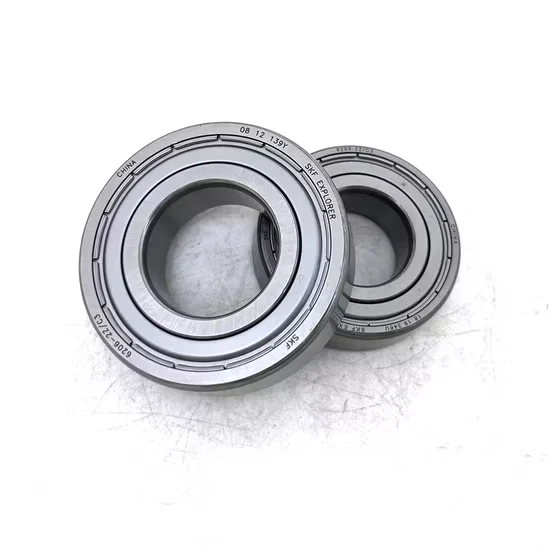
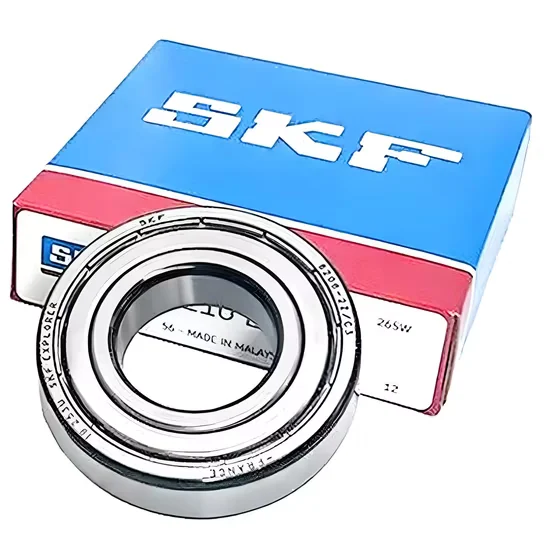
Genuine SKF bearings come in distinctive packaging with security features. The boxes should be intact, with clear printing and holographic labels. The bearings themselves should have crisp, laser-etched markings that are difficult to replicate. The surface finish should be smooth and uniform, without any signs of rough machining or discoloration.
Key verification steps include:
- Check the packaging for tamper-evident seals and holographic labels.
- Verify the part number and suffix on the bearing ring against the order.
- Inspect the surface finish for uniformity and absence of defects.
- Measure critical dimensions if necessary, using calibrated tools.
A domestic appliance manufacturer once discovered that a batch of bearings purchased from an unauthorized dealer had slightly different marking fonts. Upon testing, these bearings showed higher noise levels and shorter life spans. The investigation confirmed they were counterfeits. This incident reinforced the need to source only from authorized or highly reputable distributors who can guarantee the supply chain integrity.
When evaluating suppliers of SKF Bearings for Compressor OEMs, inquire about their sourcing channels and quality control processes. A reliable supplier will be transparent about their supply chain and willing to provide evidence of authenticity.
Conclusion
Precision in specification and documentation defines reliability in compressor manufacturing.
Selecting the correct SKF Bearings for Compressor OEMs is not merely a purchasing task but a technical imperative. By focusing on exact suffix matching, appropriate clearance selection, and rigorous documentation, OEMs can ensure operational efficiency and avoid costly disruptions. The integration of genuine components with precise specs is the foundation of durable compressor design.
Related Applications
This article connects to the application areas below. Open one to see the bearing categories used there.