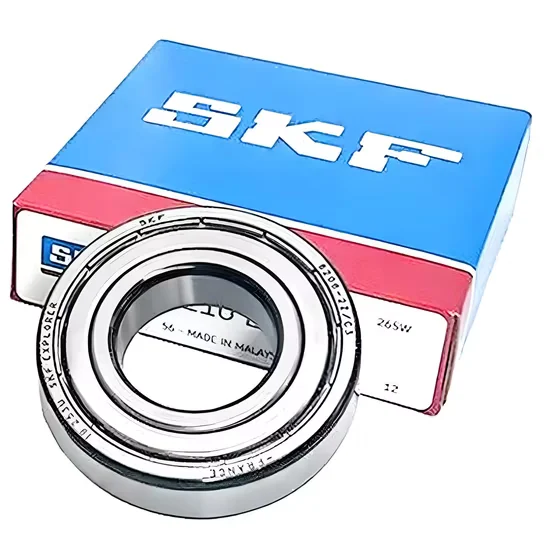
SKF Bearings Volume Supply for Series Production Wholesale
- Buying Guide
- Sep 15, 2026
- author
Lower unit cost often means higher total cost of ownership.
Securing genuine SKF bearings for series production requires strict batch consistency, complete traceability, and flexible minimum order quantities to prevent line stoppages and ensure equipment reliability. Relying solely on price or brand name without verifying documentation leads to mixed batches that fail under load.
The heat in the Riyadh assembly hall was oppressive, but the chill running down my spine had nothing to do with the temperature. A major mining client was ready to commission a new crusher line, and the crates of SKF spherical roller bearings had just arrived. On paper, everything looked perfect. The part numbers matched. The packaging was intact. But as I pulled the first bearing from its box, the serial number on the inner ring did not align with the batch code on the outer packaging. Worse, the accompanying certificate of conformity referenced a production date that predated the order by two years. We halted the entire assembly. The previous supplier had saved money by mixing old stock with new, unauthorized channels with authorized, creating a logistical nightmare that threatened weeks of downtime. This incident reinforced a critical lesson: volume procurement is not just about moving boxes; it is about maintaining engineering integrity across thousands of units.
For industrial buyers, the challenge lies in balancing the economic pressure of bulk purchasing with the non-negotiable need for authenticity. When sourcing SKF bearings volume supply for series production wholesale, the focus must shift from simple acquisition to rigorous verification.
How to Verify Batch Consistency in Bulk SKF Bearing Orders?
Visual inspection is insufficient for detecting batch inconsistencies in high-volume orders.
Batch consistency ensures that every bearing in a lot shares identical material properties, heat treatment histories, and dimensional tolerances. In series production, even minor variations between batches can cause uneven load distribution in multi-bearing arrangements, leading to premature failure. To verify this, buyers must implement a documentation-first approach rather than relying on spot checks alone.
The verification process begins with the certificate of conformity. Each batch of genuine SKF products should carry a unique traceability code linking it to the specific manufacturing facility and production run. When receiving a large shipment, cross-reference these codes against the manufacturer’s database or request validation from an authorized distributor. Do not accept generic certificates that cover multiple part numbers without specific batch details.
Dimensional tolerance checks provide physical confirmation of consistency. While individual bearings may meet ISO standards, a mixed batch might contain units from different tolerance classes, such as P0 and P6, inadvertently grouped together. Use precision micrometers to measure a statistical sample from different pallets. If the variance exceeds the expected range for a single production run, the batch is likely mixed.
| Verification Parameter | Consistent Genuine Batch | Mixed/Unauthorized Batch |
|---|---|---|
| Traceability Code | Unique per batch, verifiable | Missing, duplicated, or invalid |
| Packaging Labels | Uniform font, alignment, and material | Variations in print quality or label type |
| Dimensional Variance | Within tight statistical control | Irregular spread across samples |
| Surface Finish | Uniform grinding marks | Visible differences in texture or color |
A European heavy-equipment manufacturer once faced repeated gearbox failures despite using premium bearings. The root cause was traced to a supplier who consolidated stock from three different regional warehouses. While each bearing was genuine, the slight differences in internal clearance due to varying storage conditions and production dates caused noise and vibration issues at high speeds. By switching to a single-source provider with strict batch segregation, they eliminated the variability.
Ensuring batch consistency protects the integrity of your assembly line. It transforms SKF bearings volume supply for series production wholesale from a commodity purchase into a controlled engineering input.
What Are the Hidden Risks of Mixed-Batch Supply?
Mixed batches introduce unpredictable failure modes that standard quality controls often miss.
The primary risk of mixed-batch supply is not immediate catastrophic failure, but subtle performance degradation. Bearings from different batches may have undergone different heat treatment cycles or come from steel lots with varying inclusion levels. These microscopic differences manifest as uneven wear patterns over time.
In a mining operation, mixed batches can lead to synchronized failure. If a set of bearings in a conveyor system comes from disparate sources, the weakest unit will fail first, causing shock loads that damage adjacent components. This domino effect results in unplanned downtime that far exceeds the cost savings of cheaper procurement.
Another hidden risk is the lack of updated technical specifications. Manufacturers occasionally update designs or materials to improve performance. A mixed batch might contain older versions of a bearing alongside newer ones. While both are functional, their load ratings or lubrication requirements might differ. Installing them interchangeably without adjusting maintenance protocols can lead to lubrication starvation or overload.
Consider the case of a Middle East steel mill. They sourced tapered roller bearings for a new rolling mill from a low-cost trader. The bearings appeared identical, but half the shipment lacked the latest cage design update. During initial testing, the older cages failed under high thermal stress, halting production for days. The cost of replacing the damaged rollers and lost production time dwarfed the initial savings on the bearings.
To mitigate these risks, insist on single-batch delivery for critical applications. If multiple batches are unavoidable, require detailed segregation and labeling so that maintenance teams can track which batch is installed where. This level of control is essential when managing SKF bearings volume supply for series production wholesale.
Understanding these risks highlights why traceability is not just paperwork; it is insurance against operational disruption.
How to Balance Cost and Authenticity in Volume Procurement?
Direct brand channels do not always offer the best balance of cost and flexibility for series production.
Many buyers assume that buying directly from the brand guarantees the lowest price and highest authenticity. However, official channels often impose rigid minimum order quantities and long lead times that do not align with the dynamic needs of series production. This rigidity can force manufacturers to hold excessive inventory or face stockouts during peak demand.
Consolidated global suppliers offer a viable alternative. By aggregating demand across multiple clients, these suppliers can negotiate better pricing while maintaining smaller, more flexible MOQs for individual buyers. They also hold massive spot inventories, allowing for rapid response to urgent production needs.
The key is to select a supplier who prioritizes transparency. Look for partners who provide full traceability documentation for every item, regardless of volume. They should be able to prove the origin of each bearing through mill certificates and chain-of-custody records. This approach ensures that you get genuine products without the bureaucratic overhead of direct brand purchasing.
For example, an automotive OEM needed a large volume of deep-groove ball bearings for a new model launch. The official channel had a six-month lead time. A specialized distributor with a robust global network supplied the same genuine bearings from existing stock in four weeks, at a competitive rate. The distributor provided all necessary quality documents, allowing the OEM to proceed without delay.
This strategy allows companies to optimize their supply chain. By leveraging the economies of scale of a large distributor, buyers can access SKF bearings volume supply for series production wholesale at prices that reflect true market value, not just list price discounts.
Balancing cost and authenticity requires looking beyond the invoice price to the total value of supply chain reliability.
What Documentation is Required for Customs and Quality Audits?
Incomplete documentation can delay customs clearance and invalidate quality audits.
International trade in industrial components is heavily regulated. For bearings, customs authorities and quality auditors require proof of origin, material composition, and compliance with international standards. Missing or incorrect documents can result in shipments being held at ports, incurring demurrage charges and delaying production schedules.
Essential documents include the commercial invoice, packing list, and certificate of origin. For quality audits, you need the certificate of conformity, material test reports, and any relevant industry certifications such as ISO 9001. Ensure that the part numbers on the documents exactly match those on the physical goods and packaging. Discrepancies, even minor ones like hyphenation differences, can trigger inspections.
Traceability files are increasingly important. These files link each bearing to its production batch, providing a history of its manufacture and testing. In industries like aerospace or medical devices, this level of detail is mandatory. Even in general manufacturing, having these files simplifies root cause analysis if a failure occurs.
A Latin American mining company experienced significant delays when their bearing shipment was held at customs due to missing material certificates. The supplier had provided generic documents that did not specify the steel grade. It took weeks to obtain the correct papers from the manufacturer, during which time the mine operated with reduced capacity. Implementing a strict document checklist before shipment would have prevented this issue.
When managing SKF bearings volume supply for series production wholesale, treat documentation with the same rigor as the physical product. Verify all papers before the goods leave the supplier’s warehouse.
Proper documentation ensures smooth logistics and compliance, protecting your project timeline.
Conclusion
Authenticity and consistency are the foundations of reliable series production.
Sourcing bearings for volume production demands more than just finding the lowest price. It requires a partner who understands the critical nature of batch consistency and traceability. By verifying documentation, avoiding mixed batches, and choosing flexible supply channels, manufacturers can secure genuine components that keep their lines running.
Effective management of SKF bearings volume supply for series production wholesale turns supply chain complexity into a competitive advantage. Focus on verifiable quality and transparent processes to ensure long-term operational success.
Related Applications
This article connects to the application areas below. Open one to see the bearing categories used there.