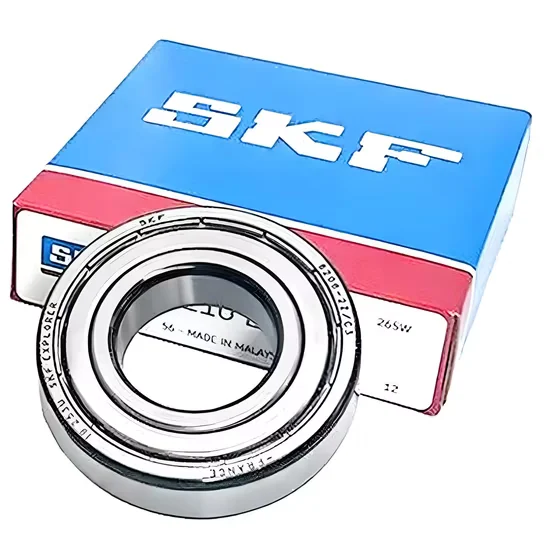
SKF Bearings for Construction Machine OEMs Wholesale Supplier
- Buying Guide
- Sep 15, 2026
- author
The base part number is rarely enough to keep an excavator running.
For construction machinery OEMs, selecting genuine SKF bearings for construction machine OEMs requires precise suffix matching for seals and internal clearance, alongside verified origin documentation to prevent costly assembly line halts. Relying solely on base prices without validating these technical specifics often leads to field failures or customs delays that far exceed initial savings.
I still recall the silence at a port in Santos, Brazil. A container sat idle for three weeks because the commercial invoice listed only the base part number for spherical roller bearings. It missed the critical suffix indicating a sealed variant required for dusty mining environments. The client’s assembly line ground to a halt. We had to air-freight the correct units at a loss that dwarfed the original order value. That incident reshaped how I view technical procurement. It was not a logistics failure; it was a specification failure.
Understanding these nuances separates successful projects from operational nightmares. Below, we break down why exact specifications matter, how to verify authenticity, and how to optimize sourcing without compromising on quality or compliance.
Why Exact Suffixes Matter for Construction Machine OEMs?
Most procurement teams assume that a standard part number guarantees compatibility. This is a dangerous oversimplification. In heavy equipment like loaders and crushers, the operating environment dictates the need for specific internal clearances and sealing solutions. A bearing with standard clearance may seize under high thermal loads, while one lacking proper seals will fail rapidly in muddy conditions.
The suffix system used by manufacturers encodes these vital details. Ignoring them is akin to ordering an engine without specifying the fuel type.
Consider the difference between a standard open bearing and one designed for contaminated environments. The latter might include reinforced seals and special grease fills. If your engineering team specifies a C3 clearance for high-temperature operation but the supplier ships a standard CN clearance unit due to a missing suffix on the purchase order, the bearing will overheat and fail prematurely. This is not a manufacturing defect; it is a specification mismatch.
| Specification Factor | Standard Configuration | Heavy-Duty Construction Requirement | Risk of Mismatch |
|---|---|---|---|
| Internal Clearance | CN (Normal) | C3 or C4 (Increased) | Seizure under thermal expansion |
| Sealing Type | Open / Shielded | RS1 / 2RS1 (Contact Seals) | Contamination ingress and premature wear |
| Cage Material | Steel | Brass or Polyamide | Fatigue failure under high vibration |
| Lubrication | Standard Grease | High-Temp / EP Additives | Lubricant breakdown and metal-to-metal contact |
A European wind farm operator once reported extended service life after switching to bearings with optimized cage designs and specific lubrication variants. The change was subtle in the part number but massive in performance.
When sourcing SKF bearings for construction machine OEMs, always cross-reference the full designation against the original equipment manufacturer’s drawings. Do not rely on legacy data or verbal descriptions. A single missing character can alter the bearing’s suitability for your application.
SKF Bearing Spec Matrix for Excavators & Loaders
Excavators and loaders subject bearings to extreme shock loads and continuous vibration. Selecting the right type involves more than just load capacity. It requires understanding the dynamic conditions of the joint or rotating assembly. Spherical roller bearings are common in pivot points due to their ability to accommodate misalignment, while cylindrical roller bearings handle high radial loads in gearboxes.
The following matrix helps clarify which bearing types suit specific heavy-equipment applications. Note that these are general guidelines; always consult technical catalogs for precise load ratings.
| Application Area | Recommended Bearing Type | Key Feature | Typical Failure Mode if Incorrect |
|---|---|---|---|
| Boom Pivot Points | Spherical Roller | Misalignment compensation | Edge loading and raceway spalling |
| Gearbox Shafts | Cylindrical Roller | High radial load capacity | Cage fracture under shock loads |
| Wheel Hubs | Tapered Roller | Combined radial and axial loads | Premature cup and cone wear |
| Swing Circle | Thrust Spherical Roller | High axial load capacity | Flattening of rolling elements |
A Middle East steel mill experienced repeated failures in their crusher bearings. The issue was not the load rating but the lack of proper misalignment compensation. Switching to spherical roller bearings with appropriate internal clearance resolved the issue. The downtime costs prior to the switch were substantial, highlighting the importance of correct type selection.
When evaluating SKF bearings for construction machine OEMs, consider the entire system. A bearing that works in a static test may fail in dynamic operation if the housing stiffness or shaft tolerance is not accounted for. Our team often assists clients in reviewing these parameters before finalizing orders to ensure batch consistency and performance reliability.
How to Verify Genuine SKF Bearings & Docs?
Counterfeit bearings are a persistent threat in global supply chains. They may look identical to genuine products but lack the material purity and precision grinding that define brand reliability. For OEMs, using counterfeit parts can void warranties and lead to catastrophic field failures.
Verification starts with documentation. Genuine products come with traceable origin certificates and batch numbers that link back to the manufacturer’s production facilities.
Check the following:
- Origin Certificates: Ensure the certificate matches the batch number on the packaging.
- Packaging Quality: Genuine packaging uses specific materials and printing techniques that are difficult to replicate.
- Surface Finish: Authentic bearings have a consistent, high-quality finish without burrs or irregularities.
A US buyer once received a shipment that appeared legitimate but failed within hours of installation. Upon inspection, the steel quality was substandard, and the heat treatment was inconsistent. The lack of verifiable origin docs was the first red flag. Had they insisted on complete traceability paperwork, the risk would have been identified before shipment.
We maintain strict protocols for document verification. Every batch of SKF bearings for construction machine OEMs we supply includes full traceability documentation. This practice protects our clients from hidden risks and ensures compliance with international quality standards.
Optimizing Wholesale Sourcing & Lead Times
Balancing cost, lead time, and inventory risk is a constant challenge for procurement managers. Ordering full container loads reduces unit costs but ties up capital and storage space. Conversely, small emergency orders incur high air-freight charges.
Mixed-batch consolidation offers a middle ground. By combining different bearing types and sizes into a single shipment, OEMs can optimize container space while maintaining flexible inventory levels. This approach requires a supplier with extensive stock and robust logistics capabilities.
Key considerations for optimization:
- MOQ Flexibility: Look for suppliers who allow mixed-SKU orders without prohibitive minimums.
- Documentation Completeness: Ensure all items in a mixed batch have individual traceability docs to avoid customs delays.
- Lead Time Buffer: Account for potential customs holds by building time buffers into your planning.
A Latin American distributor reduced their total landed cost by consolidating multiple SKUs into fewer shipments. The key was working with a supplier who could manage the complexity of mixed batches while providing complete customs documentation.
When sourcing SKF bearings for construction machine OEMs, consider the total cost of ownership. A slightly higher unit price from a reliable supplier who offers mixed-batch consolidation and complete docs may result in lower overall costs compared to a cheaper source that requires separate shipments and lacks documentation support.
Conclusion
Precision in specification and verification prevents costly operational disruptions.
Selecting the right bearings involves more than comparing base prices. It requires attention to suffix details, verification of authenticity, and strategic sourcing practices. By prioritizing these elements, construction machinery OEMs can ensure reliability and efficiency in their operations. Trust in verified supply chains and detailed technical checks to keep your machines running smoothly.
Related Applications
This article connects to the application areas below. Open one to see the bearing categories used there.