Replaceable Bearings for Serviceability: Wholesale Supplier
- Installation & Maintenance
- Sep 16, 2026
- author
Most bearing failures happen before the part ever touches the shaft.
True serviceability for replaceable bearings relies not just on the metallurgical quality of the steel, but on rigorous traceability, advanced rust-proofing, and clear visual identification to ensure immediate installation during critical breakdowns. When a mine or plant goes down, the bottleneck is rarely the availability of the part itself, but the ability to verify its authenticity, condition, and compatibility within minutes. A bearing that requires hours of cleaning, measurement verification, or cross-referencing is not a spare part; it is a liability.
I still vividly recall standing in the dusty control room of a mining site in Western Australia, watching a massive crusher sit idle. The replacement spherical roller bearings had arrived, but they were buried in unmarked crates mixed with other brands. The maintenance team spent days cleaning off heavy rust and trying to match part numbers from faded labels. That disaster taught me that for replaceable bearings, traceability and proper packaging are just as critical as the steel itself. Now, when I source full-spectrum bearings for global maintenance needs, I always check the packaging and documentation first, ensuring every part is ready for immediate installation when the machine goes down. This approach transforms how MRO managers view inventory, shifting the focus from mere stockpiling to strategic readiness.
Why Do Replaceable Bearings Fail Before Installation?
Poor storage and lack of rust-proofing compromise bearing integrity before they even reach the shaft.
The prevailing myth in many procurement departments is that bearing failure is purely a metallurgical issue related to load capacity or fatigue life. In reality, a significant portion of premature failures stems from poor storage conditions and inadequate protection against corrosion during transit and warehousing. When bearings are exposed to humidity or temperature fluctuations without proper Vapor Corrosion Inhibitor (VCI) packaging, microscopic rust forms on the raceways. This surface damage acts as a stress concentrator, leading to early spalling once the equipment is operational.
In my early days handling shipping documents in Ningbo, I noticed that bulk container shipments often lacked consistent internal packaging standards. One particular shipment of mixed-brand bearings arrived at a client’s facility with condensation damage because the desiccants were insufficient for the tropical climate. The bearings looked fine externally, but upon inspection, the inner rings showed signs of fretting corrosion. This incident highlighted that the "serviceability" of a bearing begins with its preservation.
For MRO operations, this means that the value of a spare part is directly tied to its preservation state. A bearing that arrives ready to install, with intact VCI wrapping and no signs of oxidation, saves valuable maintenance hours. Conversely, a bearing that requires cleaning and re-greasing due to poor packaging introduces contamination risks and delays. The industry standard for packaging must go beyond simple cardboard boxes; it requires a holistic approach to moisture control and physical protection.
How to Design a Serviceability-First Packaging System?
Clear visual tags and standardized rust-proofing ensure instant identification and readiness for MRO teams.
Designing a packaging system for serviceability requires a shift from cost-minimization to uptime-maximization. The goal is to create a visual and physical environment where any technician can identify, verify, and install a bearing without hesitation. This involves three key components: robust external labeling, internal corrosion protection, and batch consistency.
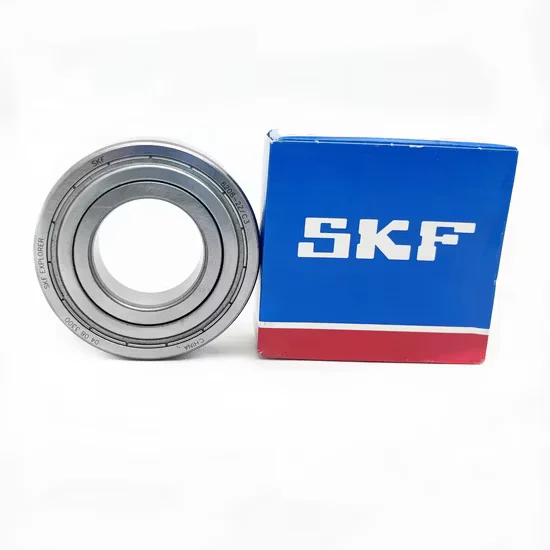
Visual tagging systems are crucial in mixed-brand environments. In a typical MRO warehouse, you might find SKF, FAG, NSK, and TIMKEN bearings stored side by side. Without clear, standardized tags that include not just the part number but also the brand, batch code, and date of receipt, misidentification is inevitable. I have seen cases where similar-looking deep-groove ball bearings from different manufacturers were swapped, leading to fitment issues due to slight tolerance variations. A serviceability-first packaging system uses color-coded labels or large-font identifiers that are visible from a distance.
Furthermore, the internal packaging must adhere to strict VCI rust-proofing standards. VCI emitters release volatile compounds that form a protective molecular layer on the metal surface, preventing oxidation even in humid conditions. This is particularly important for replaceable bearings that may sit in storage for extended periods. The packaging should also be designed to prevent physical damage during handling, using rigid inserts or custom-fit foam to keep the bearings stationary.
A case from a European wind farm operator illustrates this well. They implemented a new packaging protocol where all incoming replaceable bearings were inspected for VCI integrity and tagged with QR codes linking to their digital maintenance records. This change reduced the time required to verify spare parts during emergency repairs by a noticeable margin. The technicians no longer had to guess the condition of the bearing; the packaging itself provided the assurance of readiness.
What Traceability Documents Are Critical for Mixed-Batch Sourcing?
Complete documentation prevents counterfeit risks and speeds up customs and site verification.
When sourcing replaceable bearings from multiple brands, the risk of encountering counterfeit or substandard products increases. Traceability documents serve as the digital passport for each bearing, proving its origin, manufacturing date, and compliance with quality standards. For MRO managers, having access to these documents is not just a bureaucratic requirement; it is a critical tool for risk management.
Key documents include the Certificate of Conformity (CoC), material test reports, and batch-specific tracking numbers. These documents allow users to verify that the bearing meets the specified ISO precision classes, such as P0 or P6, and that the steel used conforms to industry standards. In the event of a failure, these records enable root cause analysis by linking the specific bearing to its production batch.
I once assisted a client in Southeast Asia who faced a customs delay due to missing documentation for a mixed-container shipment. The lack of clear traceability papers raised suspicions about the authenticity of the goods, leading to weeks of detention. Since then, I have ensured that every shipment of replaceable bearings includes a comprehensive dossier of traceability documents, organized by brand and batch. This practice not only facilitates smoother customs clearance but also provides peace of mind to the end-user.
For distributors and wholesalers, maintaining a robust traceability system is a competitive advantage. It allows them to offer genuine products with verifiable histories, distinguishing them from suppliers who deal in gray-market goods. This transparency builds trust with industrial clients who cannot afford the risk of equipment failure due to counterfeit components.
How to Streamline Cross-Brand Equivalent Replacements?
Professional technical selection support minimizes downtime when exact OEM parts are unavailable.
In many emergency situations, the exact OEM-specified bearing may not be available. In these cases, the ability to quickly identify a cross-brand equivalent is vital. However, this process is fraught with technical pitfalls. Not all bearings with similar dimensions are interchangeable; differences in internal clearance, cage design, and lubrication can significantly affect performance.
Streamlining this process requires a deep understanding of bearing engineering and access to comprehensive cross-reference databases. For example, a spherical roller bearing from one brand may have a different load rating or thermal expansion characteristic than its counterpart from another manufacturer. Simply matching the outer diameter, inner diameter, and width is insufficient for critical applications.
I recall a situation where a cement plant in Africa needed an urgent replacement for a tapered roller bearing. The original brand was out of stock, but we were able to provide a verified equivalent from another premium manufacturer after consulting with our technical team. We verified the internal clearance and load capacity to ensure it met the application requirements. This proactive approach prevented a potential mismatch that could have led to premature failure.
To facilitate this, suppliers must offer more than just a parts list; they must provide technical selection support. This includes analyzing the operating conditions, such as speed, load, and temperature, to recommend the most suitable alternative. By maintaining a broad inventory of genuine products from multiple brands, suppliers can offer flexible solutions that keep equipment running without compromising on quality.
Conclusion
Serviceability is defined by readiness, not just availability.
The true value of replaceable bearings in MRO operations lies in their ability to be installed quickly and confidently during critical downtime events. This requires a holistic approach that integrates rigorous traceability, advanced rust-proofing, and clear identification into the supply chain. By focusing on these elements, industries can minimize unplanned downtime and ensure that their maintenance strategies are both efficient and reliable.
Related Applications
This article connects to the application areas below. Open one to see the bearing categories used there.