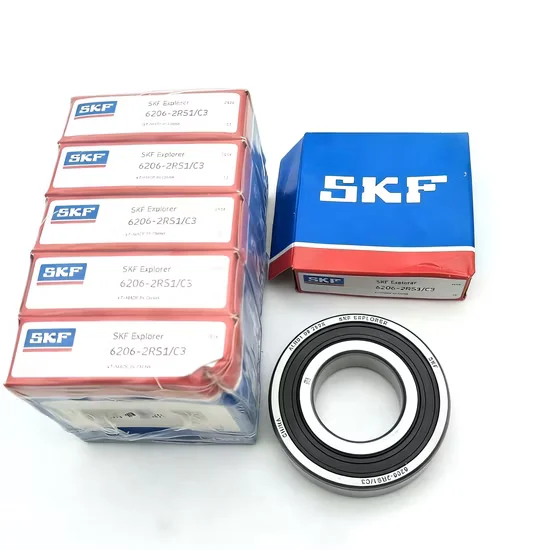
Deep Groove Ball Bearings
SKF ball, roller and mounted bearings for machine builders, distributors and project buyers





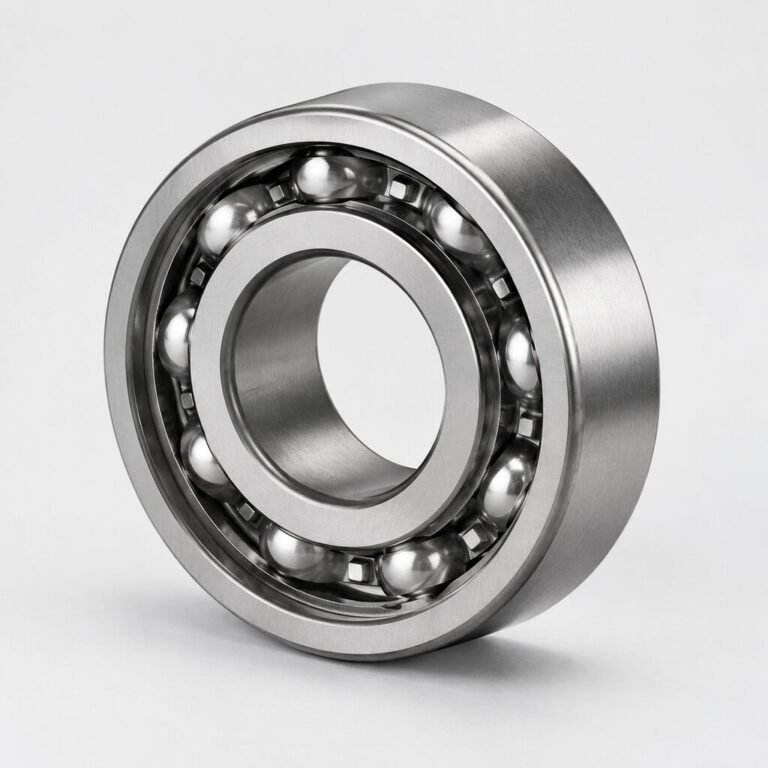
61800 61801 61802 61803 61804 Deep Groove Ball Bearings — Constructed from premium bearing steel for wind power equipment and electric motors.
Product Details
Original Batch Traceability — Every 61800 61801 61802 61803 61804 deep groove ball bearing shipped includes factory lot documentation for full lifecycle tracking.
| Parameter | Value |
|---|---|
| Designation | 61800 61801 61802 61803 61804 |
| Bearing Type | Deep Groove Ball Bearing |
| Material | Bearing Steel |
| Seal or Shield Type | Open, ZZ (Double Shielded), 2RS (Double Contact Seal) |
| Lubrication | Grease or Oil |
| Origin | Shandong Province, China |
Vibration grades Z1V1, Z2V2, Z3V3, and Z4V4 are unverified suffixes requiring manufacturer catalog confirmation.
| Industry | Typical Applications |
|---|---|
| Wind Power | Pitch and yaw mechanism control systems |
| Industrial Machinery | Electric motor spindles and precision gearboxes |
| Fluid Handling | Centrifugal pump shafts and compressor rotors |
Internal clearance collapse under thermal expansion causes catastrophic seizure long before fatigue limits are reached.
Deploying standard clearance variants in equatorial wind turbine nacelles often leads to immediate operational failure. I once tracked a complete nacelle shutdown in Nigeria where a standard clearance 61804 seized within days due to extreme ambient heat combined with an interference fit. The thin cross-section of these components makes them exceptionally sensitive to thermal gradients. Selecting the correct thermal expansion allowance is non-negotiable for these thin-section components to avoid catastrophic friction welding. When the internal clearance reaches zero, the rolling elements skid rather than roll, rapidly destroying the raceway.
The 61800 61801 61802 61803 61804 deep groove ball bearing lineup is engineered for applications where radial space is severely restricted and weight reduction is critical. By minimizing the cross-section while maintaining fundamental load capacity, these components integrate smoothly into compact wind power pitch drives and precision gearboxes. The reduced mass directly contributes to lower rotational inertia, improving the dynamic response of pitch control mechanisms during sudden wind gusts. Our sourcing network ensures consistent dimensional tolerances across all thin-wall variants, guaranteeing precise integration into tight housing assemblies without requiring excessive shimming or machining adjustments.
Wind turbine environments subject components to severe thermal cycling and fine particulate ingress, demanding careful seal and lubrication selection. Choosing between ZZ metal shields and 2RS rubber seals dictates the balance between friction generation and contamination exclusion. While non-contact shields minimize heat, contact seals provide reliable defense against airborne dust in arid regions. Proper lubrication selection further mitigates the risk of grease degradation under continuous high-temperature exposure. Base oil viscosity must be carefully matched to the operating temperature range to prevent the lubricant from thinning out and leaking past the seal lips during peak thermal cycles.
Understanding the suffix designations is critical for preventing premature failure in thin-section applications. The ZZ configuration utilizes double metal shields, offering low-friction protection ideal for high-speed electric motors where heat generation must be minimized. Conversely, the 2RS variant employs double contact rubber seals, providing reliable exclusion of moisture and dust for outdoor gearboxes. More importantly, internal clearance selection dictates operational survival; standard CN clearance often collapses under thermal expansion, making C3 or higher clearances mandatory for high-heat environments. This clearance adjustment compensates for the interference fit and thermal gradients inherent in wind power assemblies. Furthermore, the use of high-purity bearing steel ensures the thin rings possess adequate core hardness and fatigue resistance despite their reduced cross-sectional mass.
Specifying an incorrect internal clearance or seal type inevitably triggers unplanned downtime and catastrophic damage to surrounding shaft assemblies. When a thin-wall component seizes due to thermal expansion, the resulting friction can weld the inner ring to the shaft, making extraction exceptionally difficult. This failure mode voids equipment warranties and necessitates complete drivetrain disassembly, often requiring heavy lifting equipment in confined nacelle spaces. Adhering to failure mode classifications prevents these costly secondary damages and preserves the structural integrity of the entire pitch or yaw mechanism. The cost of a replacement component is negligible compared to the crane mobilization fees required for nacelle repairs.
Sourcing authentic thin-wall components requires rigorous verification of batch traceability and dimensional accuracy. We provide complete factory lot documentation for every shipment, ensuring full lifecycle tracking for wind power projects. Our technical team actively cross-references OEM equipment numbers to prevent clearance and seal misconfigurations before dispatch. Furthermore, we consolidate mixed-brand and mixed-size packages, eliminating the need to coordinate multiple suppliers for a single maintenance overhaul. This comprehensive approach guarantees that the exact specification required for high-heat nacelle environments arrives on site. For urgent maintenance requirements, our flexible sourcing capabilities ensure rapid dispatch of single-unit emergency spares without forcing buyers to accept excessive minimum order quantities.
To ensure optimal selection and L10 life calculation, please provide detailed operational parameters including radial and axial loads, rotational speeds, and ambient temperature ranges. Sharing specific OEM equipment numbers allows our engineering team to perform precise cross-reference verification and identify any superseded part numbers. Supplying installation space constraints guarantees the recommended thin-section variant aligns perfectly with your housing design. Detailing the environmental exposure, such as salt spray or extreme dust, helps us finalize the most appropriate seal and material configuration for your specific application.
Q: How do I determine the correct internal clearance for high-temperature wind power applications?
A: High ambient temperatures and interference fits cause the inner ring to expand, reducing internal clearance. For thin-section units operating in equatorial or high-heat nacelle environments, selecting a C3 or C4 clearance class is typically mandatory to prevent thermal seizure and ensure reliable operation.
Q: What is the difference between ZZ and 2RS sealing options for electric motor spindles?
A: ZZ metal shields provide non-contact protection, minimizing friction and heat generation, which is ideal for high-speed motor spindles. In contrast, 2RS rubber contact seals offer superior exclusion of dust and moisture but generate slightly more friction, making them better suited for slower, contaminated environments.
Q: How can I verify the authenticity and traceability of the supplied components?
A: Every shipment includes a Certificate of Conformity and factory batch traceability reports. Additionally, units feature official QR verification labels that allow you to authenticate the origin, material specifications, and production lot directly through the manufacturer's verification system.
Q: What operational data is needed to cross-reference an existing OEM part number?
A: Please provide the exact OEM equipment model, the original part number, and the specific operating conditions such as load, speed, and temperature. This data enables our technical team to confirm dimensional equivalence and recommend the optimal seal and clearance configuration.
Before You Enquire
A complete enquiry ties every price to the right execution, drawing and project stage. It also catches the sleeves and locking components that BOMs often leave out.
Send Your BOMSame Product Family
These bearings share a category with this model, so you can review them together when one BOM covers several lines.
Deep Groove Ball Bearings

Deep Groove Ball Bearings

Deep Groove Ball Bearings
Deep Groove Ball Bearings
Where It Fits
This bearing is listed for the applications below. Open each one to see the related product categories.
 Equipment Maintenance & Spare Parts Maintenance teams replace worn bearings in motors, fans, conveyors, pillow block supports, vehicles and field machinery, often while equipment is waiting to restart. Markings… Automotive Kits and Spare Parts · Clutch Release Bearings · Deep Groove Ball Bearings · Sealed and Shielded Bearings
 Machine & Equipment Manufacturing Machine builders specify bearings for spindles, drive shafts, rollers and other rotating assemblies across complete machine builds, from prototype runs to series production. The… Bearings by Industry · Industrial Machinery · Deep Groove Ball Bearings · Angular Contact Ball Bearings
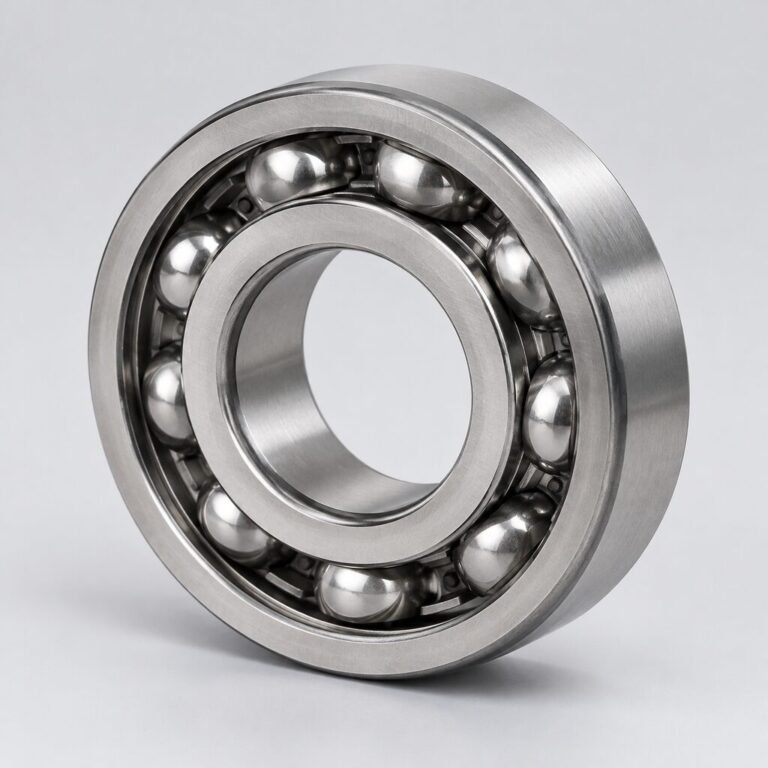 Machinery Parts Distribution Machinery parts distributors stock and resell standard bearings for general machinery, automotive and light-vehicle customers, often across many sizes on a single purchase list.… Ball Bearings · Roller Bearings · Sealed and Shielded Bearings · Inch Size Bearings
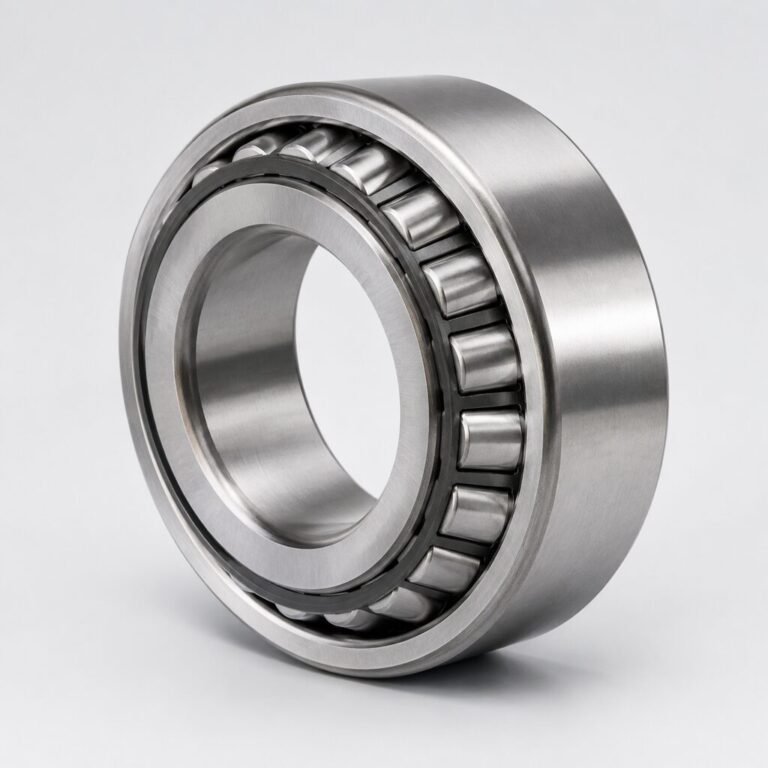 Power Transmission & Rotating Equipment Gearboxes, reducers, pumps, compressors, blowers, conveyors and wind turbine drivetrains depend on bearings that carry combined radial and axial loads at sustained speeds. Shock… Cylindrical Roller Bearings · Tapered Roller Bearings · Spherical Roller Bearings · Self-Aligning Ball Bearings
Technical Reading
These articles support bearing selection and specification checks for this product type.
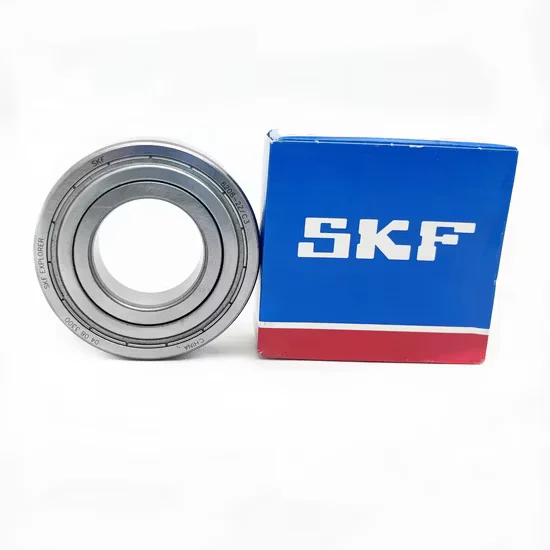
Sep 16, 2026 · Applications & Industries
Prevent thermal seizure in bearings in textile spindles and rollers by matching C3 or C4 clearance to operating temperatures. Verify dynamic load ratings against…
Sep 16, 2026 · Applications & Industries
Secure genuine bearings for NEMA electric motors with complete traceability to prevent catastrophic production line failures caused by counterfeit parts. Learn to identify premature…
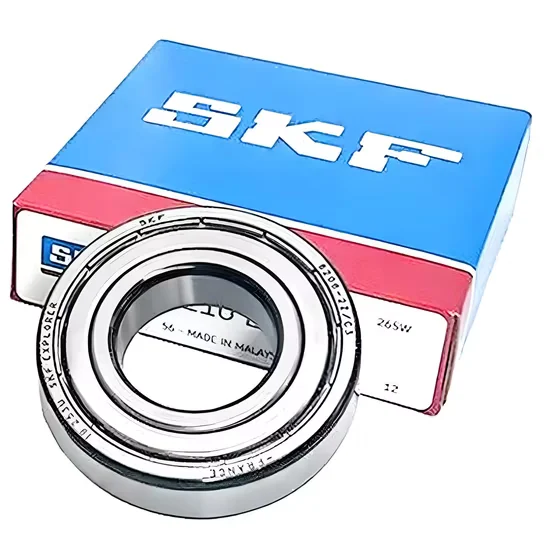
Sep 15, 2026 · Brands & Alternatives
Source Equivalent Bearings for OEM Spare Parts Lists by matching technical specifications like clearance and load ratings instead of rigid brand names. This cross-brand…
Perguntas Frequentes
The exact execution is confirmed before you accept a product quote. Share the BOM line and drawing revision. If the marking on an old bearing is incomplete, send a clear photo and note what still needs checking.
List each stage as its own quantity with its own required date. Prototype, production and spare quantities can then appear separately in one project quote, so planners can schedule each stage on its own timing.
State the BOM line, the drawing revision and whether alternatives are allowed. A separately identified alternative is settled before the product quote is accepted. Technical changes require buyer approval, so your design engineer keeps control of the specification.
Product documents are confirmed at the written quote stage, order by order. List the documents your project requires in your enquiry. Transport documents are confirmed with the shipping arrangements for the order.
Request a Quote
SKF Mechanical and Electrical Equipment supplies SKF ball, roller and mounted bearings to buyers worldwide. Your written quote states model, quantity, price and currency, availability, estimated lead time and validity.