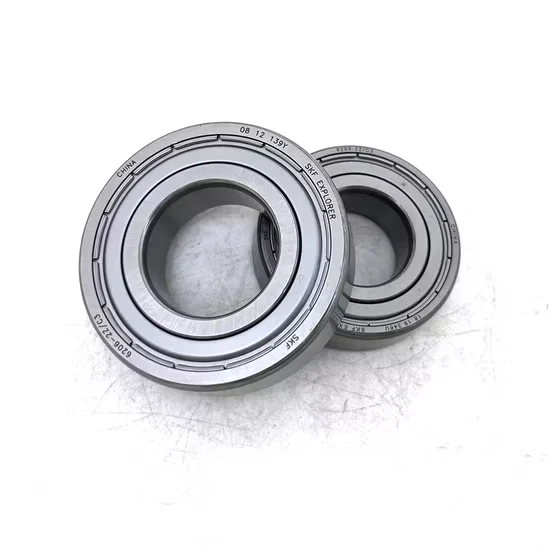
Planetary Gearhead Bearings Wholesale Supplier Bulk OEM
- Applications & Industries
- Sep 16, 2026
- author
The cheapest bearing on the invoice is often the most expensive component in your supply chain.
Selecting the right Planetary Gearhead Bearings Wholesale Supplier Bulk OEM requires prioritizing technical verification and moisture-resistant packaging over initial unit price. Catastrophic failures in planetary reducers stem primarily from misaligned load distribution due to incorrect clearance selection and corrosion caused by inadequate anti-rust protocols during Less-than-Container-Load (LCL) shipping. A reliable supplier must provide cross-brand equivalent consultation, strict drawing verification, and customized VCI packaging to prevent hidden costs such as replacement labor, downtime, and scrap claims that far exceed any upfront savings.
I still remember the silence in my office after that phone call from South America. It was early in my career, handling documentation at the Beilun Port in Ningbo. The client needed a replacement for a precision cylindrical roller bearing in a planetary reducer. I sourced a domestic alternative without performing a rigorous cross-brand equivalence check. To cut costs further, we skipped the enhanced moisture protection for the LCL consolidation. When the cargo arrived, the cage had deformed due to improper specifications, and saltwater intrusion had rusted the rolling elements. The entire reducer was scrapped. That loss was not just about the bearing cost; it was the freight, the customs duties, and the client’s production downtime. Since then, I have obsessed over selection accuracy and packaging integrity. Now, when handling bulk OEM orders or mixed-container shipments, I verify every drawing and insist on anti-rust protocols before a single box leaves the warehouse. Buying bearings is not just about unit price; selection mismatches and transit moisture create hidden costs that dwarf the initial savings.
This experience shapes how I approach every inquiry today. If you are sourcing for industrial machinery or heavy equipment, understanding the mechanics behind failure is more valuable than memorizing part numbers. Let us dissect why these components fail and how to secure a supply chain that protects your operational continuity.
Why Do Bearings Fail in Planetary Gearheads?
Misaligned load distribution and poor lubrication are the primary drivers of premature wear in planetary systems.
Planetary gearheads operate under complex loading conditions. Unlike simple shaft arrangements, the bearings here must handle high radial loads while accommodating slight misalignments from gear meshing. When the load distribution is uneven, stress concentrates on specific rolling elements, leading to spalling and eventual cage failure.
In my observations, many failures attributed to "poor quality" are actually cases of incorrect application. For instance, using a standard deep-groove ball bearing where a cylindrical roller bearing is specified can lead to rapid fatigue because the ball bearing cannot support the same radial load capacity. The contact area is too small, causing excessive Hertzian stress.
Another critical factor is lubrication breakdown. Planetary gears generate significant heat. If the grease channeling properties are insufficient, the lubricant migrates away from the bearing raceways, leading to metal-to-metal contact. This is especially prevalent in high-speed applications where centrifugal force throws the grease outward. Without proper replenishment or initial packing, the bearing runs dry.
I once consulted for a mining equipment manufacturer facing repeated reducer failures. The issue was not the brand of the bearing but the clearance class. They were using standard clearance bearings in an application with significant thermal expansion and heavy shock loads. The internal clearance closed up during operation, causing preload and overheating. Switching to a C3 clearance group resolved the issue, extending the service life meaningfully. This highlights that technical selection is as critical as the physical product quality.
How to Select the Right Bearing Type?
Cylindrical roller bearings are the preferred choice for handling heavy radial loads in planetary stages due to their line contact geometry.
Selecting the correct bearing type involves matching the load profile of the application with the bearing’s mechanical capabilities. In planetary gearheads, radial loads dominate. Cylindrical roller bearings offer superior radial load capacity compared to ball bearings because the line contact between the roller and raceway distributes stress over a larger area.
However, not all cylindrical roller bearings are identical. The cage material and design play a pivotal role. Steel cages are robust but heavier, while polymer cages offer better damping and lower weight but may have temperature limits. For high-speed planetary stages, a machined brass or polymer cage might be necessary to reduce friction and heat generation.
| Bearing Type | Radial Load Capacity | Axial Load Capacity | Speed Capability | Typical Application in Planetary Gearheads |
|---|---|---|---|---|
| Cylindrical Roller | High | Low | High | Main radial support in planet pins |
| Tapered Roller | High | High | Medium | Combined load scenarios |
| Deep Groove Ball | Medium | Medium | Very High | Light duty or auxiliary supports |
| Spherical Roller | Very High | Moderate | Low | Misalignment compensation in large reducers |
When evaluating a Planetary Gearhead Bearings Wholesale Supplier Bulk OEM, ask for detailed load rating calculations. Do not settle for generic catalog data. Ensure the supplier can verify that the selected bearing meets the dynamic and static load requirements of your specific gearbox design.
I recall a case where a distributor substituted a tapered roller bearing for a cylindrical one to save cost. The tapered bearing could handle the axial load, but its speed rating was insufficient for the high-RPM input stage. The resulting heat buildup degraded the lubricant, leading to premature seizure. The cost of replacing the entire gearbox assembly was several times the savings achieved on the bearing purchase.
Technical support is non-negotiable. A competent supplier will review your application parameters—speed, load, temperature, and environment—before recommending a part number. They should be able to explain why a specific cage material or clearance class is chosen for your use case.
What Are the Hidden Costs of Poor Sourcing?
Selection errors and transit moisture damage often outweigh initial price savings by a significant margin.
The sticker price of a bearing is a small fraction of its total cost of ownership. Hidden costs emerge when the wrong bearing is selected or when the product arrives damaged. These costs include emergency freight for replacements, labor for disassembly and reassembly, and lost production revenue during downtime.
One major hidden cost is cross-brand substitution failure. While many brands offer interchangeable dimensions, internal designs differ. Cage strength, roller profiling, and heat treatment processes vary. Substituting a premium brand with a lower-tier alternative without verifying these internal specs can lead to unexpected failures.
Another significant risk is moisture damage during shipping, particularly for LCL shipments. Bearings are highly susceptible to corrosion. If they are not packaged with proper Volatile Corrosion Inhibitor (VCI) materials and desiccants, humidity changes during ocean transit can cause surface rust. This rust creates microscopic pits on the raceways, which act as stress concentrators and initiate fatigue cracks early in the bearing’s life.
I have seen clients reject entire containers because of superficial rust, even though the bearings were technically functional. The cost of cleaning, inspecting, and repackaging these units, or worse, scrapping them, erodes any margin gained from choosing a cheaper supplier. Furthermore, claiming compensation for such damage is difficult if the packaging did not meet international standards.
A European wind farm operator once shared that a batch of bearings arrived with minor corrosion due to poor sealing in the packaging. Although they attempted to clean and use them, the vibration levels increased noticeably within months, forcing an unscheduled maintenance shutdown. The cost of the crane rental and technician team far exceeded the initial purchase price of the bearings.
How to Ensure Quality in Bulk Orders?
Strict drawing verification and anti-rust packaging are mandatory for maintaining integrity in bulk procurement.
Ensuring quality in bulk orders requires a proactive approach rather than reactive inspection. Start with drawing verification. Before production or shipment, the supplier should confirm that the part numbers match your technical drawings exactly. This includes checking dimensions, tolerances, and material specifications. For OEMs, this step prevents costly mismatches that might only be discovered during assembly.
Packaging is equally critical. For bulk orders, especially those involving mixed brands or sizes in consolidated containers, each bearing must be individually wrapped in VCI paper or film. Desiccants should be placed inside the inner packaging to absorb residual moisture. The outer cartons must be sturdy enough to withstand stacking and handling during transit.
When working with a Planetary Gearhead Bearings Wholesale Supplier Bulk OEM, request details on their packaging protocol. Ask if they use VCI materials and how they seal the packages. For high-value or sensitive items, consider requesting vacuum-sealed packaging.
Traceability is another key aspect. Ensure that the supplier provides complete documentation, including material certificates and origin proofs. This documentation is essential for quality audits and warranty claims. A reputable supplier will have a system in place to track each batch from the manufacturer to your warehouse.
In my current practice, I insist on reviewing the packaging plan for every mixed-container shipment. We simulate the transit conditions to ensure that the protective measures are sufficient. This attention to detail has significantly reduced claim rates and improved client trust. It transforms the supply chain from a potential liability into a reliable asset.
Conclusion
Reliable bearing performance starts with precise selection and ends with secure delivery.
Choosing the right Planetary Gearhead Bearings Wholesale Supplier Bulk OEM involves looking beyond the unit price to evaluate technical expertise and logistical care. Proper bearing selection prevents mechanical failures, while robust packaging protects against environmental damage during transit. By prioritizing these factors, you minimize hidden costs and ensure the longevity of your machinery. Focus on suppliers who offer verification services and adhere to strict packaging standards to safeguard your investment.
Related Applications
This article connects to the application areas below. Open one to see the bearing categories used there.