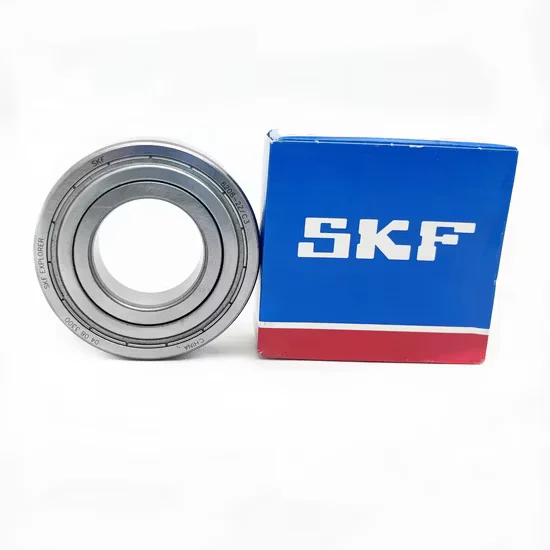
JIT Delivery of Bearings to Assembly Lines Wholesale Supplier
- Procurement & Trade FAQs
- Sep 15, 2026
- author
Precision means nothing if the part arrives after the line has stopped.
Successful JIT delivery of bearings to assembly lines requires synchronizing strict quality inspections with precise logistics to prevent costly assembly line downtimes. It is not merely about shipping speed; it is about aligning radial clearance verification, fumigation compliance, and customs documentation with the exact minute a truck reaches the factory gate. When these elements fail to sync, the penalty for a single hour of stoppage often exceeds the profit margin of an entire container shipment.
I learned this distinction not in a boardroom, but on the inspection floor of a bearing plant in Qingdao. My days were spent measuring radial clearance with micrometers, ensuring every spherical roller bearing met ISO standards. Later, moving into international trade, I watched a perfectly manufactured batch get stuck at a port for two days because the fumigation marks on the wooden crates were slightly blurred. The client’s assembly line halted. The financial bleed from that downtime was severe, dwarfing the value of the goods themselves. This reality shifted my focus from merely checking dimensions to managing the entire supply chain rhythm.
Understanding this synchronization is critical for procurement managers who bear the responsibility of keeping production flowing. The following sections break down how to manage the hidden costs, balance quality with speed, and ensure your supply chain remains resilient.
What are the hidden costs of delayed JIT bearing deliveries?
Assembly line stoppage penalties frequently surpass the total profit of the shipped container.
Most procurement strategies focus on unit price or freight cost, overlooking the exponential cost of time. In a JIT delivery of bearings to assembly lines model, inventory buffers are minimal by design. This efficiency creates vulnerability. When a shipment is delayed, there is no safety stock to absorb the shock. The immediate consequence is not just a late repair, but a complete production halt.
Consider a scenario involving an agricultural machinery OEM. They ordered a specific batch of spherical roller bearings for a new harvest season launch. The bearings were ready, and the price was competitive. However, a minor discrepancy in the phytosanitary certificate caused a delay at the destination port. The containers sat idle while the assembly line waited. The cost of paying overtime to catch up, plus the contractual penalties for late delivery to their own customers, amounted to a mid-six-figure loss. This figure was several times higher than the savings they had negotiated on the bearing unit price.
The hidden costs include:
- Labor inefficiency: Skilled technicians standing idle or working rushed overtime later.
- Contractual penalties: Fees paid to downstream clients for missed deadlines.
- Expedited freight premiums: Paying for air freight or premium courier services to replace missing units, which destroys the budget advantage of sea freight consolidation.
To mitigate these risks, suppliers must offer more than just products. They must provide visibility. A reliable partner maintains massive spot inventory to cover emergency gaps and ensures that documentation is verified before the cargo leaves the origin country. This proactive approach prevents the "port limbo" that triggers these cascading costs.
How to balance quality inspection with tight shipping schedules?
Precise radial clearance checks and document verification must be synchronized with truck arrival times.
A common misconception is that quality inspection and fast shipping are mutually exclusive. Buyers often fear that rushing a shipment compromises the technical integrity of the bearings. In reality, the bottleneck is rarely the inspection itself, but the disorganization of the process. For JIT delivery of bearings to assembly lines, quality control must be integrated into the logistics timeline, not treated as a separate final step.
Radial clearance is a critical parameter for bearing performance, especially in high-load applications like mining crushers or wind turbines. Inspecting this requires precision tools and time. If this inspection happens after the goods are packed and waiting for the truck, any failure means repacking and rescheduling, causing inevitable delays. Instead, the inspection should occur immediately upon production completion, with results documented digitally. This allows the logistics team to prepare customs paperwork in parallel.
I recall working with a heavy equipment MRO client who needed urgent mixed-brand spare parts. The lead time from order to port clearance was tight. By coordinating the inspection schedule with the trucking company’s pickup window, we ensured that the bearings were checked, certified, and loaded without unnecessary waiting periods. The key was having the technical data sheets and quality certificates ready for review before the physical goods moved.
Risk factors to monitor during this phase include:
- Documentation errors: Mismatched part numbers between the commercial invoice and the physical goods.
- Packaging integrity: Ensuring that protective coatings are intact to prevent corrosion during transit.
- Traceability: Verifying that each bearing can be traced back to its manufacturing batch, which is essential for warranty and failure analysis.
Suppliers with robust internal systems can perform these checks efficiently. They maintain organized warehouses where standard and special part numbers are easily accessible, allowing for rapid retrieval and verification. This operational discipline ensures that quality assurance supports, rather than hinders, the JIT timeline.
Why is flexible MOQ crucial for JIT assembly lines?
Small-batch mixed-brand consolidation prevents stockouts without overstocking.
Traditional procurement models often push for large Minimum Order Quantities (MOQs) to lower unit costs. However, in a JIT environment, large batches create inventory bloat and increase the risk of obsolescence. Flexible MOQs allow manufacturers to order exactly what they need, when they need it. This flexibility is a cornerstone of effective JIT delivery of bearings to assembly lines.
For many industrial buyers, the need is not for thousands of identical units, but for a specific mix of components. An automotive aftermarket supplier, for instance, might need a variety of deep-groove ball bearings and tapered roller bearings to service different vehicle models. Ordering full containers of a single SKU leads to excess stock of slow-moving items and shortages of high-turnover parts. Mixed-brand, mixed-size consolidation solves this problem.
I have seen distributors in Southeast Asia struggle with this balance. They would order large quantities of popular brands to get volume discounts, only to find themselves unable to source niche sizes for older machinery. This led to frequent backorders and lost sales. By switching to a supplier that offered flexible consolidation, they could order smaller batches of various brands, including premium global names and reliable domestic lines. This approach reduced their inventory holding costs while improving their ability to meet diverse customer demands.
Benefits of flexible MOQ include:
- Reduced capital tie-up: Money is not locked in unused inventory.
- Improved responsiveness: Ability to adapt to changes in production plans or market demand.
- Access to premium brands: Smaller orders make it feasible to use high-quality bearings from top-tier manufacturers without committing to massive volumes.
This model requires a supplier with extensive spot inventory and the logistical capability to handle complex picking and packing operations. It shifts the burden of inventory management from the buyer to the supplier, who is better equipped to handle it through economies of scale and diversified demand.
How to ensure customs clearance doesn’t bottleneck your JIT flow?
Strict compliance on fumigation and traceability docs prevents port delays.
Customs clearance is often the most unpredictable variable in international shipping. For JIT delivery of bearings to assembly lines, a delay at customs can be catastrophic. Unlike general cargo, industrial components often require specific certifications to prove their origin, material composition, and treatment. Missing or incorrect documents can result in weeks of detention.
Fumigation certificates are a frequent point of failure. Wooden packaging materials must be treated according to international standards to prevent the spread of pests. If the fumigation mark is unclear, missing, or does not match the certificate, customs authorities may hold the shipment for inspection or require re-fumigation. This was the issue in the earlier example of the agricultural machinery OEM. The delay was not due to the bearings themselves, but to the packaging compliance.
Another critical document is the certificate of origin. For buyers in regions with free trade agreements, this document can significantly reduce duty costs. However, it must be accurate and consistent with other shipping documents. Any discrepancy can trigger a manual review, slowing down the clearance process.
To avoid these bottlenecks:
- Pre-verify documentation: Ensure all certificates are issued and checked before the cargo leaves the factory.
- Use standardized packaging: Opt for non-wooden packaging where possible, or ensure wood is properly treated and marked.
- Maintain clear communication: Provide all necessary documents to the freight forwarder and customs broker well in advance of the vessel’s arrival.
Suppliers experienced in global trade understand these requirements. They maintain complete traceability documentation and ensure that every shipment complies with the destination country’s regulations. This expertise minimizes the risk of customs delays, ensuring that the JIT schedule remains intact.
Conclusion
Supply chain punctuality is as critical as dimensional tolerance.
Mastering JIT delivery of bearings to assembly lines demands a holistic view that integrates quality, logistics, and compliance. It is not enough to source genuine bearings; one must ensure they arrive precisely when needed, with all documentation in order. By prioritizing flexible sourcing, rigorous pre-shipment verification, and customs compliance, procurement managers can protect their operations from the high costs of downtime. The goal is a seamless flow where the bearing is ready for installation the moment the truck opens its doors.
Related Applications
This article connects to the application areas below. Open one to see the bearing categories used there.