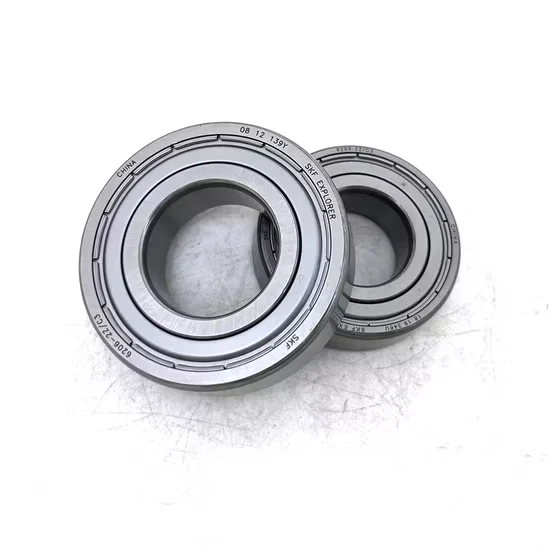
Genuine SKF Bearings for Agricultural Equipment OEMs Wholesale Supplier
- Buying Guide
- Sep 15, 2026
- author
Matching a part number is not enough to guarantee performance in muddy fields.
Sourcing genuine SKF bearings for agricultural equipment OEMs requires strict batch traceability and condition-based selection rather than simple model matching. The core argument is that internal clearance and seal materials dictate survival in harsh farming environments, not just the brand name on the box. Without verifying authenticity through official documentation and selecting variants designed for high contamination levels, OEMs risk catastrophic gearbox failures and exponential warranty costs.
Having spent years in Vietnam transitioning from quality control to bearing supply, I have witnessed the financial devastation caused by counterfeit components. A local harvester OEM once opted for cheaper, unverified deep-groove ball bearings to cut costs. During the rainy harvest season, these units suffered widespread spalling, leading to massive downtime and near-bankruptcy for the factory. This experience underscores that SKF bearings for agricultural equipment OEMs must be sourced with rigorous attention to origin and technical specifications. The mud, water, and shock loads typical of agricultural machinery demand more than standard industrial grades.
Why Do Standard SKF Bearings Fail in Harvesters?
Standard industrial bearings lack the sealing integrity required for wet harvesting conditions.
Many procurement managers assume that a standard SKF deep-groove ball bearing will perform identically to an agricultural-specific variant if the dimensions match. This is a critical misconception. In agricultural applications, especially in combine harvesters operating during rainy seasons, the primary enemy is not just load but contamination. Water and fine mud particles can bypass standard labyrinth seals, leading to rapid lubricant washout and corrosion.
The failure mechanism often begins with micro-pitting on the raceways due to water ingress, progressing quickly to spalling under heavy radial loads. Standard open or lightly shielded bearings cannot withstand these conditions. Instead, agricultural OEMs must specify bearings with enhanced sealing solutions, such as contact seals made from nitrile rubber or fluorocarbon elastomers, which offer superior resistance to abrasion and chemical attack from fertilizers or pesticides.
When selecting SKF bearings for agricultural equipment OEMs, it is essential to prioritize units with integrated sealing systems designed for high-contamination environments. These variants often feature wider inner rings and specialized grease formulations that resist emulsification. Ignoring these specific design features in favor of generic models leads to premature failure. The cost of a single gearbox rebuild far exceeds the marginal price difference between standard and agricultural-grade bearings. Therefore, the selection process must involve a detailed review of the operating environment, including exposure to water, dust, and shock loads, rather than relying solely on basic dynamic load ratings.
How to Verify Genuine SKF Bearings for OEMs?
Counterfeit bearings often mimic packaging but fail in material purity and heat treatment consistency.
The market is flooded with high-quality fakes that look identical to genuine products at first glance. For OEMs, the risk is not just a single bad batch but systemic reliability issues that damage brand reputation. Verifying authenticity requires a multi-layered approach that goes beyond visual inspection. The most reliable method is to demand full traceability documentation from the supplier. This includes original mill certificates, heat treatment logs, and batch numbers that can be cross-referenced with the manufacturer’s records.
A common red flag is the absence of consistent laser etching on the bearing rings or discrepancies in font style on the packaging. However, sophisticated counterfeits may replicate these features. Therefore, physical testing such as hardness verification and dimensional precision checks against ISO standards is necessary for initial supplier qualification. Genuine SKF products maintain tight tolerances and consistent surface finishes that are difficult for counterfeiters to replicate without expensive precision grinding equipment.
Working with a verified SKF bearings for agricultural equipment OEMs supplier means having access to complete documentation chains. This transparency allows OEMs to audit the source of every component. In one instance, a distributor provided bearings with plausible packaging but failed to produce corresponding batch certificates. Subsequent laboratory analysis revealed inferior steel quality with high inclusion counts, leading to early fatigue failure. By insisting on verifiable traceability, OEMs can eliminate this risk. It is not enough to trust the supplier’s word; the paper trail must be intact and auditable. This level of diligence ensures that every bearing installed in machinery meets the stringent quality requirements of global agricultural brands.
Which SKF Bearing Types Suit Different Agri-Machinery?
Bearing selection must align with specific load profiles and contamination risks of each machine component.
Different parts of agricultural machinery face distinct operational challenges. Gearboxes in harvesters endure high radial and axial loads with significant shock from uneven terrain, while wheel hubs on tractors require robust sealing against mud and water. Using a one-size-fits-all approach leads to inefficiencies and failures. A comparative analysis helps in selecting the right type for each application.
| Application | Recommended Bearing Type | Key Feature Requirement | Contamination Resistance |
|---|---|---|---|
| Harvester Gearbox | Spherical Roller Bearings | High load capacity, misalignment tolerance | Moderate (requires housing seal) |
| Tractor Wheel Hub | Deep-Groove Ball Bearings with Seals | Integrated contact seals, wide inner ring | High (direct exposure to mud) |
| Planter Units | Needle Roller Bearings | Compact design, high radial load in small space | Low (requires external protection) |
| Combine Auger | Cylindrical Roller Bearings | High radial load capacity, rigid support | Moderate (dust exposure) |
Spherical roller bearings are ideal for gearbox applications because they can accommodate shaft misalignment caused by frame flexing under heavy loads. In contrast, wheel hubs benefit from sealed deep-groove ball bearings that provide a compact, maintenance-free solution. The seal design is critical here, as it is the first line of defense against environmental contaminants.
When sourcing SKF bearings for agricultural equipment OEMs, understanding these distinctions is vital. A tractor wheel hub bearing needs different characteristics than a harvester gearbox bearing. Consolidating orders for mixed types requires a supplier who understands these technical nuances. Providing the wrong type, even if it fits physically, can lead to premature wear. For example, using a standard cylindrical roller bearing in a high-misalignment application can cause edge loading and rapid failure. Therefore, technical consultation during the design phase is invaluable. It ensures that each component is optimized for its specific role, enhancing overall machine reliability and reducing warranty claims.
How to Optimize OEM Bearing Procurement Costs?
Consolidating mixed-brand and mixed-size orders reduces logistical overhead and improves negotiation leverage.
Cost optimization in bearing procurement is not about finding the cheapest unit price. It is about minimizing total cost of ownership, which includes inventory holding costs, logistics, and risk of downtime. Many OEMs struggle with fragmented supply chains, sourcing different bearing types from multiple vendors. This approach increases administrative burden and shipping complexity. By consolidating orders with a single, reliable supplier, OEMs can achieve better pricing and streamlined logistics.
A one-stop sourcing solution allows for mixed-container shipments that include various sizes and types of bearings. This flexibility is crucial for agricultural OEMs who may need small batches of specialized bearings alongside large volumes of standard units. Moreover, maintaining a relationship with a supplier who stocks genuine products reduces the lead time for emergency replacements. This agility is essential during peak harvesting seasons when downtime is costly.
Partnering with a specialized SKF bearings for agricultural equipment OEMs provider enables this consolidation strategy. Such suppliers often have extensive inventory coverage and can offer technical support for model selection. This reduces the need for OEMs to maintain large safety stocks of every possible variant. Instead, they can rely on the supplier’s availability and expertise. The result is a leaner inventory system with lower capital tie-up and reduced risk of obsolescence. Additionally, bulk purchasing power can be leveraged to secure competitive pricing without compromising on authenticity. This strategic approach transforms procurement from a transactional activity into a value-driving function.
Conclusion
Authenticity and technical fit are non-negotiable for agricultural machinery reliability.
Sourcing SKF bearings for agricultural equipment OEMs demands a shift from price-focused buying to value-driven partnership. By prioritizing traceability, selecting condition-specific variants, and consolidating procurement, OEMs can safeguard their equipment against harsh field conditions. The true cost of a bearing is measured in uptime and brand reputation, not just the invoice amount.
Related Applications
This article connects to the application areas below. Open one to see the bearing categories used there.