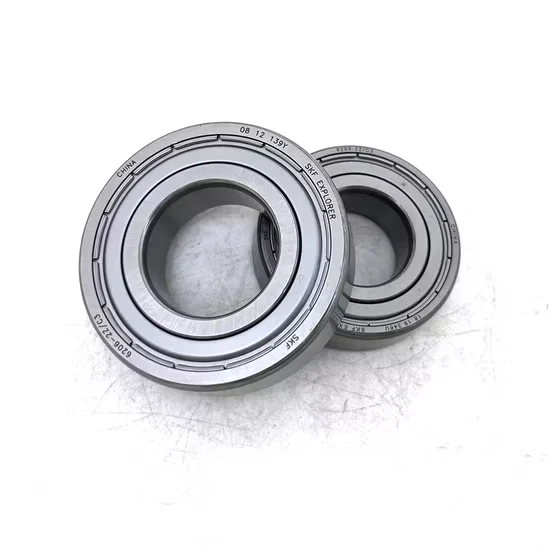
Forklift Drive Unit Bearings Wholesale Supplier Bulk OEM
- Applications & Industries
- Sep 16, 2026
- author
Tighter dimensional tolerances do not guarantee longer life in forklift drive units.
Selecting the right bearings for forklift drive units requires prioritizing sealing integrity and thermal expansion clearance over standard precision grades. In harsh environments, a bearing with moderate tolerance but robust labyrinth sealing outperforms a high-precision unit with standard rubber seals that fail under dust ingress and heat buildup.
I still remember the smoke rising from the drive axle of a forklift in a Jebel Ali port warehouse. The ambient temperature hovered well above forty degrees Celsius, and the air was thick with fine mineral dust. I had supplied what I thought were premium specifications, focusing strictly on the dimensional accuracy of the rolling elements. Within days, the drive bridge locked up. The customer did not care about my tolerance charts; he cared about the downtime. That incident shifted my entire approach to sourcing Bearings in Forklift Drive Units. I stopped looking at the drawing in isolation and started asking about the ground beneath the wheels.
This shift in perspective is critical for anyone managing MRO operations or OEM procurement. The failure modes in these applications are rarely due to material fatigue in the traditional sense. They are almost always environmental. Understanding this distinction is the first step toward reducing unplanned maintenance cycles.
Why Do Standard Bearings Fail in Forklift Drive Units?
Standard industrial specifications often ignore the real-world variables of thermal expansion and particulate contamination.
Most catalog bearings are designed for clean, climate-controlled factory floors. Forklifts, however, operate in some of the most hostile industrial environments on earth. From steel mills to open-pit mines, the operating conditions violate the assumptions built into standard ISO tolerance classes.
The primary culprit is heat. In high-ambient temperature zones, the housing and the shaft expand at different rates. If the internal clearance of the bearing is not adjusted to account for this differential expansion, the rolling elements become pre-loaded. This generates additional friction, which creates more heat, leading to a thermal runaway effect known as seizure.
Dust is the second major factor. Fine particulate matter, such as silica dust in mining or carbon dust in steel production, acts as an abrasive paste. Standard single-lip seals are insufficient against this level of ingress. Once dust penetrates the seal, it mixes with the grease, forming a grinding compound that accelerates wear on the raceways and rollers.
| Failure Mode | Standard Bearing Design | Harsh Environment Requirement |
|---|---|---|
| Sealing | Single-lip rubber contact seal | Multi-lip or labyrinth non-contact seal |
| Internal Clearance | Standard C2 or Normal | Expanded C3 or C4 for thermal growth |
| Lubrication | Standard lithium-based grease | High-temperature synthetic with extreme pressure additives |
| Cage Material | Standard stamped steel | Reinforced brass or polymer for shock resistance |
I have seen countless cases where buyers requested P5 precision bearings for forklift drive axles, believing that higher precision equals better performance. In reality, without the corresponding adjustment in internal clearance, that tight precision becomes a liability. The lack of room for thermal expansion causes the bearing to bind long before any precision benefit is realized. This is why selecting Bearings in Forklift Drive Units must be a holistic process, considering the system rather than just the component.
How to Match Bearing Types to Forklift Drive Conditions?
Roller bearings require specific clearance and sealing configurations based on actual load profiles and environmental stressors.
Not all forklifts carry the same loads or face the same challenges. A warehouse electric forklift operates in a stable, low-dust environment but demands quiet, continuous operation. In contrast, a heavy-duty diesel forklift in a port terminal faces shock loads from container handling and constant exposure to salt spray and sand.
For high-frequency indoor warehouse applications, the focus shifts to noise reduction and consistent lubrication. Deep groove ball bearings or cylindrical roller bearings with standard seals often suffice here, provided the lubrication intervals are maintained. The key is ensuring the grease does not channel or dry out during extended shifts.
However, for heavy-load port operations and mining applications, tapered roller bearings or spherical roller bearings are typically preferred due to their ability to handle combined radial and axial loads. But the type of bearing is only half the equation. The critical selection criteria become the dynamic load rating adjustments for shock loads and the robustness of the sealing system.
In a recent project for a client in Southeast Asia, we replaced standard tapered roller bearings with units featuring reinforced brass cages and upgraded sealing packages. The original bearings were failing every few months due to the shock loads from uneven dock surfaces. The new configuration, while slightly more expensive upfront, extended the service life meaningfully. The brass cage offered better resistance to the vibration-induced fatigue that had been destroying the stamped steel cages.
When sourcing Bearings in Forklift Drive Units, it is essential to communicate the specific duty cycle to the supplier. Are the loads constant or intermittent? Is there significant shock loading? These factors determine whether a standard commercial grade bearing will survive or if a heavy-duty industrial grade is required.
What Sealing Solutions Prevent Dust and Heat Seizure?
Upgrading seals is the most cost-effective intervention for preventing drive bridge lockups in high-dust, high-temperature sites.
The seal is the first line of defense. In harsh environments, it is also the most likely point of failure. Standard rubber seals can harden and crack under high temperatures, losing their contact pressure and allowing dust to enter. Alternatively, they can wear out quickly if exposed to abrasive particles.
For environments like the Middle East mining sector mentioned earlier, standard seals are simply not enough. We need customized multi-lip designs or even labyrinth sealing arrangements. Labyrinth seals create a tortuous path for dust and moisture, using gravity and centrifugal force to eject contaminants before they reach the rolling elements. While they may allow minimal grease leakage compared to contact seals, their ability to keep contaminants out is superior in extreme conditions.
Another effective solution is the use of V-ring seals or flinger shields in combination with primary seals. These secondary defenses protect the primary seal from direct impact and large debris, extending its life.
I recall a case involving a cement plant in Africa. The forklifts were operating in an area with heavy cement dust. The standard bearings were failing weekly. We introduced a bearing unit with a dual-seal arrangement: a heavy-duty rubber seal on the inside and a metal flinger shield on the outside. The flinger shield threw off the bulk of the dust, while the inner seal maintained the grease integrity. The failure rate dropped noticeably, transforming a weekly maintenance headache into a quarterly inspection routine.
When evaluating Bearings in Forklift Drive Units, ask specifically about the seal material composition. Is it resistant to the specific chemicals or temperatures present in your facility? Nitrile rubber is common, but fluoroelastomers may be necessary for higher temperature resistance. The right seal can make the difference between a bearing that lasts months and one that lasts years.
How to Verify Bearing Quality for Harsh Applications?
Strict traceability and material certification ensure genuine performance under extreme stress, distinguishing authentic products from counterfeits.
The market for industrial bearings is flooded with counterfeit goods. These fakes often look identical to genuine products but lack the metallurgical quality and precise manufacturing controls required for heavy-duty applications. In a forklift drive unit, a counterfeit bearing can fail catastrophically, causing damage to the axle housing and resulting in significant repair costs.
Verification starts with documentation. Genuine bearings from brands like SKF, FAG, TIMKEN, NSK, and others come with complete traceability. This includes material certificates, heat treatment records, and batch numbers that can be verified with the manufacturer.
Beyond paperwork, physical inspection can reveal telltale signs. Genuine bearings have consistent finishing, precise marking, and high-quality packaging. Counterfeits often have rough edges, inconsistent font sizes in markings, or poor-quality grease. However, visual inspection is not foolproof. The most reliable method is sourcing from authorized distributors who maintain direct links to the manufacturers.
We maintain a massive spot inventory of genuine products from premium global brands, alongside reliable domestic Chinese lines like ZWZ, HRB, and LYC. Each item is accompanied by full traceability documentation. This ensures that when you order Bearings in Forklift Drive Units, you are receiving components that meet the specified ISO standards and material requirements.
For OEMs and large MRO operators, consistency is key. Batch-to-batch variation can lead to unpredictable performance. By working with a supplier who offers mixed-brand sourcing and technical selection support, you can ensure that every bearing meets the rigorous demands of your application. Whether you need a single emergency spare part or a full container consolidation, the quality must remain uncompromised.
Conclusion
Selection must prioritize environmental resilience over nominal precision.
Choosing the right bearings for forklift drive units is not about finding the highest precision grade. It is about matching the sealing, clearance, and material properties to the specific harsh conditions of the worksite. By focusing on thermal expansion, dust protection, and verified authenticity, operators can significantly reduce downtime and maintenance costs. Reliable sourcing partners provide the technical expertise and genuine products needed to keep heavy equipment running smoothly in the toughest environments.
Related Applications
This article connects to the application areas below. Open one to see the bearing categories used there.