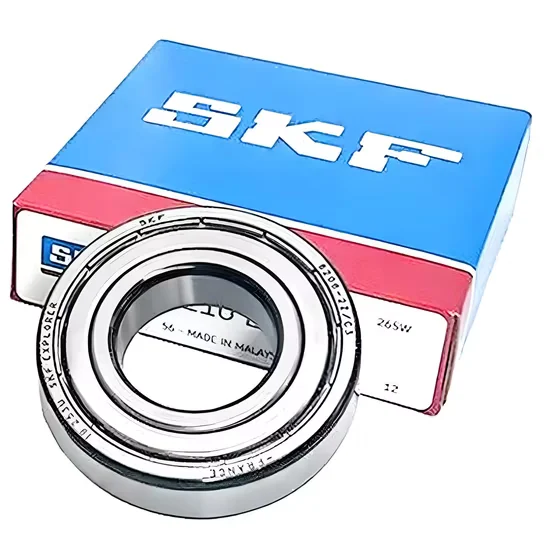
SKF Special Grease Bearings OEM Supplier
- Buying Guide
- Sep 15, 2026
- author
Thicker grease does not guarantee better high-temperature performance. In fact, selecting a bearing with the wrong base oil viscosity for your operating environment is the fastest route to catastrophic oil separation and premature field failure.
Sourcing SKF bearings with special greases for OEMs requires strict verification of grease compatibility, temperature thresholds, and supplier packaging capabilities to avoid field failures like oil separation. Success depends on matching the thickener type and base oil viscosity to specific operational loads rather than relying on generic high-temperature labels. Buyers must demand batch-level traceability and verify dropping points against actual running temperatures to ensure long-term reliability in mixed-brand consolidation scenarios.
I learned this lesson the hard way early in my procurement career. I was tasked with sourcing a batch of specialized lubricated bearings for a European client’s high-speed machinery project. To cut costs, I engaged a small subcontractor who claimed to offer custom greasing services. The specifications looked correct on paper, but the field performance was disastrous. During initial commissioning, the bearings began leaking oil almost immediately under load. The issue was not the bearing steel or the cage design, but a subtle mismatch in the grease formulation that caused rapid oil separation at elevated temperatures. That incident shifted my entire approach to technical sourcing. Now, when I evaluate potential partners, I look beyond the brand name to the underlying lubrication science and supply chain transparency.
What Defines a True OEM-Ready SKF Special Grease Bearing?
A true OEM-ready bearing is defined by the precise alignment of base oil viscosity and thickener chemistry with the application’s thermal profile. Many buyers mistakenly assume that any bearing labeled with a premium brand and a special grease code is suitable for their specific high-load or high-temperature environment. This assumption ignores the critical role of the NLGI consistency grade and the dropping point of the lubricant.
The core of the issue lies in the interaction between the base oil and the thickener. For high-temperature applications, a lithium complex thickener might be standard, but if the base oil viscosity is too low, it will migrate out of the thickener matrix under heat stress. Conversely, a viscosity that is too high can cause excessive churning and heat generation in high-speed applications. When evaluating an SKF special grease bearing supplier, you must request detailed technical data sheets that specify these parameters, not just the general grease name.
Consider the case of a heavy-equipment manufacturer I recently assisted. They were experiencing frequent failures in their crusher applications. The initial specification called for a standard industrial grease, but the operating conditions involved significant shock loads and moderate heat. By switching to a bearing pre-lubricated with a polyurea-thickened grease designed for high-load stability, they eliminated the recurring downtime. The key was not just the brand, but the specific chemical compatibility of the grease with the metal surfaces and the operating regime.
When sourcing SKF bearings with special greases for OEMs, always verify that the supplier can provide documentation linking the grease batch to the bearing serial number. This level of traceability ensures that if a compatibility issue arises, you can isolate the problem to a specific production run rather than guessing across your entire inventory. It also demonstrates that the supplier has control over their repackaging or customization processes, which is vital for maintaining quality in OEM custom greased bearings.
Specification Matrix: Standard vs. Special Greased SKF Bearings
Understanding the difference between standard and special greased bearings requires looking beyond load capacity to relubrication intervals and thermal limits. Standard bearings often come with a general-purpose lithium soap grease that works well for average conditions but fails in extreme environments. Special greased bearings are engineered to extend service life in specific niches, such as high-temperature ovens or wet food processing plants.
The following table outlines the qualitative differences in key performance indicators. Note that exact numerical values for proprietary grease formulations are rarely disclosed publicly and should be verified directly with the manufacturer’s technical support for your specific part number.
| Feature | Standard Greased Bearing | Special Greased Bearing (OEM Custom) |
|---|---|---|
| Thickener Type | General Lithium Soap | Complex Lithium, Polyurea, or Calcium Sulfonate |
| Temperature Range | Moderate | Extended High or Low Temperature Capability |
| Oil Separation Resistance | Standard | Enhanced for specific thermal profiles |
| Relubrication Interval | Frequent | Significantly Extended |
| Compatibility | Broad but shallow | Optimized for specific industry contaminants |
| Traceability | Batch Level | Full Batch-to-Bearing Traceability |
A buyer from the mining sector once approached me with a challenge. They were using standard bearings in conveyor pulleys exposed to dust and moisture. The frequent relubrication required was introducing more contaminants than it was removing. By switching to sealed SKF bearings with a calcium sulfonate complex grease, they achieved a "fit and forget" solution for the design life of the equipment. The higher upfront cost was offset by the elimination of maintenance labor and the reduction in unplanned stoppages.
When reviewing specifications for SKF special grease bearing supplier options, pay close attention to the dropping point. This metric indicates the temperature at which the grease loses its semi-solid structure. If your operating temperature approaches this limit, even briefly during startup or peak load, the grease can liquefy and escape, leaving the bearing dry. Always select a grease with a dropping point significantly higher than your maximum expected operating temperature.
How to Verify Grease Compatibility and Avoid Oil Separation?
Verification of grease compatibility starts with requesting batch test reports and understanding the rheological properties of the lubricant. Oil separation, or bleeding, is a natural phenomenon where the base oil separates from the thickener. While some separation is necessary for lubrication, excessive bleeding leads to grease hardening and loss of protective film. This is particularly critical in vertical shaft applications or bearings subjected to vibration.
To avoid this, you must implement a rigorous verification process. First, request the Certificate of Analysis (CoA) for the grease used in the bearings. This document should confirm the NLGI grade and the base oil viscosity index. Second, ask for evidence of compatibility testing if you are mixing brands or types within the same assembly. Incompatible greases can react chemically, softening into a liquid or hardening into a block, both of which cause immediate failure.
I recall a project involving a wind farm operator who faced unexpected failures in their pitch bearings. The investigation revealed that the maintenance team had topped up the original grease with a different brand that was chemically incompatible. The mixture turned into a sludge that blocked the lubrication channels. This could have been prevented by strict adherence to a single grease type or by conducting a compatibility test before mixing. When you source OEM custom greased bearings, ensure that your supplier has a clear policy on grease mixing and can provide guidance on compatible alternatives.
Another critical step is to verify the storage conditions of the bearings before shipment. Grease can degrade if stored in extreme temperatures or if the packaging is compromised. A reputable SKF special grease bearing supplier will ensure that bearings are stored in climate-controlled environments and shipped in sealed, moisture-proof packaging. Ask about their inventory rotation practices to ensure you are receiving fresh stock, not bearings that have been sitting in a warehouse for years with potentially degraded lubricant.
Optimizing Mixed-Brand Packaging for OEM and MRO Orders
Balancing MOQ flexibility with repackaging integrity is the key to efficient mixed-brand consolidation. Many OEMs and distributors need to source small quantities of specialized bearings alongside large volumes of standard parts. Direct purchases from major manufacturers often come with high minimum order quantities (MOQs) and rigid packaging requirements. This creates a logistical bottleneck for buyers who need diverse SKUs in smaller batches.
Optimizing this process involves finding a partner who can handle mixed-brand packaging without compromising the authenticity or traceability of the products. Repackaging bearings carries risks, including contamination, loss of original identification, and damage to seals. Therefore, it is crucial to work with a supplier who uses clean-room facilities for repackaging and maintains full digital traceability from the original manufacturer to the final package.
A regional distributor in Southeast Asia shared how they reduced their lead time significantly by consolidating orders through a specialized supplier. Instead of managing separate shipments from five different brands, they received a single consolidated container with mixed-brand bearing packaging. Each item was clearly labeled with its original part number and batch code, allowing them to maintain their quality standards while improving cash flow and reducing administrative overhead. This approach is particularly effective for MRO clients who need urgent access to a wide range of spare parts.
When evaluating suppliers for mixed-brand consolidation, ask about their quality control procedures during repackaging. Do they perform visual inspections? Do they verify the part numbers against the original packaging? Can they provide photos of the goods before shipment? These steps ensure that the convenience of mixed packaging does not come at the cost of quality assurance. For SKF bearings with special greases for OEMs, this level of care is non-negotiable, as the integrity of the lubrication system is paramount to performance.
Conclusion
Precision in lubrication specification prevents costly field failures. Sourcing the right bearing involves more than selecting a brand; it requires a deep understanding of grease chemistry, thermal limits, and supply chain transparency. By verifying compatibility, demanding traceability, and optimizing packaging strategies, buyers can secure reliable performance for their most critical applications.
Related Applications
This article connects to the application areas below. Open one to see the bearing categories used there.