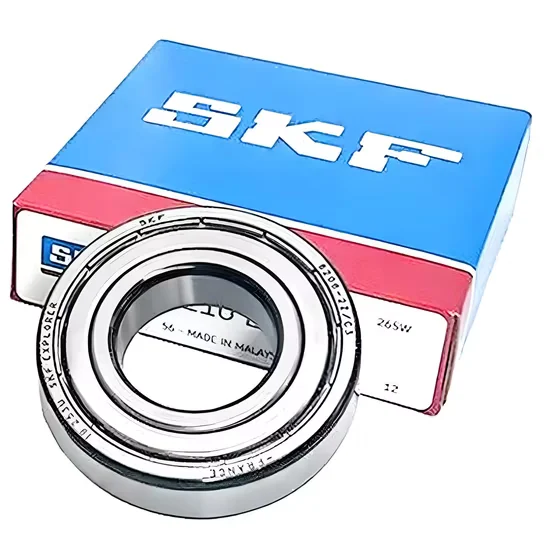
SKF Bearings for OEM Production: Wholesale Supplier Guide
- Buying Guide
- Sep 15, 2026
- author
The lowest unit price often costs the most in production downtime.
Sourcing genuine SKF bearings for OEM production requires strict batch consistency, full traceability, and reliable supplier verification to prevent production halts caused by counterfeit or mixed parts. Relying solely on direct brand channels without assessing mixed-container consolidation capabilities can lead to supply rigidity, while unverified wholesale sources risk dimensional tolerance drift that compromises assembly line integrity.
I still remember the silence in the control room at Huangdao Port. A client was inspecting a shipment of spherical roller bearings destined for a mining crusher line. The paperwork claimed OEM original status, but a random抽检 revealed inconsistent clearance tolerances. The entire crushing line nearly stalled because the internal geometry drifted beyond acceptable limits. It turned out that during container consolidation, non-genuine parts had been mixed with authentic stock. That incident shifted my focus from simple procurement to rigorous source verification. In industrial manufacturing, the stability of the supply chain is not just about logistics; it is about preserving the mechanical integrity of the final product.
Why Batch Consistency Matters More Than Unit Price in OEM Sourcing?
Dimensional tolerance drift in inconsistent batches causes severe assembly failures.
Many procurement managers prioritize unit cost, assuming that all bearings meeting the same ISO standard are interchangeable. However, for OEM applications, the critical factor is batch-to-batch consistency. Even if individual parts meet specifications, variations between production lots can cause cumulative errors in high-precision assemblies.
| Feature | Unverified Wholesale Source | Verified SKF Bearing Batch |
|---|---|---|
| Dimensional Tolerance | Variable across lots | Controlled within strict ISO limits |
| Material Certification | Often missing or generic | Full traceability to steel mill |
| Clearance Consistency | Noticeable deviation | Micron-level precision maintained |
| Risk of Counterfeit | High vulnerability | Robust verification protocols |
A European wind farm operator once reported premature failures in gearbox assemblies. Investigation showed that while each bearing passed initial inspection, the slight variance in raceway curvature between different batches caused uneven load distribution. This led to accelerated fatigue crack initiation.
When sourcing SKF bearings for OEM production, it is essential to request batch-specific test reports. These documents confirm that the entire lot was produced under consistent conditions. Without this assurance, manufacturers risk assembling machines with hidden weaknesses that only manifest under heavy load. The cost of reworking an assembled unit far exceeds the savings from choosing a cheaper, less consistent supplier.
How to Verify Genuine SKF Bearings and Avoid Counterfeits?
Implement strict traceability checks and physical inspection protocols.
Counterfeit bearings often look identical to genuine products at first glance. However, subtle differences in packaging, marking, and surface finish can reveal their true origin. Relying on visual inspection alone is insufficient; a multi-layered verification process is necessary.
First, check the packaging integrity. Genuine SKF packaging uses specific security features, including holographic labels and unique identification codes. Second, examine the bearing itself. Authentic parts have precise, laser-etched markings that are clean and uniform. Counterfeit items may show irregular font spacing or shallow engraving. Third, verify the source documentation. A reliable supplier will provide a certificate of origin and a quality assurance report linked to the specific batch number.
A Middle East steel mill experienced significant delays when customs authorities flagged a shipment due to missing origin certificates. The supplier could not provide verifiable proof of authenticity, leading to a seizure of the goods.
To avoid such issues, establish a protocol for incoming inspections. Use calibrated micrometers to measure critical dimensions and compare them against the manufacturer’s specifications. Check for smooth rotation and absence of noise, which can indicate poor internal geometry. If discrepancies arise, halt the assembly process immediately. Engaging a third-party inspection service for large orders can add an extra layer of security, ensuring that every component meets the required standards before it enters the production line.
What Documentation is Required for Smooth OEM Procurement?
Complete origin and quality certificates prevent customs delays and ensure compliance.
Documentation is the backbone of international trade in industrial components. Incomplete or inaccurate paperwork can lead to costly delays, fines, or even rejection of shipments. For OEM manufacturers, maintaining a complete audit trail is also crucial for quality management systems and warranty claims.
Essential documents include:
- Certificate of Origin: Confirms the country of manufacture, which affects tariff rates and compliance with trade agreements.
- Quality Inspection Report: Details the results of dimensional and functional tests performed on the batch.
- Material Certificate: Verifies the chemical composition and mechanical properties of the steel used.
- Packing List: Provides a detailed breakdown of contents, including part numbers, quantities, and batch codes.
A South American automotive supplier faced a two-week delay in clearing a container of bearings because the material certificates did not match the batch numbers on the packing list. This mismatch raised suspicions of mixed goods, triggering a thorough customs investigation.
Ensure that all documents are issued by authorized entities and cross-referenced with the physical goods. Digital copies should be reviewed before shipment to catch any errors early. Maintaining an organized archive of these documents facilitates easier audits and supports long-term relationships with regulatory bodies. When selecting a supplier, evaluate their ability to provide comprehensive and accurate documentation consistently.
How to Choose the Right SKF Bearing Supplier for OEM Needs?
Evaluate suppliers on mixed-batch capability, technical support, and spot inventory.
Not all distributors offer the same level of service. For OEMs, the ideal partner provides more than just products; they offer solutions that enhance operational efficiency. Key criteria include the ability to handle mixed-container consolidations, availability of technical selection support, and robust spot inventory.
Direct brand channels often have high minimum order quantities and limited flexibility for mixed SKUs. Authorized distributors, however, can consolidate various bearing types and sizes into a single shipment, reducing logistics costs and simplifying inventory management. They also possess the technical expertise to assist with model selection, ensuring that the chosen bearing matches the application’s specific requirements.
Consider a machinery manufacturer in Southeast Asia that needed urgent replacements for multiple bearing types across different production lines. A supplier with extensive spot inventory and mixed-batch capability delivered the required parts within days, preventing a potential shutdown. In contrast, sourcing directly from the brand would have taken weeks due to separate shipping schedules.
Look for suppliers who demonstrate a deep understanding of your industry’s challenges. They should be able to provide guidance on maintenance practices, failure analysis, and optimal storage conditions. Long-term partnerships with such suppliers contribute to greater supply chain resilience and operational stability.
Conclusion
Consistency and traceability are the true metrics of value in OEM sourcing.
Sourcing SKF bearings for OEM production demands a shift from price-focused purchasing to quality-assured procurement. By prioritizing batch consistency, verifying authenticity through rigorous protocols, and ensuring complete documentation, manufacturers can safeguard their production lines from costly disruptions. Choosing a supplier with technical expertise and flexible logistics capabilities further enhances this security, enabling sustainable growth and operational excellence.
Related Applications
This article connects to the application areas below. Open one to see the bearing categories used there.