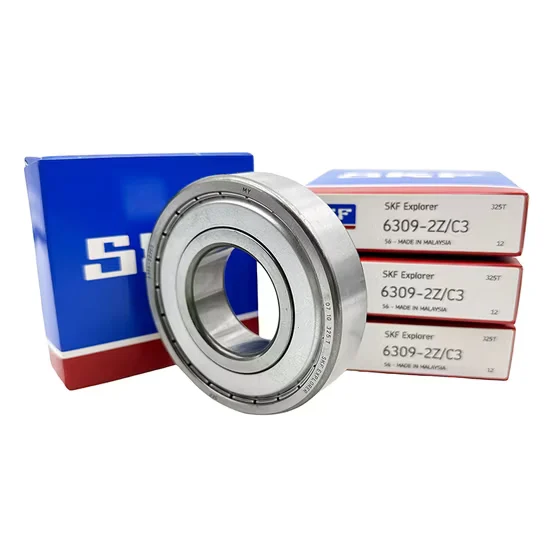
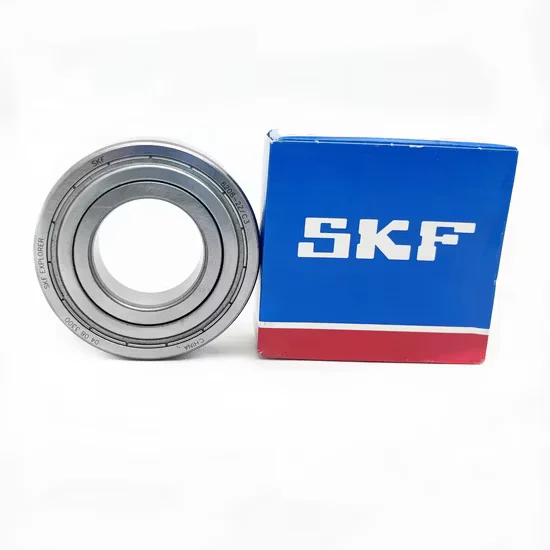
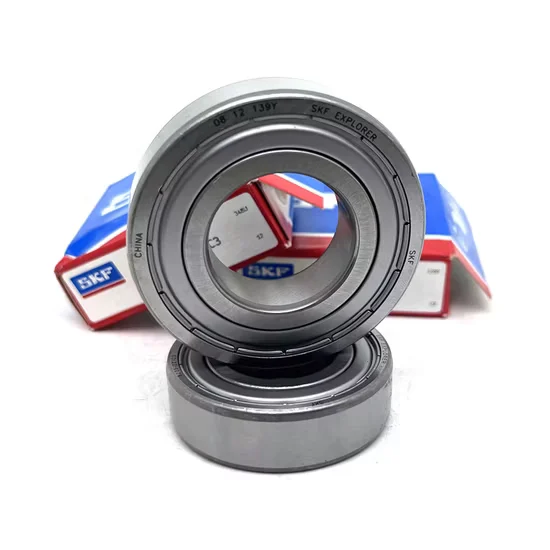
SKF 6008-2RS1 Bearing Wholesale Supplier for Bulk Orders
- Product & Series Guides
- Sep 16, 2026
- author
Uniform seal color does not guarantee authenticity.
The exact specifications for an SKF 6008-2RS1 are a bore diameter of 40 mm, an outer diameter of 68 mm, and a width of 15 mm, with a dynamic load rating of approximately 17.8 kN and a limiting speed of 6300 r/min when lubricated with grease. These parameters define the mechanical envelope, but they do not ensure operational reliability in bulk procurement. Verifying batch consistency through traceability documentation and understanding the behavior of NBR seals under thermal stress are equally critical to avoiding port rejections and premature field failures.
I learned this distinction the hard way at a warehouse in Dongguan, surrounded by crates destined for Jebel Ali Port. A distributor had ordered two full containers of these bearings. When the client opened the first few boxes upon arrival, they noticed slight variations in the shade of the black rubber seals between different cartons. To an untrained eye, it looked like mixing old stock with new, or worse, counterfeit refills. The email arrived before the container was even fully unloaded: suspicion of refurbished goods, potential rejection of the entire shipment. The reality was that genuine batches from different production runs can exhibit minor cosmetic differences in seal compound curing. However, without controlled mixing protocols and accompanying video evidence of the packing process, the buyer’s risk perception spiked. This incident shifted my focus from merely moving boxes to managing the visual and documentary integrity of every SKF 6008-2RS1 order that leaves our facility.
Understanding the technical baseline is only the first step. For buyers consolidating mixed-brand orders or fulfilling urgent MRO requirements, the physical dimensions must align perfectly with ISO standards to ensure interchangeability, while the internal quality determines longevity.
What Are the Exact Dimensions of SKF 6008-2RS1?
Precision in millimeters defines fit, but tolerance classes define function.
The SKF 6008-2RS1 follows the standard metric dimensions for the 6008 series: 40 mm bore, 68 mm outer diameter, and 15 mm width. While these numbers are static, the allowable deviation is governed by ISO 492, which specifies the tolerance classes for radial bearings. Most industrial applications utilize Normal Class (P0) tolerances, which provide a balance of cost and precision for general machinery such as pumps, gearboxes, and electric motors.
When sourcing in bulk, dimensional consistency across batches is more challenging than it appears. A common issue arises when suppliers mix stocks from different manufacturing periods or even different original equipment manufacturer facilities without proper segregation. For a regional distributor reselling to local workshops, a slight variance in the outer diameter tolerance might not affect a simple replacement job. However, for an OEM assembling high-speed spindles or precision agricultural equipment, even micron-level deviations can lead to improper preload or excessive heat generation.
| Dimension Parameter | Value | Tolerance Class Reference |
|---|---|---|
| Bore Diameter (d) | 40 mm | ISO 492 Normal Class |
| Outer Diameter (D) | 68 mm | ISO 492 Normal Class |
| Width (B) | 15 mm | ISO 492 Normal Class |
| Chamfer Dimension | Min/Max limits apply | ISO 15:1998 |
A European wind farm operator once reported premature failures in their yaw drive systems. The investigation revealed that while the bearings matched the nominal 40x68x15 mm dimensions, the internal clearance varied significantly because the supplier had substituted C3 clearance units with Normal clearance units without updating the part description. For an SKF 6008-2RS1, specifying the correct internal clearance is as vital as the external dimensions. Without clear documentation, buyers risk installing bearings that are either too tight, causing overheating, or too loose, leading to vibration and noise.
How Do Load Ratings and Speed Limits Impact Selection?
Dynamic load ratings predict life, but application conditions dictate survival.
The basic dynamic load rating for an SKF 6008-2RS1 is rated at 17.8 kN, with a static load rating of 11.6 kN. These figures are calculated according to ISO 281 standards and assume ideal operating conditions. In real-world scenarios, especially in heavy industries like mining or steel milling, the actual load often fluctuates, and shock loads are common. Relying solely on the catalog value without applying appropriate safety factors can lead to unexpected fatigue failure.
The limiting speed of 6300 r/min is another critical parameter. This limit is determined by the friction and heat generation within the bearing, particularly influenced by the seal type. The 2RS1 designation indicates contact seals on both sides, which provide superior protection against contamination but generate more friction than non-contact shields. If an application requires higher speeds, the heat generated by the seals can degrade the lubricant faster than anticipated.
Consider a case involving a textile machinery manufacturer in Southeast Asia. They selected the SKF 6008-2RS1 for a high-speed roller application based purely on its load capacity. However, they operated the bearings near the upper speed limit continuously. The contact seals heated up, causing the grease to oxidize and lose its viscosity prematurely. The failure was not due to metal fatigue but to lubrication breakdown caused by exceeding the thermal limits of the sealed design. For such applications, verifying the thermal stability of the grease and the seal material is essential.
Buyers often overlook the relationship between load and speed. A bearing that performs well under moderate load at low speed may fail quickly if the speed increases, even if the load remains constant. When sourcing for diverse MRO needs, it is crucial to match the specific operating profile of the equipment with the bearing’s rated capabilities. Providing technical datasheets that include these ratings helps end-users make informed decisions, reducing the likelihood of misapplication and subsequent warranty claims.
Why Does the 2RS1 Seal Design Matter for Harsh Environments?
Seals keep contaminants out, but material compatibility keeps them intact.
The "2RS1" suffix denotes that the bearing is equipped with contact seals made of NBR (nitrile butadiene rubber) on both sides. NBR is chosen for its excellent resistance to abrasion and its ability to retain lubricant. However, its performance is highly dependent on temperature. The standard operating temperature range for NBR seals is typically from -40°C to +100°C. Exceeding this range, even briefly, can cause the rubber to harden, crack, or lose its elasticity, compromising the seal’s effectiveness.
In harsh environments such as cement plants or marine applications, the bearing is exposed to dust, moisture, and corrosive agents. The contact design of the 2RS1 seal provides a physical barrier that prevents these contaminants from entering the raceway. However, if the seal material degrades due to heat or chemical exposure, the barrier fails. A common misconception is that all black rubber seals are identical. In reality, the compound formulation varies by manufacturer and even by batch. Inferior alternatives may use recycled rubber or lower-grade NBR, which deteriorates rapidly under stress.
A Middle East steel mill experienced repeated failures in their conveyor rollers. The ambient temperature was high, and the bearings were subjected to significant dust ingress. Upon inspection, the seals were found to be brittle and cracked. The root cause was not the steel quality of the bearing but the inferior seal compound used in a cheaper alternative brand. Switching back to genuine SKF 6008-2RS1 units, with their verified NBR compound, resolved the issue. This highlights the importance of sourcing from suppliers who can guarantee the authenticity of the seal material.
For buyers procuring in bulk, visual inspection of the seals is a quick but limited check. The color should be consistent black, and the surface should be smooth without flash or irregularities. However, true verification requires trust in the supply chain’s ability to maintain cold-chain integrity for the rubber components and avoid prolonged exposure to direct sunlight or heat during storage and transit.
How to Verify Batch Consistency and Avoid Counterfeits?
Documentation proves origin, but process integrity proves consistency.
Verifying the authenticity of an SKF 6008-2RS1 goes beyond checking the logo. Counterfeiters have become sophisticated, replicating packaging and even laser etching. The most reliable method is to demand full traceability documentation, including the original certificate of conformity and import records if applicable. However, documents alone can be forged. The physical consistency of the product across a large batch is a stronger indicator of genuine sourcing.
As mentioned earlier, batch-to-batch variations in seal color can occur in genuine products due to differences in raw material lots or curing times. Uncontrolled mixing of these batches can raise suspicions. To mitigate this, rigorous quality control processes are necessary. This includes recording video evidence of the packing process for each container, ensuring that the bearings loaded are from verified, consistent stock. Stapling the original purchase invoices and customs declaration forms together provides a paper trail that auditors and clients can verify.
| Verification Method | Reliability Level | Implementation Complexity |
|---|---|---|
| Visual Inspection of Logo | Low | Easy |
| Packaging Quality Check | Medium | Easy |
| Traceability Documentation | High | Moderate |
| Video-Recorded Packing Process | Very High | High |
| Third-Party Lab Testing | Highest | Very High |
A US-based industrial buyer once rejected a shipment because the box labels looked slightly different from previous orders. Upon review, it was discovered that SKF had updated their packaging design globally. Without prior notification or supporting documentation from the supplier, the buyer assumed foul play. This incident underscores the need for proactive communication. Suppliers should inform buyers of any known changes in packaging or minor cosmetic variations in advance.
For distributors serving multiple regions, maintaining a consistent supply of genuine SKF 6008-2RS1 bearings requires strong relationships with authorized channels and a robust internal quality assurance system. By combining document verification with physical inspection and transparent packing processes, buyers can minimize the risk of receiving counterfeit or inconsistent stock. This approach not only protects the buyer’s reputation but also ensures the reliability of the machinery they support.
Conclusion
Trust is built on transparency, not just specifications.
Mastering the technical details of the SKF 6008-2RS1 is essential, but it is only half the battle. For bulk buyers, ensuring batch consistency and verifying the authenticity of seals and documentation are critical to avoiding costly rejections and operational failures. By focusing on traceability and process integrity, distributors and OEMs can secure reliable supplies that meet the demanding standards of global industry.