Angular Contact Ball Bearings
SKF ball, roller and mounted bearings for machine builders, distributors and project buyers


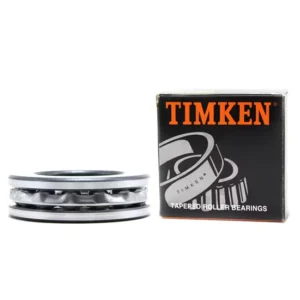
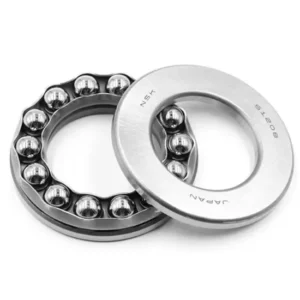
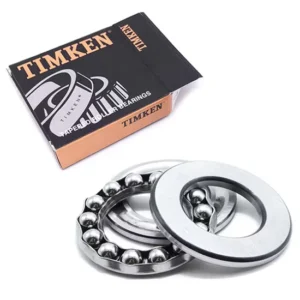


SKF 51118 51218 51318 51120 51220 51320 51122 Thrust Ball Bearing
Product Details
Original Batch Traceability — Every SKF 51118 51218 51318 51120 51220 51320 51122 shipment includes factory lot documentation for complete lifecycle verification.
| Parameter | Value |
|---|---|
| Designation | SKF 51118 51218 51318 51120 51220 51320 51122 |
| Bearing Type | Thrust Ball Bearing |
| Precision Class | P0, P6, P5, P4, P2 |
| Vibration Level | Z1V1, Z2V2, Z3V3 |
| Aligning | Non-Aligning Bearing |
| Separated | Separated |
| Rows Number | Single |
| Load Direction | Thrust |
| Material | Bearing Steel |
| Contact Angle | 0° |
| Lubrication | Grease or Oil |
| Certification | ISO9001:2008 |
| Industry | Typical Applications |
|---|---|
| Automobile | Transmission thrust support mechanisms |
| Rolling Mill | Roll neck axial positioning systems |
| Mine | Heavy-duty crusher vertical shaft supports |
| Metallurgy | Continuous casting machine guide rolls |
Misaligned thrust loads cause catastrophic cage fractures long before the steel fatigues.
Many maintenance engineers assume standard thrust units can handle minor radial forces or high-vibration environments without checking the exact series designation. I once saw a batch of standard pressed steel cage units fail within months because they were installed in high-vibration reducers not suited for that specific cage design. The catastrophic failure locked up the entire drive train, causing massive secondary damage to the gearbox housing. Selecting the correct series and verifying the exact load direction prevents unplanned downtime. When engineers ignore the pure axial nature of these components, the resulting edge stresses rapidly degrade the raceway surfaces, making precise specification matching a primary driver of mechanical reliability.
Choosing the right unit from the SKF 51118 51218 51318 51120 51220 51320 51122 range requires understanding the distinct load capacities of the 511, 512, and 513 series. The 511 series handles lighter axial loads, while the 512 and 513 series are engineered for substantially heavier thrust applications in metallurgy and rolling mills. We frequently see procurement teams ordering the 511 series simply because it is cheaper, only to realize it cannot withstand the heavy axial crushing forces present in mining crushers. By analyzing the specific thrust vectors and shock load frequencies, we guide buyers toward the heavier variants, ensuring the structural integrity of the assembly under continuous industrial stress.
Pure thrust environments in mining and rolling mills subject components to immense axial pressure and continuous vibration. Standard lubrication might degrade quickly under these conditions, making the choice between grease and oil critical for maintaining the film thickness. Furthermore, non-aligning separated designs demand precise installation to avoid uneven load distribution across the single row of rolling elements. Any misalignment during mounting introduces edge stresses that accelerate surface fatigue and compromise the overall operational lifespan. Selecting a higher vibration class ensures the internal clearances are optimized to dampen these destructive harmonic frequencies, ultimately protecting the structural stability of the entire rotating assembly.
The available precision ratings from P0 up to P2 dictate the running accuracy and axial play of the assembly. Higher precision classes like P4 and P2 are essential for machine tool spindles or precision rolling mill adjustments where minimal axial runout is mandatory. Additionally, the vibration classifications ranging from Z1V1 to Z3V3 indicate the strictness of the manufacturing tolerances and surface finish. Selecting a Z3V3 grade ensures noticeably quieter operation and reduced vibration transmission in sensitive automotive setups. Understanding these grading systems is crucial because installing a standard P0 unit in a high-speed precision application will result in unacceptable axial play and severe vibration issues that disrupt automated machinery.
Installing a lower-capacity 511 series unit where a 513 series is required leads to rapid raceway spalling and premature cage failure. This mismatch voids warranty coverage and triggers cascading damage to adjacent shaft components and housings. According to ISO 281 frameworks, operating beyond the dynamic load rating drastically shrinks the calculated L10 life, resulting in frequent, unplanned maintenance shutdowns. When a thrust unit fails catastrophically, the broken cage fragments often migrate into the gear oil, destroying downstream pumps and valves. Recognizing these hidden financial drains forces maintenance planners to prioritize exact specification matching over initial purchase price, safeguarding the broader mechanical ecosystem.
Sourcing authentic SKF 51118 51218 51318 51120 51220 thrust ball bearing units requires more than just checking the box label. We provide complete batch traceability documentation directly linked to the manufacturer's production facilities, ensuring every unit is genuine. Our technical team actively prevents the common mistake of substituting a 512 series with an incorrect dimensional equivalent by verifying exact catalog specifications before dispatch. Counterfeit thrust units often use substandard steel that lacks the necessary hardness, leading to immediate deformation under heavy axial loads. By enforcing strict authenticity checks and providing verifiable origin documents, we eliminate the risk of installing compromised components that could jeopardize your entire production line.
To ensure the optimal series selection from our available thrust range, please provide your specific axial load values, operating speeds, and ambient temperature conditions. Sharing the exact OEM equipment model numbers allows our engineering team to perform precise cross-reference verification and L10 life calculations. If your application involves extreme vibration, detailing the environmental exposure helps us recommend the most suitable vibration grade and lubrication strategy. Providing comprehensive operational data enables us to move beyond basic catalog lookups and deliver a fully engineered solution that accounts for thermal expansion and dynamic shock loads in your specific industrial environment.
Q: How can I verify the authenticity of the delivered SKF thrust units?
A: Every shipment includes original factory batch traceability documents and packaging featuring official manufacturer QR codes. You can scan these codes using the official app to instantly confirm the production origin and authenticity. We also provide dimensional and material inspection reports upon request to validate the physical specifications against the official catalog data.
Q: What are the load capacity differences between the 511, 512, and 513 series?
A: The 511 series is designed for lighter axial loads, while the 512 and 513 series feature larger rolling elements and deeper raceways to handle substantially heavier thrust forces. Selecting the correct series depends entirely on your specific axial stress profile. Our team can calculate the exact dynamic load requirements to prevent premature raceway spalling in heavy-duty applications.
Q: How do I select the appropriate precision class for rolling mill applications?
A: Rolling mill adjustments often require high axial running accuracy, making P4 or P2 precision classes ideal for minimizing axial runout. Standard P0 or P6 classes are generally sufficient for general industrial machinery where tight tolerances are less critical. We recommend sharing your specific runout tolerance limits so we can match the exact precision grade to your operational needs.
Q: What are the recommended lubrication practices for these separated thrust bearings?
A: Since these are separated, non-aligning units, the choice between grease and oil depends on your operating speed and temperature. Grease is suitable for moderate speeds and provides good contamination resistance, while oil circulation is necessary for high-speed environments to dissipate heat. Always follow the manufacturer's re-lubrication intervals to maintain the protective film thickness on the thrust contact zones.
Q: How should I install separated thrust bearings to avoid misalignment issues?
A: Because the non-aligning design cannot compensate for structural errors, the shaft and housing seating surfaces must be perfectly square to the shaft axis. Use induction heating for the shaft washer to achieve a proper interference fit without applying mechanical force that could dent the raceways. Careful alignment during mounting prevents uneven load distribution and extends the operational lifespan.
Before You Enquire
A complete enquiry ties every price to the right execution, drawing and project stage. It also catches the sleeves and locking components that BOMs often leave out.
Send Your BOMSame Product Family
These bearings share a category with this model, so you can review them together when one BOM covers several lines.
Angular Contact Ball Bearings

Angular Contact Ball Bearings

Angular Contact Ball Bearings

Cylindrical Roller Bearings
Where It Fits
This bearing is listed for the applications below. Open each one to see the related product categories.
 Equipment Maintenance & Spare Parts Maintenance teams replace worn bearings in motors, fans, conveyors, pillow block supports, vehicles and field machinery, often while equipment is waiting to restart. Markings… Automotive Kits and Spare Parts · Clutch Release Bearings · Deep Groove Ball Bearings · Sealed and Shielded Bearings
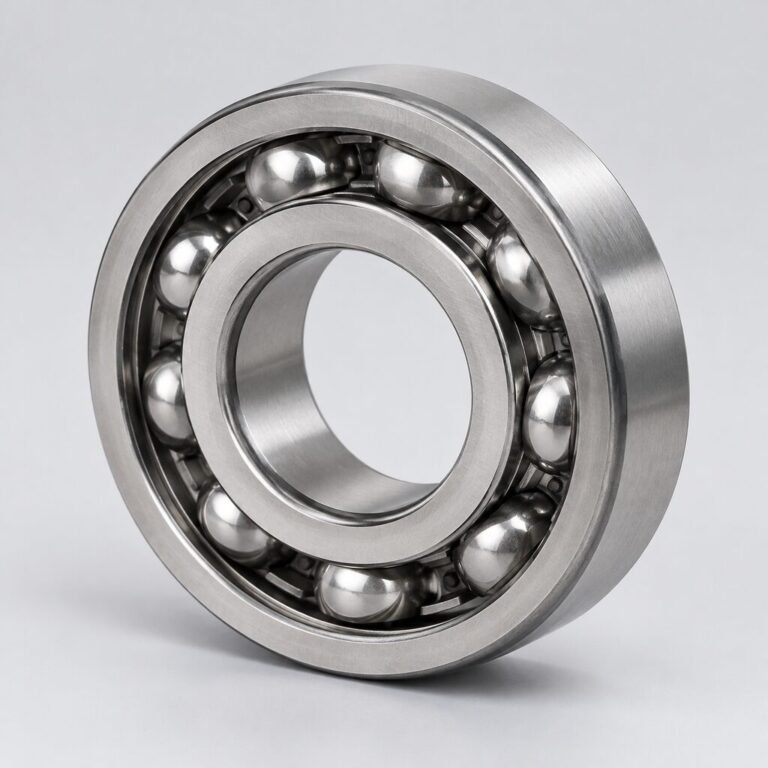 Machinery Parts Distribution Machinery parts distributors stock and resell standard bearings for general machinery, automotive and light-vehicle customers, often across many sizes on a single purchase list.… Ball Bearings · Roller Bearings · Sealed and Shielded Bearings · Inch Size Bearings
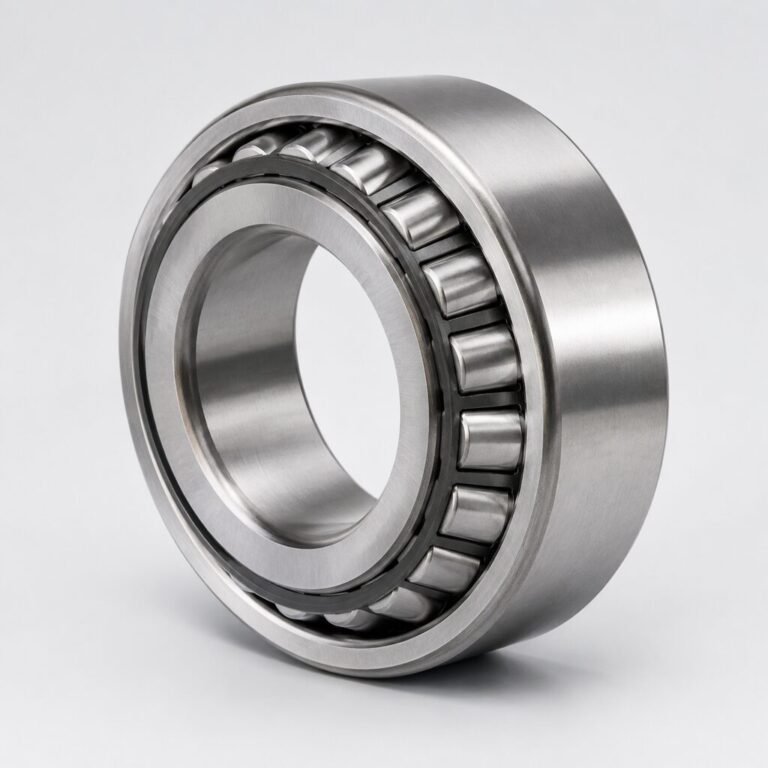 Power Transmission & Rotating Equipment Gearboxes, reducers, pumps, compressors, blowers, conveyors and wind turbine drivetrains depend on bearings that carry combined radial and axial loads at sustained speeds. Shock… Cylindrical Roller Bearings · Tapered Roller Bearings · Spherical Roller Bearings · Self-Aligning Ball Bearings
Technical Reading
These articles support bearing selection and specification checks for this product type.
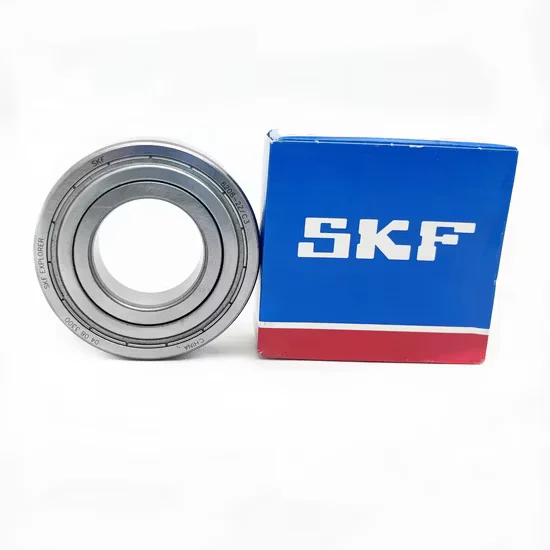
Sep 16, 2026 · Applications & Industries
Prevent thermal seizure in bearings in textile spindles and rollers by matching C3 or C4 clearance to operating temperatures. Verify dynamic load ratings against…
Sep 16, 2026 · Applications & Industries
Secure genuine bearings for NEMA electric motors with complete traceability to prevent catastrophic production line failures caused by counterfeit parts. Learn to identify premature…
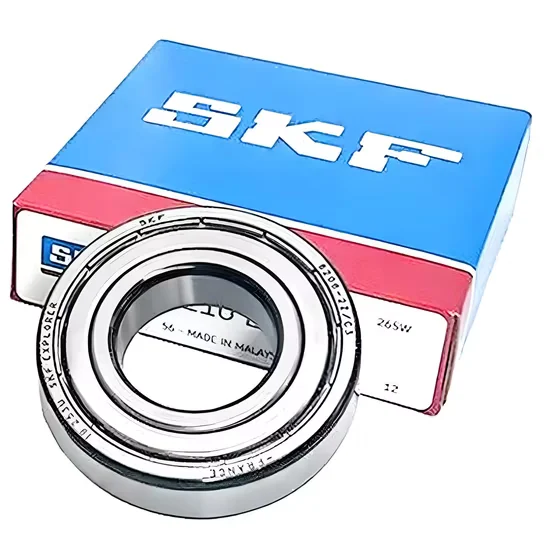
Sep 15, 2026 · Brands & Alternatives
Source Equivalent Bearings for OEM Spare Parts Lists by matching technical specifications like clearance and load ratings instead of rigid brand names. This cross-brand…
Häufig gestellte Fragen
The exact execution is confirmed before you accept a product quote. Share the BOM line and drawing revision. If the marking on an old bearing is incomplete, send a clear photo and note what still needs checking.
List each stage as its own quantity with its own required date. Prototype, production and spare quantities can then appear separately in one project quote, so planners can schedule each stage on its own timing.
State the BOM line, the drawing revision and whether alternatives are allowed. A separately identified alternative is settled before the product quote is accepted. Technical changes require buyer approval, so your design engineer keeps control of the specification.
Product documents are confirmed at the written quote stage, order by order. List the documents your project requires in your enquiry. Transport documents are confirmed with the shipping arrangements for the order.
Request a Quote
SKF Mechanical and Electrical Equipment supplies SKF ball, roller and mounted bearings to buyers worldwide. Your written quote states model, quantity, price and currency, availability, estimated lead time and validity.