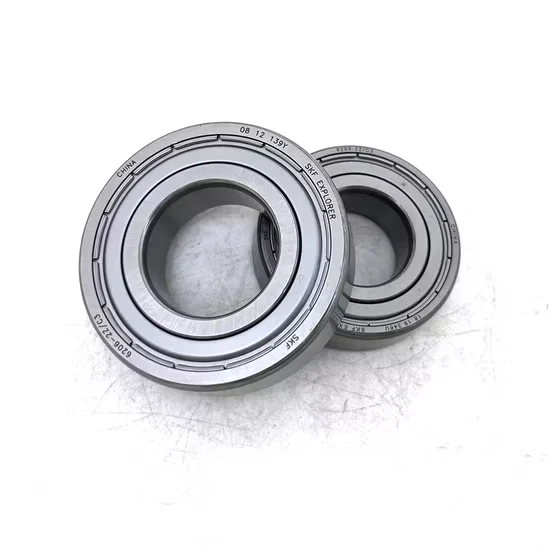
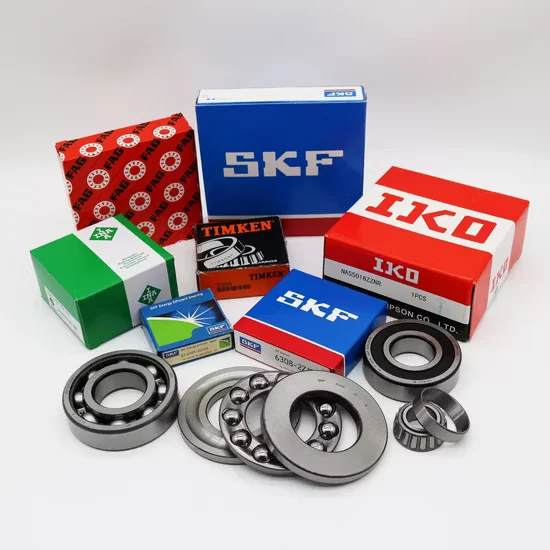
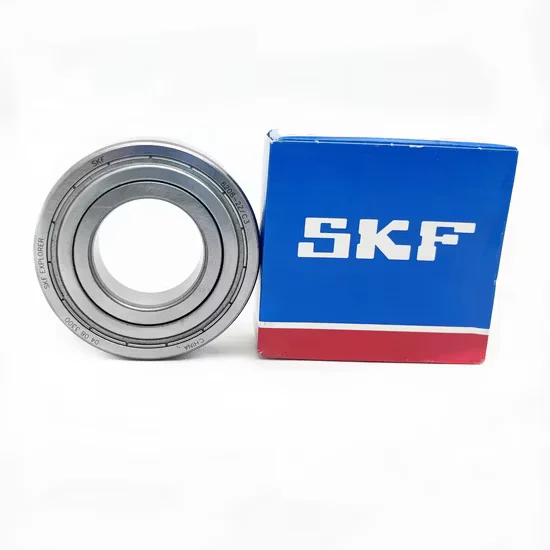
Genuine Bearings in Worm Gearboxes Wholesale Supplier
- Applications & Industries
- Sep 16, 2026
- author
Higher load ratings do not guarantee survival in worm gearboxes.
Selecting genuine bearings with correct internal clearance and verified material traceability is the only reliable method to prevent catastrophic failure under the combined axial and radial loads typical of worm reducer applications.
The hum of a heavy industrial gearbox is often mistaken for smooth operation, but beneath that sound lies a complex battle between friction, heat, and mechanical stress. I recall standing on the floor of a trade show in Hanover, watching a German maintenance manager point at a disassembled worm reducer. The tapered roller bearing cage was severely deformed, twisted into an unrecognizable shape. It was not a design flaw. The culprit was a batch of refurbished bearings mixed into a new shipment, lacking the structural integrity to handle the specific thrust loads generated by the worm wheel. That incident reinforced a critical truth: in heavy-duty power transmission, the authenticity and specification of the bearing are not just procurement details—they are operational lifelines. For those sourcing components for such demanding environments, finding a reliable Genuine Bearings in Worm Gearboxes Wholesale Supplier is essential to avoid the hidden costs of premature failure.
Why Do Bearings Fail in Worm Gearboxes?
Worm gearboxes generate unique combined loads that standard radial bearings cannot withstand.
Unlike parallel shaft gearboxes, worm reducers create significant axial thrust alongside radial forces due to the sliding action between the worm and the wheel. This dual-load condition places extreme stress on the bearing assembly. When bearings fail in these applications, it is rarely due to simple wear. More often, it is the result of cage deformation, roller fatigue, or thermal seizure caused by improper clearance selection.
The sliding contact in worm gears generates more heat than rolling contact gears. This thermal expansion changes the internal geometry of the bearing housing and the shaft. If the bearing selected has insufficient internal clearance, the rollers bind as the temperature rises, leading to rapid overheating and eventual seizure.. Conversely, excessive clearance leads to misalignment and uneven load distribution, causing early spalling on the raceways.
I have seen numerous cases where maintenance teams replaced failed bearings with identical part numbers, only to see the same failure recur within weeks. The issue was not the part number, but the source. Non-genuine or improperly stored bearings often suffer from microscopic surface defects or compromised lubricant seals. In a high-heat worm gearbox environment, these minor defects accelerate into major failures. A Genuine Bearings in Worm Gearboxes Wholesale Supplier understands that the operating environment dictates the bearing choice, not just the shaft diameter.
How to Select the Right Bearing Type for Worm Reducers?
Tapered and spherical roller bearings are the industry standard for handling heavy axial and radial forces in worm reducers.
Selecting the correct bearing type requires understanding the load direction and magnitude. Worm gearboxes typically require bearings that can accommodate both radial and axial loads simultaneously. Deep groove ball bearings, while common in electric motors, are generally unsuitable for the high-thrust conditions of heavy-duty worm reducers.
| Bearing Type | Axial Load Capacity | Radial Load Capacity | Misalignment Tolerance | Suitability for Worm Gearboxes |
|---|---|---|---|---|
| Tapered Roller | High | High | Low | Excellent for paired arrangements |
| Spherical Roller | Moderate | Very High | High | Ideal for shaft deflection |
| Cylindrical Roller | None/Low | Very High | Low | Only for pure radial loads |
| Deep Groove Ball | Low | Moderate | Low | Unsuitable for heavy thrust |
Tapered roller bearings are frequently used in pairs to counteract axial thrust from both directions. Their geometry allows them to handle heavy combined loads effectively. However, they require precise adjustment of internal clearance during installation. Spherical roller bearings, on the other hand, offer self-aligning capabilities, which can compensate for slight shaft misalignments or housing distortions common in large industrial gearboxes..
The choice also depends on the specific application. For instance, in mining crushers where shock loads are frequent, spherical roller bearings provide the necessary robustness. In precision machine tools using worm drives, tapered roller bearings offer the rigidity required for accurate positioning. When consulting with a Genuine Bearings in Worm Gearboxes Wholesale Supplier, providing detailed load diagrams and operating conditions ensures the recommended bearing matches the actual mechanical demands.
What Are the Hidden Costs of Non-Genuine Bearings?
Counterfeit or substandard bearings increase total ownership cost through unplanned downtime and secondary damage.
The initial savings from purchasing cheaper, non-genuine bearings are often illusory. In reality, these components lack the material traceability and quality control of authentic products. Counterfeit bearings may use inferior steel with higher inclusion levels, leading to premature fatigue and spalling..
Consider a cement plant reducer case. The facility opted for lower-cost alternatives for routine maintenance. Within months, the operating temperature of the gearbox rose significantly, indicating increased friction. Upon inspection, the bearings showed signs of premature wear and incorrect internal clearance. The resulting downtime and repair costs far exceeded the initial savings. The maintenance team had to replace not just the bearings, but also damaged shafts and housing components.
Another common issue is the mixing of refurbished bearings with new stock. As seen in the Hanover incident, refurbished bearings may look acceptable externally but have internal damage or weakened cages. In a marine winch gearbox, exposure to salt spray and high humidity accelerates corrosion. Non-genuine bearings often lack proper sealing or corrosion-resistant treatments, leading to pitting and rapid failure..
Working with a verified Genuine Bearings in Worm Gearboxes Wholesale Supplier mitigates these risks. Authentic products come with full documentation, including material certificates and batch traceability. This ensures that every bearing meets the manufacturer’s specifications for hardness, precision, and durability. The cost of verification is negligible compared to the cost of a production line stoppage.
How to Ensure Bearing Authenticity and Quality During Sourcing?
Require full traceability documentation and verify supplier audits to guarantee bearing authenticity.
Sourcing genuine bearings involves more than checking part numbers. It requires a rigorous verification process to ensure the components are authentic and suitable for the application. Key steps include requesting original manufacturer certificates, verifying batch numbers, and conducting visual inspections upon receipt.
- Request Traceability Documents: Always ask for the original certificate of conformity from the bearing manufacturer. This document should include the batch number, production date, and material specifications..
- Verify Supplier Credentials: Ensure the supplier is an authorized distributor or has a proven track record of supplying genuine products. Check for audits or certifications that validate their supply chain integrity.
- Inspect Packaging and Markings: Genuine bearings come in high-quality packaging with clear, laser-etched markings. Counterfeit products often have poor printing, misspelled brand names, or inconsistent font sizes.
- Check Internal Clearance: For critical applications, verify the internal clearance class (e.g., C3, C4) matches the technical requirements. Incorrect clearance is a leading cause of thermal failure in worm gearboxes.
A European wind farm operator once faced repeated gearbox failures due to counterfeit bearings sourced from an unauthorized vendor. The bearings lacked the necessary C3 clearance for thermal expansion, leading to frequent seizures. By switching to a verified Genuine Bearings in Worm Gearboxes Wholesale Supplier, they secured components with proper documentation and correct specifications, significantly improving reliability.
Conclusion
Authenticity and correct specification are non-negotiable for worm gearbox reliability.
Selecting the right bearings for worm gearboxes requires a deep understanding of load dynamics, thermal expansion, and material quality. Relying on non-genuine or improperly specified components invites catastrophic failure and costly downtime. By prioritizing traceability, verifying supplier credentials, and choosing the correct bearing type for the application, operators can ensure long-term performance. Partnering with a knowledgeable Genuine Bearings in Worm Gearboxes Wholesale Supplier provides the technical support and authentic products needed to keep heavy industrial machinery running smoothly.
Related Applications
This article connects to the application areas below. Open one to see the bearing categories used there.