Genuine Bearings for Cordless Drills Wholesale Supplier
- Applications & Industries
- Sep 16, 2026
- author
Cheap micro bearings do not save costs; they scrap the entire drill.
Sourcing genuine, high-speed deep-groove ball bearings from authorized channels is the only reliable method to prevent rotor sweep and ensure longevity in cordless power tools. Distributors must prioritize micron-level precision and authentic traceability over initial unit price to protect their reputation and reduce warranty claims.
I still remember the humidity in Jakarta during the rainy season. The air felt heavy, sticking to everything, including the inventory in a local hardware workshop I was supplying. I had sourced a batch of budget-friendly micro bearings for a line of cordless drills, believing the specifications matched the requirements. Within weeks, the returns started pouring in. The drills were not just failing; they were seizing completely. The rotors had swept, grinding against the stators because the bearings could not handle the combined stress of high RPMs and thermal expansion in the tropical heat. That failure rate dropped from double digits to near zero only after I switched to verified, high-precision components with proper clearance ratings. This experience reshaped my approach to sourcing, moving me from simple procurement to a rigorous focus on technical authenticity and supply chain transparency.
Understanding why these small components dictate the fate of an entire power tool requires looking beyond the basic function of reducing friction. The demands placed on bearings in handheld power tools are extreme, involving rapid acceleration, high rotational speeds, and significant vibrational loads.
Why Do Bearings Dictate Cordless Drill Lifespan?
High-RPM heat and vibration demand micron-level precision to prevent catastrophic rotor failure.
In a cordless drill, the bearing is not merely a passive component; it is the critical interface that maintains the alignment of the rotor within the stator. When a user pulls the trigger, the motor spins up to thousands of revolutions per minute almost instantly. This rapid acceleration generates significant centrifugal force. If the bearing has even a micron-level dimensional deviation, this force translates into vibration rather than smooth rotation.
The heat generated during continuous use exacerbates any existing imperfections. Standard industrial bearings often have clearances designed for slower, heavier applications. In a high-speed drill motor, these standard clearances can lead to excessive internal movement, causing the balls to skid rather than roll. This skidding generates intense localized heat, which degrades the grease and expands the metal components. Eventually, the rotor loses its concentricity and contacts the stator, a failure known as rotor sweep. This is not a gradual wear issue; it is a sudden, catastrophic failure that renders the tool unusable.
I have seen distributors lose entire contracts because they assumed all deep-groove ball bearings were interchangeable. They are not. The tolerance class, often defined by ABEC or P-level standards, determines whether a bearing can survive the dynamic loads of a power tool. A bearing rated for low-speed agricultural machinery will fail prematurely in a drill, regardless of its load capacity rating. The key is matching the bearing’s precision grade to the motor’s operational profile.
Selecting the right bearing involves more than just checking the outer diameter and bore size. It requires understanding the dynamic load ratings and the specific lubrication needs of high-speed applications.
What Bearing Types Suit High-Speed Drill Motors?
Deep-groove ball bearings and needle bearings dominate, but require specific clearance and cage designs for high-speed stability.
For most cordless drills, deep-groove ball bearings are the standard choice due to their ability to handle both radial and axial loads. However, not all deep-groove bearings are created equal. The internal geometry, particularly the cage design and the clearance class, plays a pivotal role in performance at high speeds.
| Feature | Standard Industrial Bearing | High-Speed Power Tool Bearing |
|---|---|---|
| Clearance Class | C0 or Standard | C3 or Specific High-Speed Clearance |
| Cage Material | Steel or Basic Polymer | Reinforced Polyamide or Phenolic Resin |
| Grease Type | General Purpose Lithium | High-Temperature, High-Speed Synthetic |
| Precision Grade | P0 (Normal) | P5 or P6 (Higher Precision) |
| Seal Type | Basic Rubber Shield | Low-Friction Contact or Non-Contact Seal |
Standard industrial bearings often use steel cages, which are durable but heavy. At high RPMs, the inertia of a steel cage can cause instability. High-speed bearings for power tools typically use reinforced polyamide or phenolic resin cages. These materials are lighter and have better damping properties, reducing vibration and allowing for smoother operation at elevated speeds.
The clearance class is another critical factor. A standard C0 clearance may be too tight when the bearing heats up during operation, leading to preload and increased friction. A C3 clearance provides additional space for thermal expansion, ensuring the bearing remains free-running even under sustained load. This is particularly important in cordless drills, where users may push the tool to its limits for extended periods.
Needle bearings are sometimes used in the gear reduction stages of the drill, where space is limited and radial loads are high. However, for the motor itself, deep-groove ball bearings remain the preferred solution due to their versatility and ability to handle misalignment. Sourcing these specific variants requires a supplier who understands the nuances of power tool applications, not just general industrial needs.
Even with the right bearing type, environmental factors can quickly degrade performance if the sealing and lubrication are not adequate.
How Do Harsh Environments Accelerate Bearing Failure?
Humidity and dust ingress destroy cheap seals, leading to rapid grease degradation and corrosion.
Power tools are rarely used in clean, climate-controlled environments. Construction sites, workshops, and outdoor projects expose drills to dust, moisture, and temperature fluctuations. In tropical climates like Southeast Asia, the combination of high humidity and heat creates a perfect storm for bearing failure.
Cheap bearings often come with basic rubber shields that offer minimal protection against fine dust and moisture. Once contaminants enter the bearing raceway, they act as abrasives, accelerating wear on the balls and races. More critically, moisture can wash away or emulsify the grease, leaving the metal surfaces unprotected. This leads to corrosion, which increases friction and generates more heat, creating a vicious cycle of degradation.
I recall a case where a distributor in a coastal region faced a spike in warranty claims. The drills were being used in marine construction, where salt spray and humidity were constant. The original bearings had standard seals that could not withstand the corrosive environment. Switching to bearings with enhanced sealing options and corrosion-resistant grease significantly reduced the failure rate. The difference was not just in the bearing itself but in the holistic approach to protecting the internal components from the external environment.
Grease compatibility is another often-overlooked factor. Standard lithium-based greases may break down at the high temperatures generated by high-speed motors. High-performance synthetic greases are designed to maintain their viscosity and lubricating properties over a wider temperature range, ensuring consistent performance even under extreme conditions. Sourcing bearings with the correct grease fill is essential for maintaining reliability in harsh environments.
For distributors and OEMs, securing these specialized components can be challenging, especially when dealing with mixed orders and varying minimum order quantities.
How to Source Genuine Micro Bearings for Mixed Orders?
Authentic traceability and flexible MOQs are vital when consolidating micro parts with standard industrial lines.
One of the biggest challenges for regional distributors is sourcing small quantities of high-precision micro bearings alongside larger volumes of standard industrial bearings. Many official brand channels have high minimum order quantities (MOQs) that make it impractical for smaller distributors to stock genuine parts. This often leads them to seek alternative sources, where the risk of counterfeits is high.
Counterfeit bearings may look identical to genuine products but lack the precise manufacturing tolerances and material quality required for high-speed applications. Using a counterfeit bearing in a cordless drill is a ticking time bomb. The cost of a single warranty claim, including shipping and replacement, far exceeds the savings from buying cheaper, unverified parts.
To mitigate this risk, distributors need a supplier who can provide genuine products with full traceability documentation. This includes original manufacturer certificates and customs documentation that verify the origin of the goods. Consolidating micro bearings with standard industrial lines into full container shipments allows distributors to achieve better pricing while maintaining authenticity.
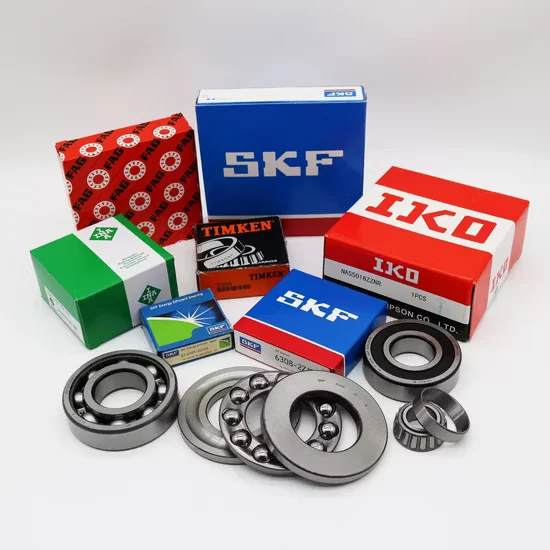
I work with clients who need to mix SKUs from brands like SKF, NSK, and FAG in a single shipment. By leveraging a broad inventory and established relationships with manufacturers, it is possible to fulfill these mixed orders without compromising on quality. The key is transparency. Every batch should come with verifiable documentation, ensuring that the bearings meet the specified standards. This approach not only protects the distributor’s reputation but also ensures that end-users receive reliable, long-lasting tools.
Sourcing is not just about finding the lowest price; it is about building a supply chain that supports the technical requirements of the application.
Conclusion
Precision micro bearings dictate cordless drill lifespan; sourcing genuine, high-speed deep-groove ball bearings prevents catastrophic rotor failures and ensures ROI.
The difference between a reliable power tool and a costly warranty claim often comes down to the quality of its smallest components. By prioritizing authentic, high-precision bearings with appropriate clearance and sealing, distributors can significantly reduce failure rates and build trust with their customers. Genuine Bearings for Cordless Drills Wholesale Supplier services must focus on traceability and technical suitability rather than just cost.