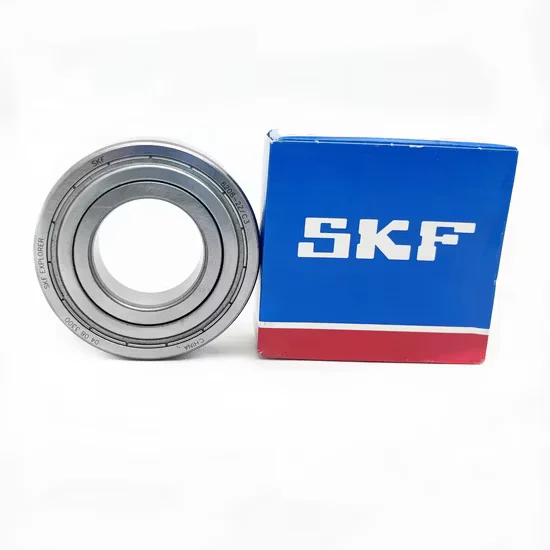
SKF vs C&U Bearings: Bulk OEM Supply & Wholesale
- Brands & Alternatives
- Sep 15, 2026
- author
Premium brands are not always the right choice for every slot in your machinery.
Choosing between SKF and C&U for volume OEM supply requires matching the bearing performance tier to specific operating conditions rather than applying a single brand standard across all components. This strategy prevents catastrophic failures in critical zones while optimizing procurement costs in general applications.
The humidity in Lagos clings to everything, including the rusted housing of a jaw crusher that had stopped dead. I stood there watching the site manager wipe sweat from his forehead, pointing at the shattered remains of a cage inside what was supposed to be a cost-saving replacement bearing. He had swapped out the original premium heavy-duty units for a cheaper, standard series alternative to cut initial procurement costs. The savings on the invoice were visible, but the cost of the subsequent downtime, the emergency air freight for replacements, and the lost production output dwarfed those initial gains by a massive margin. That day taught me that bulk bearing sourcing is not a simple game of picking the lowest price tag or blindly sticking to one famous logo. It is about precision matching.
Understanding the distinct roles these brands play in a global supply chain helps manufacturers and distributors avoid such costly mismatches. When we look at SKF vs C&U bearings, we are comparing two different philosophies of engineering and market positioning that can coexist profitably within a single operation if managed correctly.
What Are the Core Differences Between SKF and C&U?
SKF leads in extreme-load precision and specialized application engineering, while C&U dominates in cost-effective standardization for high-volume general use.
The fundamental difference lies not just in the brand name, but in the intended operational envelope. SKF has long established itself as a pioneer in tribology and failure analysis, offering solutions that reach higher precision grades and handle more complex loading scenarios. Their product lines often include advanced material treatments and sealing technologies designed for harsh environments where failure is not an option.
C&U, as one of the largest bearing manufacturers in China, has focused its strength on massive scale production of standard deep-groove ball bearings and common tapered roller designs. Their advantage is consistency in high-volume batches and competitive pricing for applications that do not push the physical limits of steel fatigue. When evaluating SKF vs C&U bearings, it is crucial to recognize that C&U has significantly improved its quality control processes, making their standard series a viable alternative for many non-critical industrial uses.
| Feature | Premium Tier (e.g., SKF) | Economy/Standard Tier (e.g., C&U) |
|---|---|---|
| Primary Strength | Extreme load capacity, specialized seals, global technical support | High-volume consistency, competitive pricing, standard dimension availability |
| Precision Range | Up to very high precision classes (P4/P2 equivalent) | Standard commercial precision (P0/P6 equivalent) |
| Material Traceability | Full batch-level certification available | Sample-level or batch-level depending on order size |
| Ideal Application | Critical heavy-duty machinery, high-speed spindles, harsh environments | General motors, agricultural equipment, light conveyors, non-critical transmissions |
A European wind farm operator once shared how they standardized on premium brands for the main shaft and gearbox inputs due to the inaccessible nature of the turbines, but used reliable domestic brands for auxiliary yaw mechanisms. This hybrid approach reduced their overall spare parts budget without compromising the integrity of the power generation core. When sourcing SKF vs C&U bearings, understanding this tiered application is key to smart procurement.
How to Match Bearing Brands to Specific OEM Applications?
Assign premium brands to critical heavy-duty zones and economy brands to general transmission parts to optimize both reliability and cost.
The mistake many purchasers make is assuming that a higher price tag guarantees better performance in every scenario. In reality, over-specifying a standard application with a premium bearing wastes capital, while under-specifying a heavy-duty application with a standard bearing invites disaster. The correct method involves a detailed analysis of the load, speed, and environmental conditions for each specific point in the machinery.
For instance, in a general motor OEM scenario, the deep-groove ball bearings supporting the rotor often operate under moderate loads and stable speeds. Here, switching to a reputable standard brand like C&U can reduce procurement costs noticeably while maintaining stable run-time. The dimensional tolerances and internal clearance options available in standard series are often perfectly sufficient for these duties.
Conversely, consider the main shaft of a mining conveyor or the pivot points of an excavator. These components face shock loads, contamination, and misalignment. Here, the advanced sealing solutions and robust cage designs found in premium brands provide a necessary safety margin. I have seen cases where the lack of proper sealing in a standard bearing led to rapid grease contamination and premature wear in a dusty quarry environment. The initial savings were erased within weeks by the need for frequent regreasing and early replacement.
When deciding on SKF vs C&U bearings, map out your bill of materials. Identify the critical path components where failure causes total line stoppage. Allocate your budget to secure premium quality for these points. For the non-critical, high-turnover parts, utilize the cost advantages of standard manufacturers. This strategic segmentation ensures that you are not paying for performance you do not need, nor risking reliability where you cannot afford it.
What Are the Hidden Costs of Wrong Brand Selection?
Improper substitution causes premature wear, leading to massive unplanned downtime that far exceeds initial procurement savings.
The most dangerous aspect of bearing selection is the invisible cost of failure. A bearing that fails prematurely does not just cost the price of the replacement unit. It triggers a cascade of expenses: labor for emergency disassembly, potential damage to adjacent components like shafts and housings, and the most significant factor, lost production revenue.
In a mixed-batch MRO scenario, consolidating premium and economy brands for different machinery zones can optimize overall maintenance budgets, but only if the selection is correct. If a standard bearing is mistakenly installed in a high-vibration zone designated for a premium unit, the fatigue life drops dramatically. The L10 life calculation, which estimates the number of revolutions a bearing can endure before fatigue failure, becomes irrelevant if the actual operating conditions exceed the design limits of the cheaper component.
I recall a textile mill in Southeast Asia that attempted to cut costs by replacing all imported spindle bearings with a lower-cost alternative. While the initial purchase price was halved, the increased frequency of vibration-related failures led to a noticeable drop in fabric quality and a surge in maintenance overtime. The total cost ended up being several times higher than the original setup. This highlights why understanding the nuances of SKF vs C&U bearings is vital. It is not about which brand is "better" in absolute terms, but which brand is appropriate for the specific stress profile of the application.
Furthermore, inventory management suffers when wrong selections lead to unpredictable failure rates. Instead of planned replacements during scheduled shutdowns, maintenance teams are forced into reactive mode, requiring expensive expedited shipping and disrupting production schedules. The hidden cost is the loss of predictability and control over your operations.
How to Ensure Quality in Mixed-Brand Volume Sourcing?
Require full traceability, ISO compliance, and technical selection support from suppliers to mitigate risks in multi-brand procurement.
Sourcing from multiple brands introduces complexity in quality assurance. To manage this effectively, buyers must enforce strict documentation requirements. Genuine original bearings should come with complete traceability documentation, allowing you to verify the manufacturing batch and material certifications. This is non-negotiable for critical applications.
When dealing with a global full-range bearing supplier, leverage their technical expertise. A competent partner will not just ship boxes; they will offer cross-brand equivalent model consultation. They can help you identify where a standard C&U bearing is a safe alternative to an SKF unit and where it is not. This technical selection support is invaluable in avoiding mismatch disasters.
Flexible MOQs are also essential. You may need a single unit for an emergency repair of a critical premium bearing, while simultaneously ordering a container load of standard bearings for routine maintenance. A supplier who can handle both ends of this spectrum simplifies your logistics. Ensure that the supplier provides inspection services and has a robust system for verifying authenticity. Counterfeit bearings are a persistent risk in the global market, and buying from authorized or highly reputable channels is the best defense.
By establishing a relationship with a supplier who understands the intricacies of SKF vs C&U bearings, you gain a partner who can help you navigate the trade-offs between cost and performance. They can provide the technical datasheets needed for your local market promotion and ensure that every bearing, whether premium or standard, meets the required ISO compliance levels. This approach transforms bearing procurement from a transactional task into a strategic advantage.
Conclusion
Smart bearing procurement is about strategic matching, not just brand loyalty or price hunting.
Balancing premium and standard brands allows OEMs and distributors to optimize costs without sacrificing reliability. By understanding the specific strengths of each tier, you can build a resilient supply chain that supports both heavy-duty performance and economic efficiency.
Related Applications
This article connects to the application areas below. Open one to see the bearing categories used there.