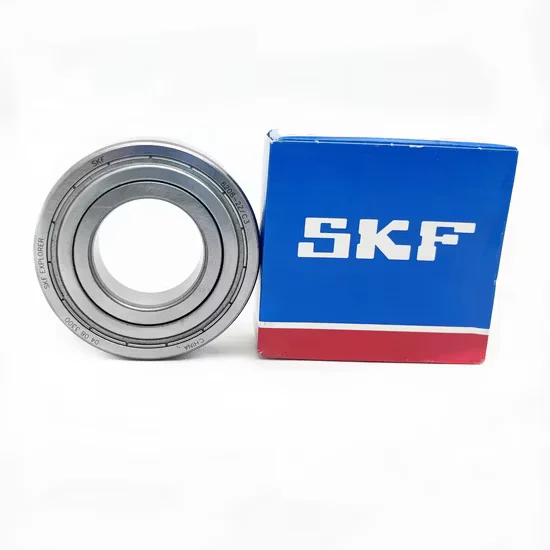
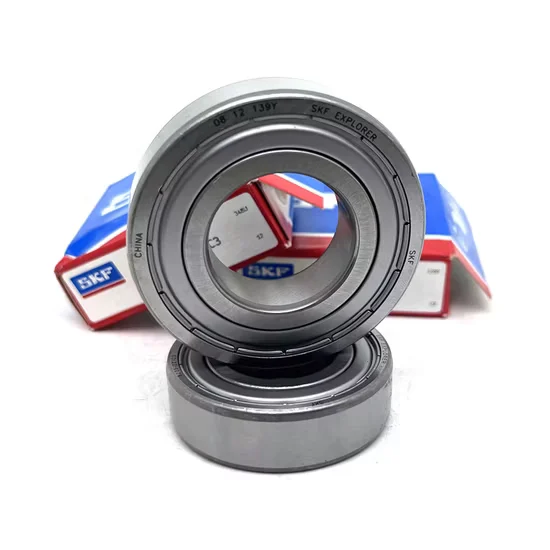
SKF 16004 Deep Groove Ball Bearing Wholesale Supplier for Sale
- Product & Series Guides
- Sep 16, 2026
- author
Cheap bearings cost more than genuine ones. The initial savings vanish the moment a pump seizes due to incorrect internal clearance in a counterfeit unit. The core specifications for an SKF 16004 deep groove ball bearing are a 20mm bore, 42mm outer diameter, and 8mm width, with a dynamic load rating suitable for high-speed applications where authenticity is verified through traceable steel stamps and official documentation rather than price alone.
I still remember the smell of burnt oil in that workshop in Qingdao. A client had rushed in, furious, holding a seized water pump shaft. He had bought a batch of what he thought were budget-friendly replacements for his fleet. They looked identical to the real thing from the outside. But inside, the raceways were pitted, and the cages were warped. It wasn’t bad luck; it was bad sourcing. We spent hours checking the faint steel stamps under magnifying glasses and cross-referencing batch numbers with customs declarations. That day taught me that in the bearing trade, the paper trail is just as critical as the metal itself.
Understanding the difference between a functional component and a ticking time bomb requires looking beyond the box. For distributors and MRO operators, knowing exactly what to check prevents costly downtime.
What Are the Core Dimensions and Specs of SKF 16004?
Precision starts with the basics, but reliability lives in the tolerances. When you specify an SKF 16004, you are not just asking for a ring of steel; you are requesting a specific engineering solution designed for light to moderate loads at high speeds. The physical envelope is compact, making it ideal for electric motors, small pumps, and household appliances where space is at a premium.
The fundamental dimensions are non-negotiable. The bore diameter is exactly 20mm, allowing it to fit standard shafts in this size class. The outer diameter measures 42mm, and the width is a slender 8mm. This slim profile is characteristic of the 16000 series, which prioritizes low friction and high rotational speed over heavy radial load capacity.
However, two units can share these exact external measurements and perform vastly differently. The distinction lies in the internal geometry and material quality. Genuine units maintain strict control over radial internal clearance, often falling into the C3 range for standard applications, which allows for thermal expansion without preloading the balls. Counterfeit versions often ignore these tolerances, leading to either excessive play or immediate binding upon heating up.
| Parameter | Specification | Note |
|---|---|---|
| Bore Diameter | 20 mm | Standard metric shaft fit |
| Outer Diameter | 42 mm | Compact housing requirement |
| Width | 8 mm | Low-profile design |
| Weight | Approx. 0.05 kg | Light weight reduces rotational inertia |
| Dynamic Load Rating | Specific to series | Verify via official catalog |
| Static Load Rating | Specific to series | Verify via official catalog |
A European wind farm operator once replaced a batch of generator sensors using what appeared to be correct 16004 units. Within weeks, vibration analysis showed abnormal frequencies. The issue wasn’t the size; it was the surface finish of the raceways, which lacked the super-finished smoothness of genuine SKF production. This roughness generated heat and noise, forcing a complete teardown.
For buyers, this means that verifying the part number is not enough. You must ensure the supplier can provide the technical datasheet that matches the physical item, confirming that the load ratings and clearance classes align with your application’s demands.
How Do SKF 16004 Specs Compare to Equivalent Brands?
Brand loyalty matters less than batch consistency. In global sourcing, you will often encounter equivalents from other major manufacturers like NTN, KOYO, or NSK. While these are reputable brands, mixing them in a single machine assembly without understanding their subtle differences can lead to uneven wear patterns.
The primary difference between an SKF 16004 and its counterparts from other premium brands often lies in the lubrication formulation and cage design. SKF typically uses specific grease formulations optimized for their steel quality, while others may use different base oils or thickeners. Mixing incompatible greases can cause chemical breakdown, leading to sludge formation and bearing failure.
When evaluating equivalents, focus on the precision grade. Most standard industrial applications require P0 (Normal) precision. However, high-speed spindles may need P5 or P4. A generic "equivalent" might meet the dimensional specs but fail the runout tolerance required for precision machinery.
| Feature | SKF 16004 | Typical Premium Equivalent | Generic/Unbranded |
|---|---|---|---|
| Steel Quality | High-purity vacuum degassed | High-quality standard steel | Variable, often inconsistent |
| Cage Material | Stamped steel or polymer | Stamped steel or brass | Often low-grade steel |
| Lubrication | Optimized proprietary grease | Standard industrial grease | Unknown or basic lithium |
| Traceability | Full batch tracking | Limited batch tracking | None |
| Price Point | Premium | Moderate | Low |
A Middle East steel mill faced repeated failures in their conveyor roller assemblies. They had switched to a cheaper alternative brand to cut costs. The bearings fit perfectly, but the cage material was not suited for the high-temperature environment. The cages deformed, causing the balls to cluster and seize. Switching back to a verified brand with appropriate heat-resistant specifications resolved the issue, despite the higher initial unit cost.
For distributors, this highlights the importance of offering technical consultation. Clients may ask for the cheapest option, but providing data on why a specific brand’s material composition suits their environment adds value and prevents returns.
Why Do Counterfeit 16004 Bearings Fail in Pumps?
Failure is rarely sudden; it is usually a slow accumulation of microscopic errors. Pump applications are particularly harsh on bearings due to constant vibration, potential moisture ingress, and continuous operation. A counterfeit SKF 16004 might look perfect in the box, but under load, its flaws become catastrophic.
The most common cause of failure in fake bearings is incorrect internal clearance. As mentioned, genuine bearings are manufactured to tight tolerances. Counterfeits often have wider variances. If the clearance is too tight, the bearing heats up rapidly as the balls expand against the races. If it is too loose, vibration increases, leading to fretting corrosion and eventual fatigue spalling.
Another critical factor is the hardness of the steel. Genuine SKF bearings use high-carbon chromium steel that is heat-treated to a specific hardness level, ensuring resistance to deformation. Counterfeit units often use softer steel to save on material costs. Under the radial and axial loads of a pump, this softer steel deforms, creating flat spots on the raceways. This leads to increased noise, vibration, and ultimately, shaft seizure.
I recall a case involving a municipal water treatment plant. They experienced a series of pump failures every few months. The maintenance team kept replacing the bearings with new ones from a local vendor who offered significant discounts. When we analyzed the failed parts, we found that the steel composition did not match the required grade. The raceways had worn down significantly faster than expected. The "savings" from the cheap bearings were dwarfed by the cost of emergency repairs and downtime.
This scenario underscores why verifying the source is crucial. It is not just about avoiding fakes; it is about ensuring the material properties match the operational stresses. For MRO operators, keeping a stock of verified genuine parts is an insurance policy against unplanned shutdowns.
How to Verify Genuine SKF 16004 Specs and Authenticity?
Trust, but verify with documentation. In a market flooded with replicas, visual inspection is only the first step. True verification requires a multi-layered approach involving packaging, marking, and traceability documents.
Start with the packaging. Genuine SKF boxes have high-quality printing, precise logos, and specific security features such as holograms or QR codes that link to the SKF verification portal. The box should also display the batch number and manufacturing date clearly. Counterfeit packaging often has blurry text, misspelled words, or low-quality cardboard.
Next, inspect the bearing itself. The steel stamp on the outer ring should be crisp, evenly spaced, and deep enough to be felt but not so deep as to create stress risers. The font style and spacing are standardized by SKF. Any deviation in font weight or alignment is a red flag.
The most robust verification method is requesting traceability documentation. A reputable supplier will provide a certificate of origin and a test report linked to the specific batch number on the bearing. This document traces the product from the manufacturer’s production facilities to the end user. Without this paper trail, the bearing’s authenticity cannot be guaranteed.
- Check the Packaging: Look for high-quality printing, security holograms, and clear batch numbers.
- Inspect the Steel Stamp: Ensure the font is crisp, evenly spaced, and matches SKF standards.
- Verify the Batch Number: Cross-reference the batch number on the bearing with the provided documentation.
- Request Traceability Docs: Ask for the certificate of origin and test reports for the specific batch.
- Use Official Verification Tools: Scan QR codes or use online portals provided by the manufacturer.
A buyer in Southeast Asia once ordered a large container of bearings. Before clearing customs, they requested the full traceability package for a random sample of SKUs. The supplier could not provide matching batch numbers for the 16004 units. The shipment was held, and further inspection revealed a mix of genuine and counterfeit items. By insisting on documentation upfront, the buyer avoided a potentially disastrous inventory contamination.
For global distributors, establishing a supply chain that prioritizes this level of transparency is essential. It protects your reputation and ensures your clients receive products that perform as specified. Our approach involves maintaining complete traceability documentation for all genuine SKF bearings, ensuring that every unit can be traced back to its source. This commitment to quality and transparency supports flexible MOQs, allowing both small emergency orders and large bulk consolidations to be handled with the same level of rigor.
Conclusion
Authenticity is the foundation of performance. Selecting the right SKF 16004 deep groove ball bearing involves more than just matching dimensions; it requires verifying the integrity of the supply chain. By focusing on traceability, understanding technical specifications, and recognizing the signs of counterfeits, buyers can ensure reliable operation and avoid costly failures. Prioritizing genuine products with full documentation safeguards both equipment longevity and operational efficiency.
Related Applications
This article connects to the application areas below. Open one to see the bearing categories used there.