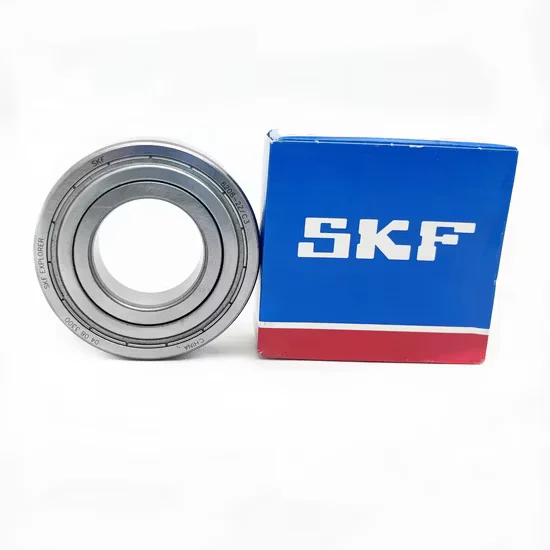
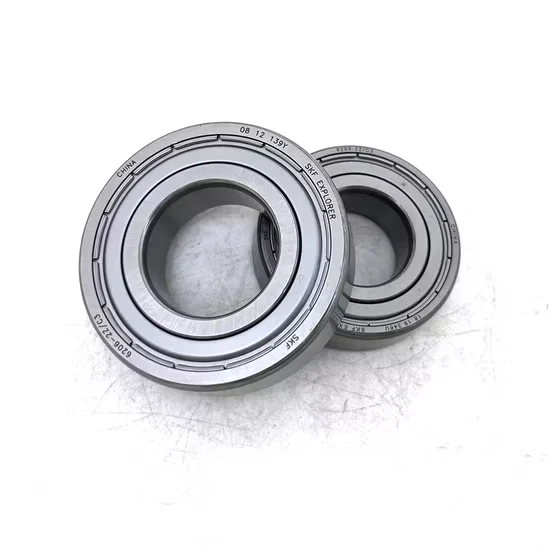
Helical Gear Reducer Bearings: Genuine SKF/FAG Wholesale Supplier
- Applications & Industries
- Sep 16, 2026
- author
Premium brand bearings do not guarantee longevity if installation clearance is ignored.
Selecting the right bearings for helical gear reducers requires matching load conditions with precise clearance and installation practices, not just choosing premium brands. Most premature failures stem from improper assembly rather than material defects. Operators must prioritize thermal expansion compensation and alignment verification over simple brand preference to ensure operational stability in heavy-duty industrial applications.
I still remember the heat radiating from a gearbox housing during a routine test run early in my career. The assembly team had installed high-grade spherical roller bearings but failed to measure the initial clearance accurately. Within minutes of startup, the temperature spiked, leading to immediate seizure. That incident shifted my focus from merely sourcing parts to understanding the mechanical dynamics inside the housing. Later, while managing supply chains for mining operations in Chile, I observed a similar pattern. A batch of genuine bearings sent to a copper mine failed due to on-site installation errors, causing roller spalling after only a short period of operation. These experiences highlight that the physical integrity of Bearings in Helical Gear Reducers depends as much on human procedure as on manufacturing quality.
Understanding these mechanical nuances helps distributors and OEMs avoid costly downtime. The following sections break down why failures occur, how to select the correct type, and what installation parameters matter most.
Why Do Bearings Fail in Helical Gear Reducers?
Misalignment and improper clearance are primary culprits, not just excessive load.
Helical gears generate both radial and axial forces, creating complex stress patterns within the reducer housing. While operators often blame heavy loads for bearing failure, the root cause is frequently geometric. When shafts are misaligned, even slightly, the load distribution across the rolling elements becomes uneven. This concentration of stress leads to premature fatigue and spalling.
In many cases, the issue lies in the thermal management of the assembly. Helical gear reducers operate at elevated temperatures, causing the shaft and housing to expand. If the bearing clearance is too tight, this thermal expansion has nowhere to go, resulting in internal preload that generates excessive heat. Conversely, excessive clearance allows for vibration and impact loading. I have seen maintenance teams replace bearings multiple times without addressing the underlying housing distortion or shaft deflection issues.
The solution involves rigorous inspection of the housing bore and shaft journals before installation. Using dial indicators to verify runout ensures that the bearing seats are concentric. Furthermore, monitoring the temperature rise rate during the initial run-in period provides early warning signs of clearance issues. If the temperature stabilizes quickly, the fit is likely correct. A continuous climb suggests friction due to insufficient clearance or poor lubrication.
How to Select the Right Bearing Type?
Spherical roller bearings handle misalignment; cylindrical rollers suit high radial loads.
Choosing the correct bearing type for Bearings in Helical Gear Reducers depends on the specific force vectors present in the application. Helical gears produce significant axial thrust alongside radial loads. Therefore, the bearing arrangement must accommodate both. Spherical roller bearings are often the preferred choice for the output shafts where misalignment might occur due to housing deflection or foundation settling. Their self-aligning capability compensates for minor angular errors, protecting the rolling elements from edge loading.
For high-speed input shafts where precision and rigidity are critical, cylindrical roller bearings offer superior radial load capacity. However, they cannot handle axial loads independently, requiring a separate thrust bearing or an angular contact pair. Mixing these types incorrectly can lead to catastrophic failure. For instance, using a deep groove ball bearing in a position subjected to heavy axial shock loads will result in rapid cage deformation and ball fracture.
| Bearing Type | Radial Load Capacity | Axial Load Capacity | Misalignment Tolerance | Best Application Area |
|---|---|---|---|---|
| Spherical Roller | High | Moderate | High | Output shafts, heavy shock loads |
| Cylindrical Roller | Very High | Low (None alone) | Low | High-speed input shafts, pure radial loads |
| Tapered Roller | High | High | Low | Combined heavy radial and axial loads |
| Angular Contact Ball | Moderate | High (One direction) | Low | Precision high-speed applications |
When evaluating options, consider the operating environment. In mining or cement plants, where dust and vibration are prevalent, the robustness of the cage design becomes crucial. Solid brass or steel cages offer better durability than polymer cages under extreme conditions.
What Are the Critical Installation Parameters?
Precise clearance measurement and thermal expansion compensation are mandatory.
Installation is where theoretical selection meets physical reality. The most critical parameter is the internal radial clearance. For Bearings in Helical Gear Reducers, this clearance must account for the interference fit on the shaft and the operating temperature. A common mistake is installing bearings with standard clearance when reduced clearance is required for precise positioning, or vice versa.
The heating method for mounting inner rings also matters. Induction heaters provide controlled, uniform heating, preventing damage to the bearing steel. Open flame heating creates hot spots that can alter the metallurgy of the raceways, leading to premature hardness loss. Once mounted, the clearance must be re-checked. If the clearance drops below the minimum recommended value after mounting, the bearing will overheat during operation.
Lubrication plays a dual role in cooling and film formation. Over-greasing is as harmful as under-greasing. Excess grease churns, generating heat and increasing drag. The fill volume should typically range between thirty to fifty percent of the free space, depending on speed. Regular oil analysis can detect wear particles before they cause secondary damage, allowing for planned maintenance rather than emergency repairs.
How to Optimize Maintenance and Sourcing?
Regular oil analysis and flexible mixed-brand sourcing reduce downtime.
Maintenance strategies for Bearings in Helical Gear Reducers should shift from reactive to predictive. Vibration analysis and thermography provide real-time data on bearing health. A sudden increase in vibration amplitude at specific frequencies often indicates early-stage spalling or cage damage. Addressing these signs early prevents total gearbox failure.
From a sourcing perspective, relying on a single brand can create supply chain vulnerabilities. A balanced inventory strategy involves stocking genuine products from multiple premium manufacturers. This approach allows for cross-brand equivalent selection, ensuring that maintenance teams can find suitable replacements quickly during emergencies. For example, if a specific SKF model is on backorder, a technically equivalent FAG or NSK bearing can maintain operations without compromising performance.
Cost-effectiveness does not mean sacrificing quality. It means leveraging global supply networks to access competitive pricing while maintaining authenticity. Verifying traceability documentation ensures that every bearing meets ISO standards. Working with suppliers who offer technical selection support helps match the right bearing to the specific reducer application, reducing the risk of mismatched specifications.
Conclusion
Proper selection and installation outweigh brand prestige in ensuring reducer reliability.
Success with Bearings in Helical Gear Reducers hinges on understanding the interplay between load, clearance, and alignment. By focusing on precise installation practices and adopting a flexible sourcing strategy, operators can extend equipment life and minimize unplanned downtime. Prioritizing technical accuracy over simple brand recognition leads to more resilient industrial operations.
Related Applications
This article connects to the application areas below. Open one to see the bearing categories used there.