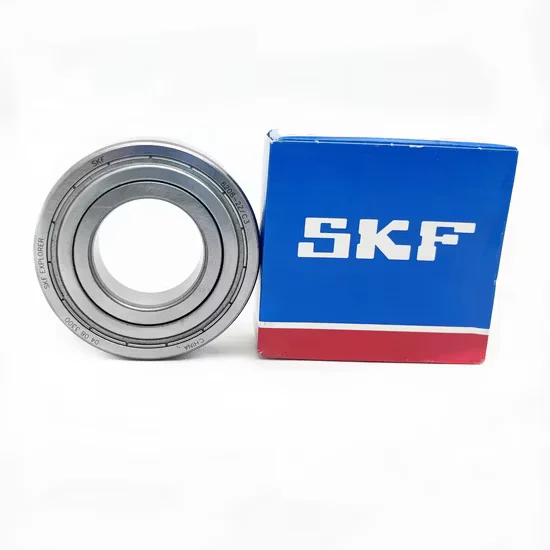
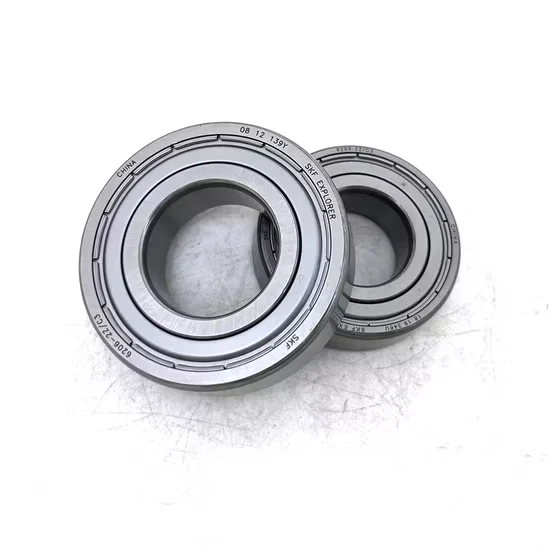
Treadmill Motor & Roller Bearings Wholesale Supplier
- Applications & Industries
- Sep 16, 2026
- author
Cheaper bearings do not save money; they destroy profit margins through batch returns.
Selecting the correct treadmill motor and roller bearings requires matching internal clearance to operating speed, choosing lubrication that withstands high-frequency continuous load, and verifying acoustic performance before bulk procurement. Mismatched clearance causes high-speed vibration, while improper grease leads to premature roller wear under constant tension.
I still remember the humidity in Ho Chi Minh City when I supplied a batch of treadmill spindle bearings to a local fitness equipment factory. To win the bid on price, I sourced cylindrical roller bearings with slightly oversized internal clearance. On paper, the dimensions were perfect. In the workshop, however, the motors screamed. At high speeds, the excessive clearance caused severe vibration that exceeded acceptable limits. The entire batch was returned from the terminal market, resulting in a mid-six-figure loss that wiped out months of margin. That failure shifted my focus from unit price to application physics. Now, when advising clients in Southeast Asia and beyond, I inspect the motor’s acoustic signature personally. Selection is not about finding the cheapest component; it is about aligning clearance, lubrication, and speed ratings to prevent field failures.
Understanding why standard industrial bearings fail in fitness applications is the first step toward reliable sourcing. The following sections detail the technical mismatches that cause premature failure and how to verify quality before shipment.
Why Do Treadmill Motor Bearings Fail at High Speeds?
Mismatched internal clearance is the primary cause of high-speed vibration and early motor burnout.
Treadmill motors operate at significantly higher RPMs than typical industrial gearboxes. When a bearing with loose clearance is subjected to these speeds, the rolling elements lose stable contact with the raceways, leading to skidding and heat generation. This phenomenon is often misdiagnosed as a motor winding issue, but the root cause lies in the bearing selection.
In many cases, distributors supply standard C3 clearance bearings for applications that require tighter tolerances or specific preload conditions. The result is a harmonic vibration that travels through the motor housing, causing noise complaints and eventual insulation failure. A European fitness brand once reported that their premium home units failed acoustic tests despite using reputable brands. The issue was not the brand, but the clearance class. Switching to a bearing with controlled clearance reduced the vibration amplitude noticeably, allowing the units to pass certification.
For a Treadmill Motor & Roller Bearings Wholesale Supplier, understanding this dynamic is crucial. It is not enough to stock generic parts; one must offer technical guidance on clearance selection based on the motor’s design speed. Clients who ignore this parameter face costly warranty claims that far exceed the savings from cheaper components.
How to Select the Right Roller Bearings for Continuous Load?
Proper lubrication and load rating are critical for roller lifespan under continuous tension.
Roller bearings in treadmills support the belt and user weight, operating under constant load rather than intermittent use. The most common failure mode here is not fatigue, but lubrication breakdown. Standard greases often separate or dry out under the high-frequency oscillation and heat generated by continuous running.
A case from a Middle East distributor highlights this risk. They supplied rollers with standard lithium-based grease to a gym chain in a hot climate. Within months, the grease had hardened, causing metal-to-metal contact and premature wear. The solution was not a more expensive bearing, but a grease with higher viscosity index and better thermal stability. By switching to a synthetic lubricant designed for high-RPM applications, the service life extended meaningfully.
When evaluating options from a Treadmill Motor & Roller Bearings Wholesale Supplier, ask for data on grease compatibility and temperature range. Do not rely solely on load capacity ratings. A bearing with high static load capacity will still fail if the lubricant cannot maintain a film under dynamic, continuous operation. The right selection balances mechanical strength with chemical stability.
What Defines "Low Noise" in Premium Fitness Equipment?
Precision grades and specific grease types dictate acoustic performance.
In the premium fitness segment, silence is a key selling point. Standard commercial bearings may meet dimensional tolerances but fail acoustic tests due to surface roughness or inconsistent ball spacing. Low noise is not just about absence of sound; it is about the absence of irregular vibration frequencies.
Achieving low noise requires bearings manufactured to higher precision grades, such as P5 or P4, depending on the application. These grades ensure tighter control over raceway geometry and ball diameter variation. Additionally, the type of grease plays a role. Some greases contain additives that reduce friction noise, while others may introduce chattering if too viscous.
A manufacturer in North America struggled with noise complaints in their luxury home treadmills. They were using standard P0 grade bearings. After switching to P5 grade bearings with specialized quiet-run grease, the noise floor dropped noticeably. This change did not increase the price significantly but greatly enhanced the perceived quality of the equipment. For a Treadmill Motor & Roller Bearings Wholesale Supplier, offering precision-grade options is essential for serving high-end OEMs.
How to Verify Bearing Quality Before Bulk Procurement?
Workshop noise testing and traceability documentation prevent costly field returns.
Before committing to a large order, buyers must verify the quality of the bearings beyond the certificate of analysis. Paperwork can be forged, but performance cannot. A simple yet effective method is to conduct workshop-level noise testing. Mount sample bearings on a test rig and run them at operational speeds. Listen for irregularities such as clicking, grinding, or humming.
Traceability is another critical factor. Genuine bearings from brands like SKF, NSK, or FAG come with batch numbers that can be verified against manufacturer records. This ensures that the products are not counterfeits or refurbished items. A client in Latin America once received a shipment of bearings that looked authentic but failed prematurely. Upon investigation, the batch numbers did not match the manufacturer’s database. They were counterfeit units. By working with a supplier who provides full traceability, such risks are eliminated.
When sourcing from a Treadmill Motor & Roller Bearings Wholesale Supplier, request sample units for testing. Verify the packaging, markings, and documentation. Ensure that the supplier can provide technical support for failure analysis if issues arise. This level of diligence protects your reputation and reduces the risk of batch returns.
Conclusion
Precision matching prevents profit loss.
Successful bearing selection for treadmills depends on aligning clearance, lubrication, and precision with operational demands. Ignoring these factors leads to vibration, wear, and noise issues that damage brand reputation. Partnering with a knowledgeable Treadmill Motor & Roller Bearings Wholesale Supplier ensures access to genuine products and technical expertise. Verify quality through testing and traceability to secure long-term reliability.