Supplier Quality Manuals: What to Expect
- Procurement & Trade FAQs
- Sep 15, 2026
- author
A thick document does not equal high quality. The real value lies in whether batch numbers strictly match material certificates.
A robust supplier quality manual guarantees batch-to-batch traceability and material certification, preventing customs holds and payment disputes in global bearing trade. It is not merely a collection of ISO certificates but a verifiable chain linking raw material mills to finished bearing units. Without this alignment, distributors face withheld balances and operational downtime.
In my early days handling export documentation in Ningbo, I learned that customs officers and procurement auditors do not read every page of a quality manual. They look for breaks in the chain. I once managed a shipment of spherical roller bearings destined for Hamburg. The factory provided a comprehensive quality manual, yet the batch numbers on the physical packaging did not align with the mill test reports inside the folder. The discrepancy was minor in appearance but fatal in compliance. The client withheld the final payment, citing an untraceable supply chain. That incident shifted my focus from volume to verification. A supplier quality manual must serve as a legal and technical shield, ensuring that every bearing can be traced back to its origin without ambiguity.
This guide details what to expect when reviewing these documents, focusing on the specific clauses that protect your investment and operational continuity.
What core documents must a quality manual include?
It must cover ISO certs, material proofs, and dimensional inspection reports. Many buyers mistake a general company profile for a quality manual. However, a functional supplier quality manual for bearing procurement requires specific technical evidence.
The foundation is the ISO 9001 certification, which validates the manufacturer’s quality management system. Yet, this alone is insufficient for high-stakes industrial applications. The manual must include material certificates, often referred to as mill test reports or MTRs. These documents verify the chemical composition and mechanical properties of the steel used, such as chromium content and hardness levels. For deep-groove ball bearings or tapered roller bearings, this data confirms the material meets international standards like ABMA or ISO specifications.
Dimensional inspection reports are equally critical. These reports provide actual measured values for inner diameter, outer diameter, and width, rather than just nominal sizes. They prove that the manufacturing process stays within specified tolerance classes, such as P0 or P6. Without these reports, you cannot verify if the bearings will fit your machinery or meet the precision requirements of your end-users.
| Document Type | Purpose | Verification Level |
|---|---|---|
| ISO 9001 Certificate | Validates quality management system | Basic Compliance |
| Material Certificates (MTR) | Confirms steel composition and heat treatment | Full Batch-Level |
| Dimensional Inspection Report | Verifies size tolerances and geometric accuracy | Sample-Level |
| Hardness Test Report | Ensures surface and core hardness meet specs | Verifiable |
A complete supplier quality manual integrates these elements into a cohesive package. If any component is missing, the traceability chain is broken. For instance, having a dimension report without a material certificate means you know the size is correct but not whether the steel can withstand the required load. This gap exposes buyers to premature failure risks and liability issues.
How to verify batch traceability in the manual?
Ensure strict alignment between physical batch numbers and material certificates. Traceability is the backbone of a reliable supplier quality manual. It allows you to track a specific bearing back to the exact production run and raw material batch.
The verification process involves cross-checking the batch number printed on the bearing box or the bearing itself with the number listed on the material certificate. In a proper supplier quality manual, these numbers must match exactly. Any deviation, even a single digit, indicates a potential mix-up or documentation error. This mismatch can lead to significant delays during customs clearance, as authorities may suspect counterfeit goods or misdeclared items.
I have seen cases where a container of cylindrical roller bearings was held at port for weeks because the batch numbers on the packing list did not correspond to the attached quality documents. The cost of demurrage and storage far exceeded the value of the bearings. To avoid this, buyers must implement a cross-checking matrix before shipment. This matrix compares the purchase order line items, packing list details, and quality manual entries to ensure consistency.
Furthermore, traceability extends to heat treatment records. Bearings undergo rigorous thermal processing to achieve the necessary hardness and durability. A robust supplier quality manual includes references to heat treatment batches, linking them to the final product. This level of detail is crucial for industries like mining or wind power, where failure can result in catastrophic downtime. By verifying these links, you ensure that the bearings meet the performance expectations set by their design specifications.
What are the risks of missing traceability links?
Incomplete chains lead to customs holds and final payment deductions. When a supplier quality manual lacks clear traceability, the buyer assumes all the risk. This imbalance often results in financial penalties and operational disruptions.
One major risk is the withholding of payment. In international trade, letters of credit or deferred payment terms often require strict document compliance. If the supplier quality manual fails to provide verifiable traceability, banks or buyers may reject the documents, leading to delayed or reduced payments. I recall a scenario where a distributor faced a significant penalty because the material certificates were generic and not linked to specific bearing batches. The buyer argued that they could not guarantee the quality to their end-users, resulting in a substantial deduction from the final balance.
Another risk is customs detention. Authorities increasingly scrutinize industrial imports for authenticity and safety. Without a clear trail from raw material to finished product, shipments may be flagged for inspection. This process can take days or weeks, incurring storage fees and disrupting supply chains. For MRO operations, where time is critical, such delays can halt production lines, causing losses that dwarf the cost of the bearings themselves.
Additionally, missing traceability complicates warranty claims. If a bearing fails prematurely, the manufacturer may refuse liability if the batch cannot be identified. A comprehensive supplier quality manual protects both parties by establishing a clear record of production conditions. This documentation is essential for resolving disputes and maintaining long-term business relationships. It transforms the transaction from a simple purchase into a verified partnership based on transparency and accountability.
How to handle mixed-brand quality documentation?
Require brand-specific original certs for every SKU in consolidated shipments. Sourcing from multiple brands introduces complexity in documentation. A supplier quality manual for mixed-brand orders must address each brand’s specific requirements without compromising clarity.
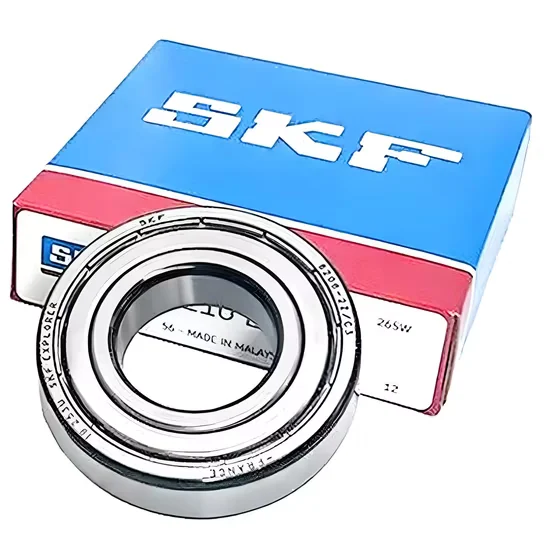
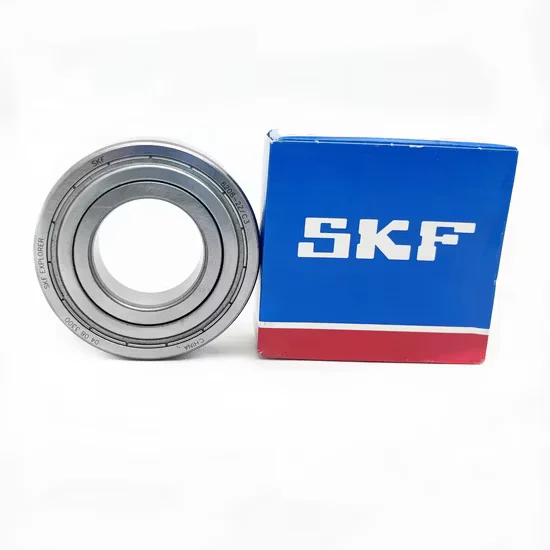
When consolidating shipments from brands like SKF, FAG, NSK, or TIMKEN, each product line may have different documentation standards. Some brands provide digital certificates, while others insist on original paper copies. A professional supplier ensures that each SKU in the mixed container is accompanied by its respective authentic documentation. This approach prevents confusion and ensures that each bearing meets its brand’s quality assurances.
For example, a European wind farm operator once required a mixed shipment of spherical roller bearings and angular contact ball bearings for a turbine overhaul. The supplier provided a unified quality manual that clearly separated the documentation by brand and batch. Each section included the original material certificates and inspection reports specific to that brand’s manufacturing process. This clarity allowed the operator to verify each component quickly, minimizing downtime during the maintenance window.
Our approach to one-stop mixed-brand sourcing emphasizes this level of detail. We ensure that genuine original bearings come with complete traceability documentation, regardless of the brand. This service supports flexible MOQs, allowing clients to consolidate various sizes and types into a single container. By maintaining strict documentation standards for each brand, we help distributors and OEMs avoid the pitfalls of mixed paperwork. This method ensures that every bearing, whether from a premium global brand or a reliable domestic line, is fully verifiable and compliant with international standards.
Conclusion
Traceability is not optional; it is the foundation of trust in bearing procurement. A well-structured supplier quality manual prevents costly errors and ensures smooth transactions. By focusing on batch alignment and complete documentation, buyers can secure their supply chains and maintain operational efficiency.
Related Applications
This article connects to the application areas below. Open one to see the bearing categories used there.