
Angular Contact Ball Bearings
SKF ball, roller and mounted bearings for machine builders, distributors and project buyers

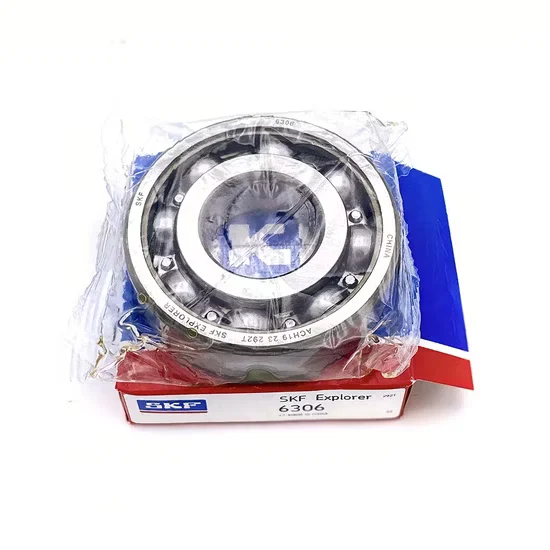


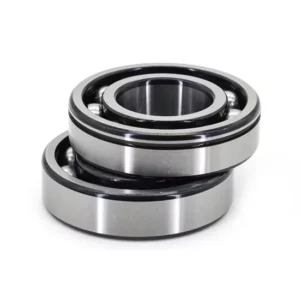

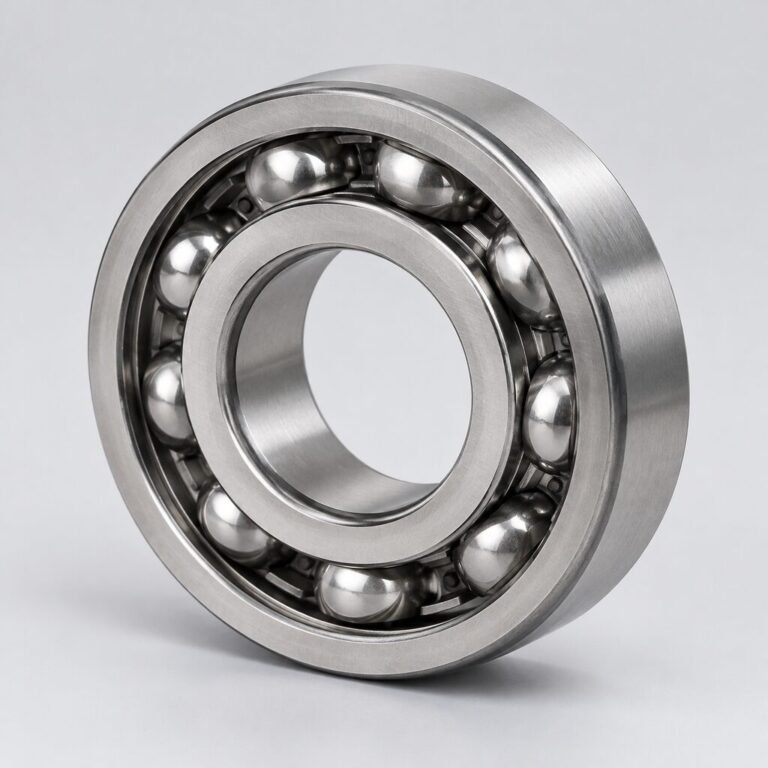
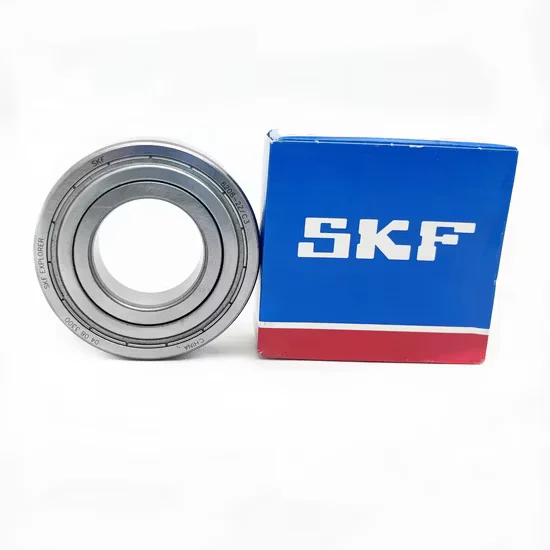
SKF 6306 Deep Groove Ball Bearing 30×72×19 mm — Open type design requires external sealing and lubrication, featuring standard P0 precision and normal clearance for general industrial use.
Product Details
Full Brand Sourcing Coverage — Consolidate SKF, FAG, and NSK conveyor bearings into a single mixed-brand shipment without juggling multiple suppliers.
| Parameter | Value |
|---|---|
| Designation | SKF 6306 |
| Bearing Type | Deep Groove Ball Bearing |
| Bore Diameter (d) | 30 mm |
| Outside Diameter (D) | 72 mm |
| Width (B) | 19 mm |
| Material | Available in GCr15 chrome steel variants |
| Lubrication | Grease or Oil |
| Origin | Sweden |
| Clearance Class | Standard (CN) |
| Precision Class | Normal (P0) |
| Seal or Shield Type | Open |
| Industry | Typical Applications |
|---|---|
| Material Handling | Belt conveyor drive pulleys and idler rollers |
| Logistics Transport | Sorting system diverters and transfer belt motors |
| General Manufacturing | Gearbox input shafts and pump drive assemblies |
Thermal expansion from continuous friction rapidly eliminates standard internal clearance, leading to premature seizure.
When dispatching conveyor components to Southeast Asian facilities, overlooking the internal clearance suffix on a standard SKF 6306 deep groove ball bearing can result in catastrophic locking under high-temperature and heavy-load conditions. Complex operational environments demand precise suffix selection, as a minor oversight in clearance class transforms a routine replacement into an unplanned production halt. Maintenance managers often assume that a baseline part number is universally applicable, failing to account for the intense frictional heat generated at the drive pulley. This thermal buildup rapidly eliminates the internal clearance, causing the rolling elements to skid and the cage to fracture.
Selecting the correct SKF 6306 deep groove ball bearing for material handling systems requires aligning the open-type design with the facility's existing lubrication protocols. Our sourcing network ensures that maintenance teams receive components compatible with their centralized grease or oil circulation systems, preventing contamination buildup in exposed idler roller applications. By evaluating the specific housing design and external seal integrity, procurement teams can avoid the premature wear associated with mismatched lubrication strategies. This alignment is particularly critical in logistics hubs where continuous operation leaves minimal windows for scheduled maintenance interventions.
Belt conveyors subject drive pulleys to sustained radial loads combined with significant thermal fluctuations from continuous friction. Standard clearance bearings often struggle when ambient heat and operational friction exceed the thermal limits of standard bearing steel, causing the internal gap to close. Selecting an appropriate clearance class, such as C3, accommodates this thermal expansion while maintaining optimal lubrication film thickness. Furthermore, open designs require strict adherence to external sealing and regreasing intervals to fend off abrasive dust inherent in mining and aggregate transport. Ignoring these environmental factors inevitably accelerates raceway spalling and compromises the structural integrity of the entire drive assembly.
The baseline configuration of the SKF 6306 deep groove ball bearing features a 30 mm bore, 72 mm outside diameter, and 19 mm width, engineered to handle primarily radial loads with minor axial displacement. Constructed from available GCr15 chrome steel variants, the raceways provide the necessary hardness to resist surface fatigue under continuous rotation. As an open-type bearing with standard P0 precision and normal clearance, it relies entirely on the housing's external seals to retain lubricant and exclude contaminants. This configuration is ideal for applications where maintenance crews prefer to flush and relubricate the bearing in situ rather than relying on pre-packed, sealed alternatives. The deep groove geometry ensures smooth operation and low noise levels, which is essential for monitoring the acoustic signature of the conveyor system during routine predictive maintenance walks.
Deploying a normal-clearance SKF 6306 deep groove ball bearing in a high-temperature conveyor drive inevitably leads* generating severe friction and eventual cage failure. Such premature failures not only void warranty claims but also trigger cascading damage to adjacent gearbox seals and motor windings. Aligning the selection with ISO 15243 failure mode classifications helps engineers recognize that thermal seizure is entirely preventable through correct clearance designation. The financial impact extends far beyond the component cost, encompassing lost production hours, emergency freight charges for replacement parts, and the labor required to dismantle the heavily contaminated drive housing.
Sourcing genuine components for critical material handling nodes requires more than just matching the basic part number. We verify the exact clearance and precision suffixes to prevent the costly mismatches that frequently plague bulk conveyor maintenance orders. Our mixed-brand consolidation allows you to bundle these specific deep groove units with spherical roller bearings for heavy pulleys in a single container. Every shipment includes complete traceability documentation, ensuring your maintenance logs reflect authentic, factory-verified origins rather than unverified aftermarket substitutions. This rigorous validation process protects your facility from the hidden liabilities of counterfeit steel, which often exhibits unpredictable hardness and rapid fatigue under dynamic loading.
To ensure the selected deep groove unit matches your specific belt conveyor dynamics, please provide the exact radial and axial load profiles alongside operational RPM and ambient temperature ranges. Sharing the OEM equipment number allows our technical team to cross-reference the original clearance and sealing requirements. This data enables a precise L10 life calculation and prevents the thermal binding issues common in heavy-duty material handling applications.
Q: How can we verify the authenticity of the received bearings upon delivery?
A: You can authenticate the components by scanning the official QR codes on the outer packaging, which link directly to the manufacturer's verification database. Additionally, cross-check the physical dimensions and weight against the official catalog, and review the accompanying Certificate of Conformity to confirm the Swedish origin and batch traceability.
Q: What are the recommended lubrication intervals for open bearings in dusty conveyor environments?
A: Lubrication frequency depends heavily on the dust concentration and operational hours of the material handling system. For open designs exposed to aggregate or mining dust, maintenance teams should establish a strict regreasing schedule to flush out contaminants, relying on the housing's external seals to retain the fresh grease or oil.
Q: How does standard clearance perform under continuous vibratory loads in belt systems?
A: Standard clearance is optimized for normal operating temperatures and typical radial loads. However, in belt conveyors where continuous friction generates significant heat, the internal gap may close, leading to excessive preload. Engineers must evaluate the thermal expansion of the shaft to determine if a larger clearance class is required.
Q: What is the difference between open, shielded, and sealed variants of this series?
A: The open variant lacks integrated seals or shields, allowing for higher speed capabilities and easier relubrication within the housing. Shielded versions use non-contact metal covers for basic dust exclusion, while sealed variants employ contact rubber lips for superior moisture protection, albeit with slightly higher friction and lower speed limits.
Q: How do we select the correct clearance class for high-temperature conveyor environments?
A: Selecting the appropriate clearance requires calculating the temperature differential between the inner ring and outer ring during operation. If the conveyor drive generates substantial heat, specifying a C3 or C4 clearance compensates for the thermal expansion of the shaft, preventing the internal gap from closing and causing premature seizure.
Before You Enquire
A complete enquiry ties every price to the right execution, drawing and project stage. It also catches the sleeves and locking components that BOMs often leave out.
Send Your BOMSame Product Family
These bearings share a category with this model, so you can review them together when one BOM covers several lines.
Angular Contact Ball Bearings

Angular Contact Ball Bearings

Angular Contact Ball Bearings
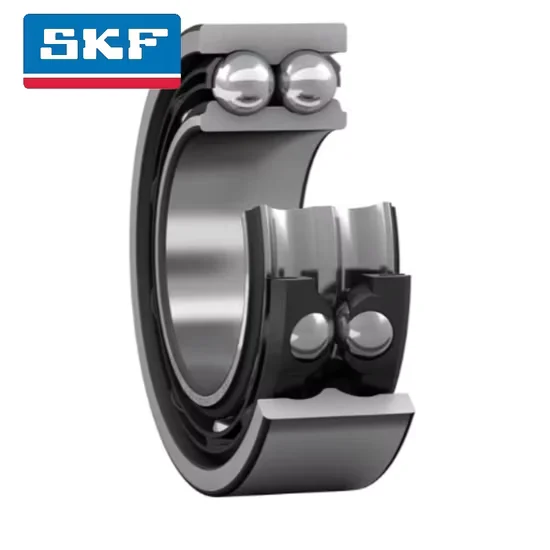
Angular Contact Ball Bearings
Where It Fits
This bearing is listed for the applications below. Open each one to see the related product categories.
 Equipment Maintenance & Spare Parts Maintenance teams replace worn bearings in motors, fans, conveyors, pillow block supports, vehicles and field machinery, often while equipment is waiting to restart. Markings… Automotive Kits and Spare Parts · Clutch Release Bearings · Deep Groove Ball Bearings · Sealed and Shielded Bearings
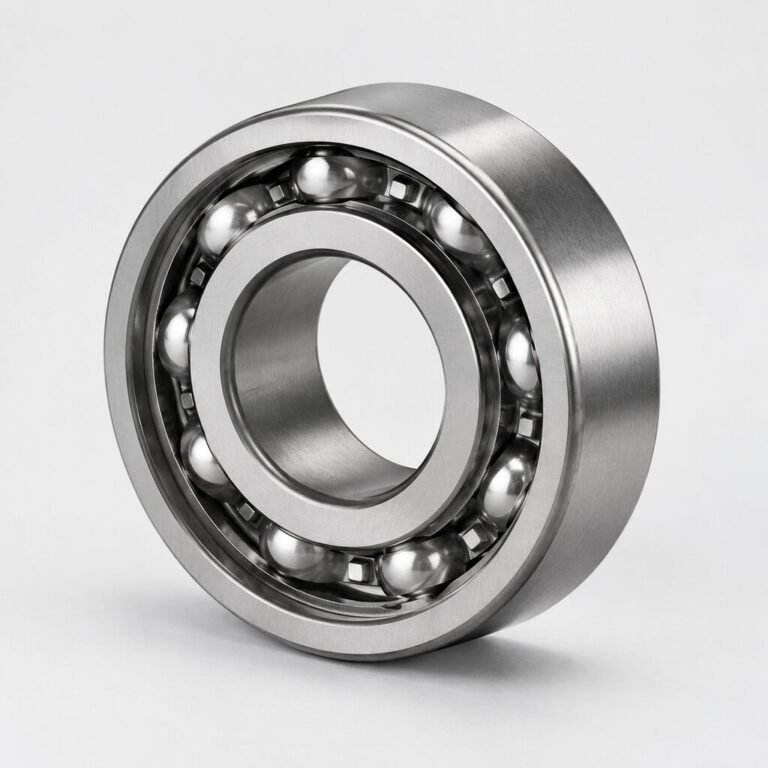 Machine & Equipment Manufacturing Machine builders specify bearings for spindles, drive shafts, rollers and other rotating assemblies across complete machine builds, from prototype runs to series production. The… Bearings by Industry · Industrial Machinery · Deep Groove Ball Bearings · Angular Contact Ball Bearings
 Machinery Parts Distribution Machinery parts distributors stock and resell standard bearings for general machinery, automotive and light-vehicle customers, often across many sizes on a single purchase list.… Ball Bearings · Roller Bearings · Sealed and Shielded Bearings · Inch Size Bearings
Technical Reading
These articles support bearing selection and specification checks for this product type.
Sep 16, 2026 · Applications & Industries
Prevent thermal seizure in bearings in textile spindles and rollers by matching C3 or C4 clearance to operating temperatures. Verify dynamic load ratings against…
Sep 16, 2026 · Applications & Industries
Secure genuine bearings for NEMA electric motors with complete traceability to prevent catastrophic production line failures caused by counterfeit parts. Learn to identify premature…

Sep 15, 2026 · Brands & Alternatives
Source Equivalent Bearings for OEM Spare Parts Lists by matching technical specifications like clearance and load ratings instead of rigid brand names. This cross-brand…
FAQ
The exact execution is confirmed before you accept a product quote. Share the BOM line and drawing revision. If the marking on an old bearing is incomplete, send a clear photo and note what still needs checking.
List each stage as its own quantity with its own required date. Prototype, production and spare quantities can then appear separately in one project quote, so planners can schedule each stage on its own timing.
State the BOM line, the drawing revision and whether alternatives are allowed. A separately identified alternative is settled before the product quote is accepted. Technical changes require buyer approval, so your design engineer keeps control of the specification.
Product documents are confirmed at the written quote stage, order by order. List the documents your project requires in your enquiry. Transport documents are confirmed with the shipping arrangements for the order.
Request a Quote
SKF Mechanical and Electrical Equipment supplies SKF ball, roller and mounted bearings to buyers worldwide. Your written quote states model, quantity, price and currency, availability, estimated lead time and validity.