Genuine SKF Bearings for Forklift & AGV Makers | Wholesale Supplier
- Buying Guide
- Sep 15, 2026
- author
Lower unit price often triggers higher total cost of ownership in automated material handling.
Sourcing genuine SKF bearings for forklifts and AGVs demands strict traceability verification and environment-specific specification matching rather than simple unit price comparison. Buyers must prioritize internal clearance classes suitable for thermal shifts and demand full batch-level documentation to mitigate counterfeit risks in harsh operating environments.
I still recall the chill of a European cold-storage facility where a fleet of automated guided vehicles began emitting high-pitched grinding noises within months of deployment. The procurement team had selected standard deep-groove ball bearings based on load capacity alone, ignoring the impact of sub-zero temperatures on internal clearances. As the ambient temperature dropped, the steel races contracted differently than the rolling elements, eliminating the necessary operational gap. This led to premature seizure and a costly recall that far exceeded the initial savings from choosing a non-specialized variant. That incident reshaped my approach to technical selection, emphasizing that data sheets must align with real-world thermal dynamics.
Understanding these mechanical nuances is critical for OEMs and distributors who face the pressure of maintaining uptime while managing inventory costs. The following sections detail how to verify authenticity, select the correct series, and balance supply chain efficiency without compromising reliability.
Why Standard SKF Bearings Fail in AGV Cold Chains?
Temperature fluctuations fundamentally alter the mechanical fit between bearing components, rendering standard specifications inadequate for cold-chain logistics.
In automated warehouses, AGVs frequently move between ambient loading docks and freezing storage zones. Standard bearings are typically manufactured with Normal (CN) internal clearance, which assumes a stable operating temperature range. When these units enter a cold environment, the outer ring, inner ring, and rolling elements contract at different rates depending on their mass and material composition. If the initial clearance is not sufficiently large to accommodate this differential contraction, the bearing operates under pre-load conditions even when no external load is applied. This generates excessive heat, accelerates lubricant thickening, and leads to early fatigue failure.
For forklift masts operating in similar conditions, the issue is compounded by dynamic shock loads. A bearing that is already tight due to thermal contraction has zero tolerance for the impact forces generated during lifting operations. The result is not just wear, but catastrophic spalling of the raceways. Selecting bearings with C3 or C4 internal clearance allows for the necessary thermal expansion room, ensuring that the operational clearance remains within optimal limits even at low temperatures. This selection criterion is non-negotiable for equipment designed for cold storage, yet it is frequently overlooked in favor of generic part numbers.
The failure mode is rarely immediate. It begins with subtle increases in vibration and noise, which are often misdiagnosed as motor or drive wheel issues. By the time the bearing seizes, the damage to the housing and shaft may be irreversible. Therefore, specifying the correct clearance class at the design stage is a preventive measure that protects the entire drivetrain assembly.
How to Verify Genuine SKF Bearings for Forklifts?
Packaging aesthetics are easily replicated; only full traceability documentation guarantees authenticity.
The market for industrial bearings is saturated with high-quality counterfeits that mimic the visual appearance of genuine products. These fakes often use recycled steel with inconsistent hardness levels and poor surface finishes, leading to unpredictable performance. To protect your brand and your customers, you must look beyond the box. Genuine SKF bearings come with a unique identification code that can be traced back to the specific production batch and factory. Requesting this traceability data is the first step in verifying authenticity.
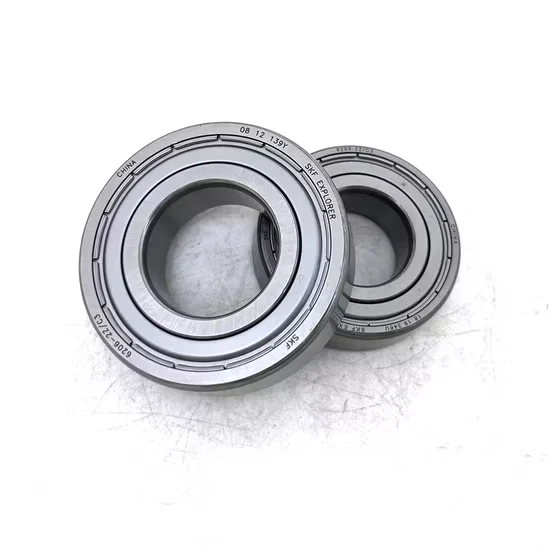
A reliable verification process involves checking the laser-etched markings on the bearing itself. These marks should be crisp, evenly spaced, and resistant to removal with standard solvents. Counterfeit parts often have etched markings that are shallow or uneven. Additionally, the grease used in genuine bearings is formulated for specific operating conditions and has a distinct consistency and color. Deviations in grease appearance can indicate refilled or fake units.
| Verification Aspect | Genuine Product Characteristics | Counterfeit Risk Indicators |
|---|---|---|
| Traceability Docs | Full batch-level certification available | Sample-level or self-reported only |
| Marking Quality | Crisp, laser-etched, permanent | Shallow, printed, or easily rubbed off |
| Grease Consistency | Uniform, specific to application | Inconsistent, discolored, or excessive |
| Packaging Print | High-resolution, sharp text | Blurry text, color mismatches |
In one instance, a distributor in Southeast Asia received a shipment that looked perfect externally. However, upon requesting the batch certificates, the supplier could only provide generic quality statements without specific batch numbers. Further inspection revealed slight variations in the cage material finish, which was not consistent with the manufacturer’s standards. Rejecting this shipment prevented potential field failures that would have damaged the distributor’s reputation. Always insist on verifiable documentation before accepting delivery.
Which SKF Series Suit Specific AGV Applications?
Different AGV components require distinct bearing geometries to handle varying load profiles and precision needs.
Selecting the right bearing series is not a one-size-fits-all task. Drive wheels, mast rollers, and steering mechanisms each present unique mechanical challenges. Drive wheels require bearings that can handle combined radial and axial loads while maintaining low friction for energy efficiency. Mast rollers, on the other hand, are subjected to high radial loads and shock impacts, necessitating robust construction and high load-carrying capacity.
Deep-groove ball bearings are commonly used in drive wheels due to their versatility and ability to operate at high speeds with minimal maintenance. However, for heavier AGVs or those operating in rough terrain, tapered roller bearings may be more appropriate due to their superior load distribution capabilities. For mast applications, cylindrical roller bearings offer high radial stiffness and can accommodate minor misalignments, which is crucial for smooth lifting operations.
| Application Area | Recommended Bearing Type | Key Performance Requirement |
|---|---|---|
| Drive Wheels | Deep-groove Ball / Tapered Roller | Low friction, combined load capacity |
| Mast Rollers | Cylindrical Roller / Spherical Roller | High radial load, shock resistance |
| Steering Mechanisms | Angular Contact Ball | Precision, axial load handling |
| Conveyor Interfaces | Needle Roller | Compact design, high load in small space |
A European OEM recently consolidated their sourcing to include both deep-groove and cylindrical roller variants from a single trusted source. This allowed them to standardize their maintenance protocols and reduce inventory complexity. By matching the bearing type to the specific mechanical demands of each component, they achieved a noticeable improvement in overall vehicle reliability and reduced unplanned downtime.
How to Balance MOQ and Lead Time for OEMs?
Consolidated sourcing strategies can mitigate inventory risks while ensuring batch consistency for assembly lines.
Original Equipment Manufacturers often struggle with the trade-off between minimum order quantities and lead times. Ordering large batches reduces unit costs but ties up capital and warehouse space. Conversely, small orders offer flexibility but may incur higher shipping costs and longer lead times. A strategic approach involves consolidating orders across multiple bearing types and brands to achieve volume discounts without overstocking specific items.
Working with a supplier who offers mixed-brand consolidation allows OEMs to combine genuine SKF bearings with other premium brands like FAG or NSK in a single shipment. This flexibility enables buyers to meet diverse technical requirements while optimizing logistics costs. Furthermore, maintaining a spot inventory of critical sizes ensures that emergency replacements can be sourced quickly, minimizing production delays.
In a recent project, a Middle East-based assembler faced delays due to fragmented sourcing from multiple vendors. By switching to a consolidated model, they reduced their average lead time significantly and improved their inventory turnover. The ability to source small batches of specialized bearings alongside standard volumes provided the agility needed to respond to fluctuating production schedules. This approach also simplified quality control, as all incoming goods were subject to a unified verification process.
Conclusion
Authenticity and specification accuracy are the pillars of reliable material handling equipment.
Sourcing genuine SKF bearings for forklifts and AGVs requires a disciplined approach to verification and selection. Prioritizing traceability, understanding thermal effects on clearance, and choosing the right bearing series for each application are essential steps in ensuring long-term performance. By adopting consolidated sourcing strategies, buyers can balance cost efficiency with supply chain resilience, ultimately protecting their operational integrity and brand reputation.
Related Applications
This article connects to the application areas below. Open one to see the bearing categories used there.