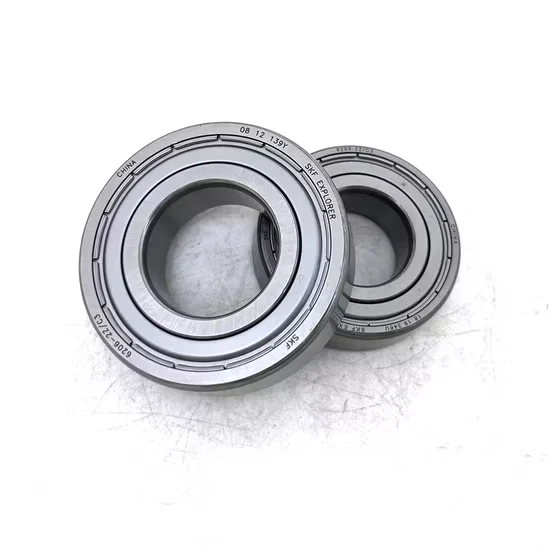
Genuine SKF Bearings for Elevator & Escalator OEMs Wholesale Supplier
- Buying Guide
- Sep 15, 2026
- author
Standard clearance does not fit all elevator motors.
Selecting genuine SKF bearings with precise internal clearance and verifying supplier traceability are critical for elevator and escalator OEMs to ensure low-noise operation and avoid costly field failures.
The hum of a malfunctioning escalator is distinct. It is not just noise; it is the sound of warranty costs accumulating. Years ago, while working on a retrofit project in Mexico City, I opened the main drive unit of a busy public transit escalator. The client had sourced what they believed were premium components locally. Upon inspection, the deep groove ball bearings installed in the motor were standard clearance units. In an application subject to significant thermal expansion and high-speed rotation, this was a fundamental error. The resulting vibration was severe enough to be felt through the handrails. To resolve the immediate crisis, I had to coordinate an urgent shipment of authentic units with the correct C3 clearance from overseas. That incident highlighted a persistent gap in the industry: many procurement teams focus on brand names but overlook the technical specifications that define performance.
This experience is not unique. Elevator and escalator original equipment manufacturers face constant pressure to balance cost, lead time, and quality. However, compromising on the technical verification of genuine SKF bearings supplier for lift OEMs often leads to premature failures. The market is flooded with counterfeits that look identical to the naked eye but lack the metallurgical integrity required for vertical transportation safety. Understanding how to select the right specification and verify authenticity is not just a technical requirement; it is a business imperative.
Why Do Elevator OEMs Struggle with SKF Bearing Selection?
Incorrect clearance selection and poor load matching are the root causes of most field failures in vertical transportation systems.
Many engineers assume that a bearing is a commodity item. If it fits the shaft, it should work. This assumption ignores the dynamic environment of an elevator traction machine or an escalator drive. The primary struggle lies in understanding internal clearance classes. Standard clearance (CN) is suitable for many general industrial applications, but it is often inadequate for high-speed elevator motors where heat generation is significant.
When a bearing operates under load, friction generates heat. This heat causes the inner ring to expand more than the outer ring, effectively reducing the internal clearance. If the initial clearance is too tight, the bearing can seize or generate excessive noise. Conversely, if the clearance is too loose, it leads to vibration and uneven load distribution. For escalator sheaves, which operate at lower speeds but under heavy, fluctuating loads, the requirement is different. Here, stability and resistance to false brinelling during idle periods are crucial.
I have seen OEMs specify standard clearance for traction machines to save on inventory complexity. The result is often a noticeable increase in cabin noise, leading to customer complaints and expensive service calls. The solution is not to stock every possible variant but to understand the specific operational profile of each component. A SKF elevator motor bearing clearance of C3 is often recommended for motors operating at higher temperatures or speeds, while C4 might be necessary for extreme conditions. Ignoring these distinctions turns a precision component into a liability.
The challenge is compounded by the global supply chain. Procurement teams may order based on part numbers alone, without specifying the clearance class. Suppliers, aiming to fulfill orders quickly, may ship standard clearance units if the specific class is not explicitly stated. This mismatch between design intent and delivered product is a common source of failure. Ensuring that the genuine SKF deep groove ball bearings for escalators are specified with the correct suffixes for clearance and cage material is the first step toward reliability.
Specification Matrix: Choosing the Right SKF Bearing for Escalator Components
Comparing deep groove ball bearings for motors, sheaves, and step chains based on speed and load reveals distinct selection criteria.
Selecting the right bearing requires a matrix approach. Different components within an escalator or elevator system have vastly different operational requirements. A one-size-fits-all strategy fails because the physics governing a high-speed motor differ from those governing a slow-moving step chain. The following table outlines the key considerations for major components.
| Component | Primary Load Type | Speed Range | Recommended Clearance | Key Failure Mode |
|---|---|---|---|---|
| Traction Motor | Radial & Axial | High | C3 or C4 | Thermal seizure, Noise |
| Escalator Sheave | Radial (Heavy) | Low/Medium | CN or C3 | False brinelling, Fatigue |
| Step Chain Roller | Radial (Impact) | Low | CN | Contamination, Wear |
| Guide Wheel | Radial | Low | CN | Corrosion, Deformation |
For traction motors, the focus is on minimizing friction and managing heat. Deep groove ball bearings are the standard choice due to their ability to handle combined loads. However, the cage material matters. Polyamide cages are common for their lightweight and self-lubricating properties, but steel cages may be preferred in high-temperature environments. When sourcing authentic SKF bearings supplier for lift OEMs, verifying the cage material specification is as important as checking the clearance.
Escalator sheaves present a different challenge. They operate under heavy radial loads and are subject to frequent start-stop cycles. This creates a risk of false brinelling, where small dents form on the raceways due to vibration while the bearing is stationary. Using bearings with optimized internal geometry and proper lubrication can mitigate this risk. In one case, a manufacturer switched to a specific series of spherical roller bearings for their main drives after experiencing repeated fatigue failures with deep groove units. The change resulted in a substantial extension of service life.
Step chain rollers operate in a harsh environment, exposed to dust, dirt, and moisture. Here, sealing effectiveness is paramount. Standard open bearings will fail quickly in such conditions. Sealed units with robust rubber seals are essential. The key is to ensure that the seals do not create excessive drag, which would increase energy consumption. Balancing protection and efficiency requires careful selection of the seal type and lubricant.
The matrix serves as a starting point. Each application has unique constraints. For instance, outdoor escalators require bearings with enhanced corrosion resistance. In these cases, stainless steel variants or specialized coatings may be necessary. The goal is to match the bearing’s capabilities to the operational reality, ensuring that the SKF bearings for elevator and escalator OEMs perform reliably throughout their designed lifespan.
How to Verify Genuine SKF Bearings and Avoid Counterfeits
Traceability documentation and packaging checks are mandatory for OEMs to avoid counterfeit risks.
The market for premium bearings is plagued by counterfeits. These fake products often look convincing, with replicated logos and packaging. However, they lack the precise manufacturing tolerances and high-quality steel that define genuine SKF products. Using counterfeit bearings in safety-critical applications like elevators is not just a financial risk; it is a legal and ethical hazard.
Verification starts with the supplier. An authentic SKF bearings supplier for lift OEMs must provide full traceability. This means every batch of bearings should come with certificates of conformity that link back to the manufacturer’s production records. These documents include batch numbers, production dates, and test results. Without this paper trail, the authenticity of the product cannot be guaranteed.
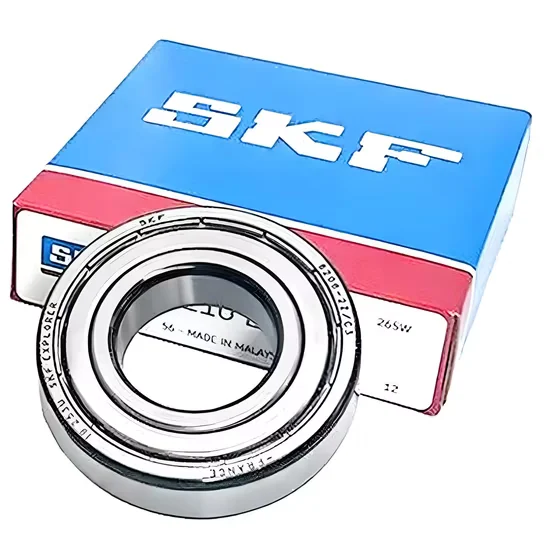
Physical inspection is also crucial. Genuine SKF bearings have specific markings that are difficult to replicate. The laser etching on the rings is sharp and uniform. The packaging is high-quality, with secure seals and holographic labels. Counterfeit packages often have spelling errors, poor print quality, or broken seals. However, sophisticated fakes can bypass casual visual checks. Therefore, relying solely on physical inspection is insufficient.
I once encountered a batch of bearings in a local market that appeared genuine. The packaging was intact, and the bearings looked perfect. However, upon closer inspection of the batch numbers, they did not match the format used by the manufacturer. Further testing revealed inferior steel quality, which would have led to premature failure. Switching to a verified supplier with full traceability docs for container loads eliminated this risk.
Procurement teams should implement a strict verification protocol. This includes checking the supplier’s authorization status, requesting sample certificates before bulk orders, and conducting random audits of incoming goods. Some suppliers offer online verification tools where batch numbers can be checked against the manufacturer’s database. Utilizing these tools adds an extra layer of security.
The cost of verification is negligible compared to the cost of a field failure. A single failed bearing in an elevator can result in downtime, repair costs, and reputational damage. By prioritizing traceability, OEMs protect their brand and ensure the safety of end-users. When sourcing genuine SKF deep groove ball bearings for escalators, never compromise on documentation.
Sourcing Strategy: Balancing Lead Time, MOQ, and Cost for OEMs
Flexible MOQ and global consolidation from professional suppliers prevent production halts.
Supply chain disruptions are a reality for modern manufacturing. Elevator OEMs often face the dilemma of choosing between high-cost direct channels with long lead times and cheaper, less reliable sources. The ideal strategy involves partnering with a supplier who can offer flexibility in minimum order quantities (MOQ) and consolidate shipments from multiple brands.
Emergency situations require rapid response. A production line stoppage due to a missing bearing can cost thousands per hour. In such cases, having access to a supplier with massive spot inventory is crucial. I recall a situation where an OEM needed urgent SKF bearings for elevator and escalator OEMs to prevent a shutdown. By leveraging a global network, we sourced the genuine parts within days, avoiding significant losses. This level of responsiveness is only possible with a supplier who maintains strategic stock levels across multiple regions.
Cost management is another critical factor. Direct purchases from manufacturers often require large volumes, which ties up capital and storage space. A professional distributor can offer competitive pricing by consolidating orders from various clients. This allows OEMs to purchase smaller quantities at better rates than they would achieve independently. Additionally, mixing brands in a single shipment can optimize logistics costs.
Technical support is an often-overlooked aspect of sourcing. A good supplier does not just sell boxes; they provide engineering assistance. This includes help with model selection, cross-referencing equivalent parts, and troubleshooting application issues. For OEMs designing new products, this support can accelerate development and reduce errors.
When evaluating suppliers, consider their ability to handle mixed-brand orders. Many projects require bearings from SKF, FAG, NSK, and other brands. A supplier who can source all these from a single point simplifies procurement and reduces administrative burden. They should also provide comprehensive documentation for customs and compliance, ensuring smooth international transactions.
The goal is to build a resilient supply chain. This means diversifying sources, maintaining safety stock for critical items, and establishing strong relationships with trusted partners. By balancing lead time, MOQ, and cost, OEMs can ensure continuous production and maintain competitiveness in the global market. Sourcing authentic SKF bearings supplier for lift OEMs is not just about buying parts; it is about securing the entire production process.
Conclusion
Precision in selection and verification defines reliability in vertical transportation.
Choosing the right bearings involves more than matching part numbers. It requires understanding internal clearance, load dynamics, and the critical importance of authenticity. Counterfeit products pose a severe risk to safety and profitability, making traceability non-negotiable. By partnering with suppliers who offer technical expertise, flexible sourcing options, and verified genuine stock, OEMs can ensure consistent performance and minimize downtime. The investment in proper selection and verification pays dividends in reduced warranty claims and enhanced brand reputation.
Related Applications
This article connects to the application areas below. Open one to see the bearing categories used there.