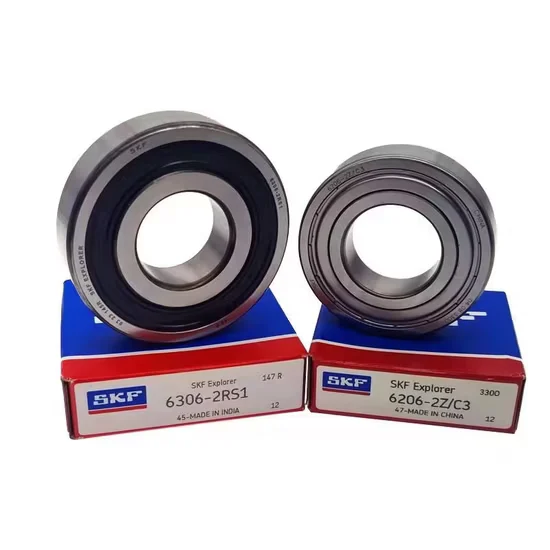
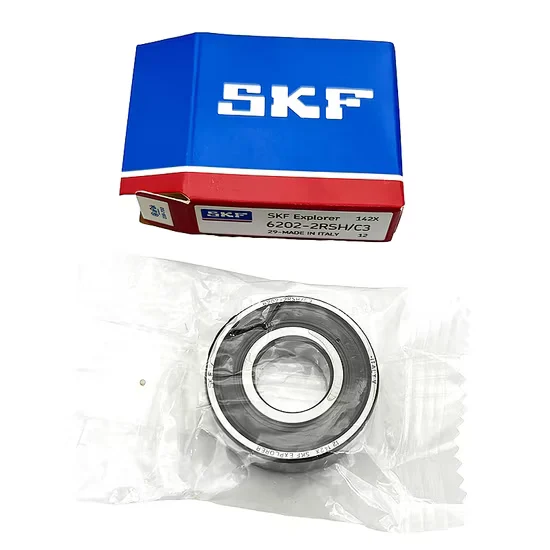
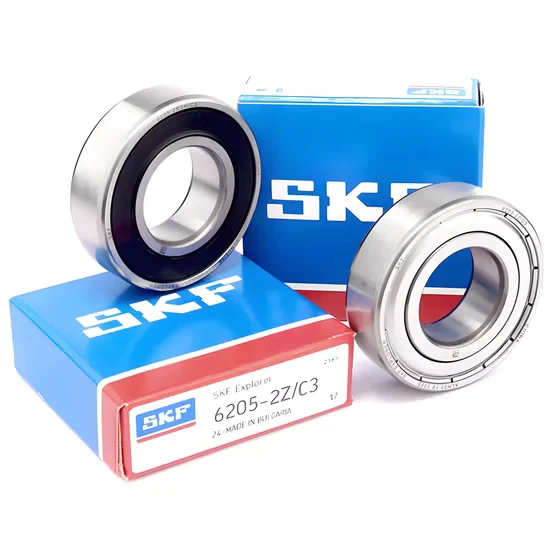
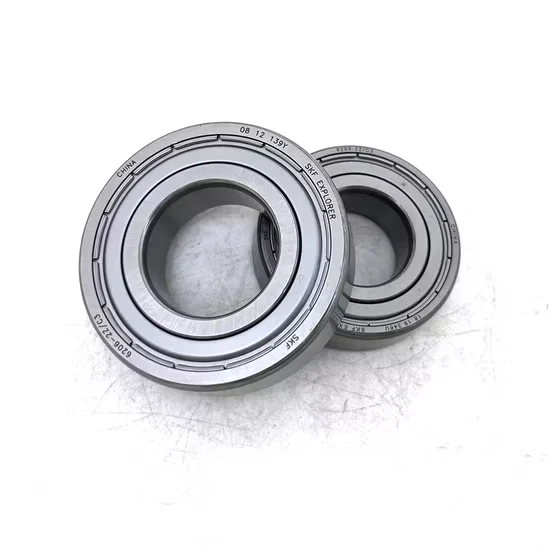
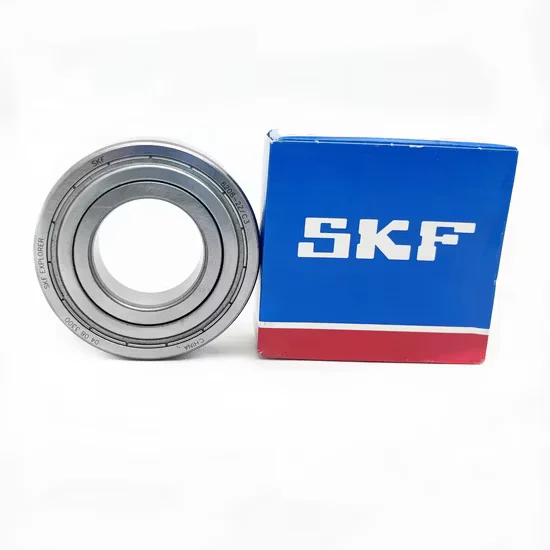
Genuine Bearings for Angle Grinders Wholesale Supplier
- Applications & Industries
- Sep 16, 2026
- author
Most angle grinder failures are not caused by heavy loads, but by microscopic tolerance deviations at ultra-high RPMs.
High-speed angle grinders demand precision deep-groove ball bearings with strict clearance classes and low noise ratings; using counterfeit parts causes catastrophic spindle failures, making genuine traceability critical for safety and operational continuity.
I still remember the humidity and the smell of diesel at the Apapa port in Lagos. A container of angle grinder accessories sat stuck on the tarmac, not because of missing paperwork, but because customs officials spotted inconsistencies in a mixed batch of 6202 bearings. The demurrage charges quickly outpaced the total cargo value. The root cause was a supplier who had mixed genuine stock with cheap counterfeits to lower the unit price. Later, I visited a local workshop where one of those grinders had been assembled. During a high-speed cutting test, the bearing disintegrated instantly. The spindle bent beyond repair, and the operator was lucky to escape without injury. That incident shifted my perspective entirely. In high-RPM applications, the margin for error is non-existent. A deviation of a few microns in raceway roundness or cage alignment does not just reduce lifespan; it triggers immediate mechanical failure.
This reality defines the market for Bearings in Angle Grinders. Distributors and MRO operators cannot rely on visual inspection alone. The difference between a reliable tool and a hazardous liability lies in the internal geometry and material purity of the bearing, which only genuine manufacturers like SKF and NSK can guarantee through rigorous quality control.
Why Do Angle Grinders Require Specialized Bearings?
Standard industrial bearings often fail in angle grinders due to insufficient clearance and noise control for ultra-high rotational speeds.
Angle grinders operate at rotational speeds that far exceed those of typical electric motors or gearboxes. While a standard conveyor roller might turn at a few hundred RPM, an angle grinder spindle frequently exceeds ten thousand RPM. This extreme velocity generates significant heat and centrifugal force. If the bearing internal clearance is too tight, thermal expansion will cause the rolling elements to lock up, leading to seizure. Conversely, if the clearance is too loose, vibration increases, causing premature fatigue of the raceways.
The industry standard for such applications involves deep-groove ball bearings with specific clearance classes, typically C3 or C4. These classes provide the necessary room for thermal expansion without compromising structural integrity. Furthermore, noise and vibration levels are critical. Bearings are graded from Z1V1 to Z4V4, with higher numbers indicating stricter limits on vibration and noise. For hand-held power tools, low vibration is not just a comfort feature; it is a safety requirement that reduces operator fatigue and prevents loss of control.
| Feature | Standard Industrial Bearing | High-Speed Angle Grinder Bearing |
|---|---|---|
| Clearance Class | C0 (Normal) | C3 or C4 (Expanded) |
| Vibration Rating | Standard (Z1/V1) | Low Noise (Z3/V3 or Z4/V4) |
| Cage Material | Steel or Basic Polymer | High-Performance Polyamide or Reinforced Brass |
| Lubrication | General Purpose Grease | High-Speed, High-Temperature Synthetic Grease |
| Tolerance Precision | Normal Class | P5 or Higher Precision |
Using a standard C0 clearance bearing in a high-speed grinder is a common mistake among cost-cutting suppliers. The bearing may run smoothly during initial testing at low speeds, but under load and heat, it will fail rapidly. This is why selecting the correct deep groove ball bearings for angle grinders requires technical verification of these parameters, not just matching the outer dimensions.
What Happens When Counterfeit Bearings Fail?
Fake bearings do not just wear out faster; they disintegrate catastrophically, causing severe safety hazards and financial losses far exceeding the initial savings.
The market is flooded with counterfeit bearings that mimic the packaging and external markings of premium brands. However, the internal construction tells a different story. Counterfeit manufacturers often use lower-grade steel with higher inclusion density, poor heat treatment, and imprecise grinding processes. At low speeds, these defects might remain hidden. But in the context of high speed angle grinder bearings, the centrifugal forces amplify every imperfection.
I recall a case involving a European distributor who sourced a bulk lot of bearings at a significantly discounted rate. The bearings looked identical to genuine NSK products. However, within weeks, end-users reported multiple failures. Analysis revealed that the cage material was brittle and shattered under high RPM, sending metal fragments into the motor windings. The resulting damage required complete motor replacement, not just bearing change. The cost of warranty claims and reputational damage was multiples of the savings achieved on the initial purchase.
Counterfeit bearings also lack proper traceability. When a failure occurs, there is no batch record to investigate root causes. This leaves distributors liable for safety incidents. In contrast, genuine genuine SKF NSK angle grinder bearings come with full documentation linking each unit to its production batch, material certificates, and quality inspection reports. This traceability is essential for MRO operators who need to ensure compliance with workplace safety regulations.
How to Verify Bearing Authenticity for High-Speed Tools?
Genuine traceability documents and authorized sourcing channels are non-negotiable for verifying the authenticity of premium brand bearings.
Verifying bearing authenticity goes beyond checking the hologram on the box. Sophisticated counterfeiters can replicate packaging with high accuracy. The most reliable method is to demand full traceability documentation from the supplier. This includes the original certificate of conformity, material test reports, and proof of authorization from the brand manufacturer. For brands like SKF and NSK, these documents contain unique batch numbers that can be verified directly with the manufacturer.
Another critical indicator is the price. Premium bearings involve high costs in material science, precision grinding, and quality control. If a supplier offers prices significantly below the market average, it is a major red flag. There is no such thing as a "discounted genuine" bearing from an unauthorized source. The supply chain for these products is tightly controlled. Any deviation from authorized channels increases the risk of receiving fake or refurbished goods sold as new.
Distributors should also perform physical inspections upon receipt. Genuine bearings have consistent, high-quality marking laser-etched or stamped with precision. The grease inside should be clean and uniform, without contaminants. The rotation should be smooth and silent, reflecting the strict Z3/V3 or Z4/V4 standards. Any roughness or uneven resistance suggests poor manufacturing quality.
How to Source Reliable Bearings for Angle Grinders?
Partnering with global suppliers who offer genuine stock, flexible MOQ, and technical selection support ensures consistent quality and supply chain reliability.
Sourcing Bearings in Angle Grinders requires a partner who understands the technical nuances of high-speed applications. It is not enough to simply order part numbers. Suppliers must provide technical support to ensure the correct clearance class and vibration rating are selected for specific grinder models. This is particularly important when dealing with mixed-brand requirements, as different manufacturers may have slight variations in dimensional tolerances or load ratings.
A reliable supplier maintains a massive spot inventory of standard and special part numbers, allowing for quick fulfillment of urgent maintenance needs. They should also offer flexible minimum order quantities, catering to both small emergency spare-part orders and large container-load consolidations. This flexibility helps distributors manage inventory costs while ensuring they can meet sudden demand spikes.
Furthermore, the ability to consolidate mixed-brand shipments is a significant advantage. Distributors often need to source SKF, NSK, FAG, and other premium brands in a single shipment to serve diverse customer preferences. A professional supplier can handle this consolidation, ensuring that all products are genuine and accompanied by the necessary customs and traceability documents. This one-stop solution simplifies logistics and reduces the administrative burden on buyers.
Conclusion
Authenticity and precision are the foundations of safety and performance in high-speed angle grinder applications.
Selecting the right bearings involves more than matching dimensions; it requires understanding the demands of ultra-high RPMs and the risks of counterfeit components. By prioritizing genuine traceability, verifying technical specifications like clearance and vibration ratings, and partnering with reputable global suppliers, distributors and operators can avoid catastrophic failures and ensure long-term equipment reliability. The cost of genuine Bearings in Angle Grinders is an investment in safety and operational continuity, far outweighing the risks associated with inferior alternatives.