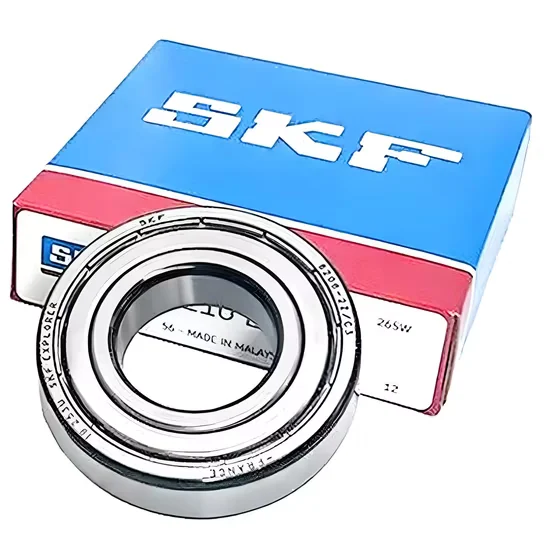
SKF Bearings for Electric Motor OEMs: Wholesale Supplier
- Buying Guide
- Sep 15, 2026
- author
Tighter tolerances do not always mean better performance in electric motors. In high-temperature or variable-frequency drive (VFD) environments, an overly tight fit can lead to instant seizure rather than improved precision.
Selecting the right SKF bearings for electric motors requires matching bearing types and internal clearances to specific speeds, loads, and harsh environments to prevent premature failure and electrical erosion. This guide compares deep groove, hybrid, and INSOCOAT types to help OEMs optimize motor performance and reliability.
I still remember the humidity in Lagos, where the air felt thick enough to drink. A batch of motors arrived at a local assembly plant, fitted with what looked like premium components. Within two weeks, the rotors were scorched, and the bearings had fused to the shafts. The issue was not just heat; it was a mismatch in internal clearance and a failure to account for stray currents from the drives. That incident shifted my focus from simple part replacement to rigorous technical selection. When sourcing SKF bearings for electric motors, understanding the interplay between thermal expansion, electrical insulation, and mechanical load is critical for avoiding costly downtime.
For distributors and OEMs, the goal is not just to buy steel rings but to secure operational continuity. Let us break down how to make these selections correctly.
What Are the Main SKF Bearing Types for Electric Motors?
Not all bearings are created equal, especially when electricity and rotation intersect. The choice between standard deep groove, hybrid ceramic, and insulated variants depends on the specific electrical and mechanical stresses the motor will face.
Deep groove ball bearings are the workhorses of the industry. They handle radial and axial loads efficiently and are suitable for most general-purpose applications. However, when motors operate under VFDs, the rapid switching of voltages can induce shaft voltages. If these voltages discharge through the bearing, they cause electrical erosion, leading to fluting and premature failure.
| Bearing Type | Electrical Insulation | Speed Capability | Load Capacity | Best For |
|---|---|---|---|---|
| Deep Groove Ball | None | High | Moderate | General purpose, low voltage |
| INSOCOAT | High Resistance | High | Moderate | VFD-driven motors, high voltage |
| Hybrid Ceramic | Inherent Insulation | Very High | Moderate to High | High speed, harsh environments |
Hybrid bearings, which feature ceramic rolling elements and steel rings, offer inherent electrical insulation because ceramics are non-conductive. They also run cooler and last longer in contaminated environments due to their lower density and hardness. INSOCOAT bearings, on the other hand, use a specialized coating on the outer ring to block current passage while maintaining standard steel performance characteristics.
A European wind farm operator once switched to hybrid bearings for their generator units. The initial cost was higher, but the reduction in maintenance intervals was noticeable. The ceramic elements resisted the micro-vibrations and stray currents that had previously degraded their standard steel bearings. For OEMs sourcing SKF bearings for electric motors, this trade-off between upfront cost and lifecycle reliability is a key calculation.
When evaluating options, consider the voltage levels and switching frequencies of your drives. If the environment is clean and the voltage low, deep groove may suffice. But for industrial settings with complex power electronics, insulation becomes non-negotiable.
How to Match Bearing Clearances to Motor Operating Environments?
Standard clearance is not a universal default. In high-temperature or high-vibration settings, sticking to standard internal clearance can be a recipe for disaster.
Bearings need room to breathe. As a motor runs, heat builds up, causing the inner ring to expand more than the outer ring due to its direct contact with the hot shaft. If the internal clearance is too tight, this thermal expansion eliminates the running gap, leading to excessive preload, heat generation, and eventual seizure. This is why selecting the correct clearance group—such as C3 or C4—is vital for motors operating in harsh conditions.
In African mining operations, where ambient temperatures soar and dust is pervasive, I have seen motors fail simply because the bearings were specified with standard clearance. The heat from the environment combined with the operational heat of the motor left no room for expansion. Switching to C3 or even C4 clearance allowed the bearings to accommodate this thermal growth without binding.
| Environment Condition | Recommended Clearance | Reason |
|---|---|---|
| Standard Indoor | CN (Normal) | Minimal thermal expansion |
| High Temperature | C3 | Accommodates thermal growth |
| Extreme Heat/Vibration | C4 | Maximum allowance for expansion |
| Precision/High Speed | C2 | Reduced vibration, controlled heat |
It is a common misconception that tighter is always better. In reality, improper internal clearance in high-heat environments causes instant seizure. For OEMs designing motors for tropical climates or heavy industrial use, specifying SKF bearings for electric motors with appropriate clearance groups is a small detail that prevents massive field failures.
Always verify the operating temperature range of your application. If the motor housing exceeds typical ambient levels, step up the clearance. Technical datasheets from the manufacturer provide the necessary limits for each clearance group, ensuring you do not over-specify or under-specify the component.
How to Prevent Electrical Erosion in VFD-Driven Motors?
Stray currents are silent killers of motor bearings. With the widespread adoption of variable frequency drives (VFDs) for energy efficiency, electrical erosion has become a leading cause of bearing failure.
VFDs create high-frequency voltage pulses that can capacitively couple to the motor shaft. When the voltage on the shaft exceeds the dielectric strength of the lubricant film in the bearing, it discharges through the rolling elements. This creates tiny craters and fluting patterns on the raceways, leading to noise, vibration, and early failure.
To combat this, two main solutions exist: INSOCOAT bearings and hybrid ceramic bearings. INSOCOAT bearings feature an aluminum oxide coating on the outer ring that provides high electrical resistance. This blocks the current path, forcing any stray voltage to find another route, typically through a grounding brush if installed. Hybrid bearings use silicon nitride ceramic balls, which are naturally insulating. They prevent current flow entirely through the bearing set.
| Solution | Mechanism | Maintenance Impact | Cost Implication |
|---|---|---|---|
| INSOCOAT | Coating blocks current | Reduced erosion | Moderate increase |
| Hybrid Ceramic | Non-conductive balls | Extended life, less heat | Higher initial cost |
| Grounding Brush | Diverts current externally | Requires installation | Low component cost |
A textile mill in Southeast Asia struggled with frequent motor replacements due to VFD-induced damage. After switching to insulated bearings, their maintenance costs dropped noticeably. The key was not just buying the right part but understanding the electrical architecture of their drive systems. For buyers seeking SKF bearings for electric motors, verifying the insulation resistance values is crucial. Look for specifications that confirm resistance levels well above the threshold required to block typical VFD stray currents.
Do not assume that standard grease will protect against electrical damage. While some greases have additives to mitigate corrosion, they cannot stop the physical pitting caused by electrical discharge. Insulation at the bearing level is the most reliable defense.
How to Verify Genuine SKF Bearings for OEM Sourcing?
Counterfeit bearings look identical to genuine ones until they fail. In the global supply chain, mixed-batch orders can sometimes include non-genuine parts that lack the metallurgical quality and precision of the original brand.
Verifying authenticity is not just about checking the logo. It involves tracing the documentation back to the source. Genuine products come with complete traceability documents, including material certificates and inspection reports. These documents link the specific batch number to the manufacturing facility and quality control records. Without them, you are buying on faith alone, which is a significant risk for OEMs who guarantee their own product reliability.
Packaging is another indicator. Authentic bearings come in sealed, branded packaging with holographic labels and specific batch codes. However, sophisticated fakes can replicate packaging. Therefore, relying solely on visual checks is insufficient. Engaging with authorized suppliers who can provide verifiable proof of origin is essential.
| Verification Step | Action | Outcome |
|---|---|---|
| Documentation Check | Request material certs | Confirms batch origin |
| Packaging Inspection | Check holograms/codes | Initial authenticity screen |
| Supplier Verification | Confirm authorization | Ensures supply chain integrity |
| Physical Inspection | Check finish/markings | Identifies obvious fakes |
I once encountered a distributor offering SKF bearings for electric motors at prices significantly below market rates. The packaging looked perfect, but the traceability documents were vague and lacked specific batch links. Upon closer inspection with a magnifying lens, the laser etching on the bearing ring was slightly irregular. We rejected the shipment, avoiding a potential claim rejection rate that would have been total had those parts entered production.
For regional distributors and wholesalers, establishing a relationship with a supplier who prioritizes transparency is vital. Ask for the full paper trail. If a supplier hesitates to provide detailed traceability for mixed-brand orders, it is a red flag. Genuine sourcing ensures that every bearing meets the strict ISO standards for dimensions and tolerances, protecting your reputation and your clients’ operations.
Conclusion
Selecting the right bearing is an engineering decision, not just a purchasing one. By matching clearance to thermal conditions and choosing insulated options for VFD applications, OEMs can significantly enhance motor reliability.
Ensure your supply chain provides full traceability to avoid counterfeit risks. Proper selection of SKF bearings for electric motors safeguards your production lines and maintains the trust of your end users.
Related Applications
This article connects to the application areas below. Open one to see the bearing categories used there.