Shipping Genuine Bearings to OEM Plants in Vietnam Wholesale Supplier
- Procurement & Trade FAQs
- Sep 15, 2026
- author
Standard English packaging is not enough for Vietnamese customs.
To ship bearings to OEM plants in Vietnam successfully, you must secure a FORM E certificate for tariff reduction and ensure all outer cartons bear compliant Vietnamese labeling. Missing either document triggers red-channel inspections, leading to port detentions and significant demurrage costs at Hai Phong or Cat Lai ports.
I learned this the hard way during a shipment of mixed-brand deep groove ball bearings to an OEM facility in Bac Ninh. The cargo included premium international brands alongside reliable domestic lines. Because the FORM E certificate was not coordinated in advance with the suppliers, and the original packaging lacked mandatory Vietnamese text, the entire container was held in the red channel. I spent weeks coordinating with customs brokers to rectify the documentation, while demurrage fees accumulated daily. This experience reshaped how I approach shipping bearings to Vietnam, prioritizing document verification over simple freight booking.
Navigating the regulatory landscape requires more than just finding a competitive price. It demands a precise understanding of local compliance requirements that many global distributors overlook.
What Documents Are Mandatory for Shipping Bearings to Vietnam?
The FORM E certificate is non-negotiable for tariff reduction and smooth clearance.
Many buyers assume that a standard commercial invoice and packing list are sufficient for importing industrial components. However, Vietnam’s customs authorities strictly enforce origin certification under the ASEAN-China Free Trade Agreement. Without a valid FORM E, imported bearings are subject to higher import duties, which erodes the cost advantage of sourcing from China. More critically, the absence of this document often flags the shipment for detailed inspection.
The process of obtaining a FORM E requires precise coordination between the exporter and the supplier. It is not a document that a freight forwarder can generate independently. The manufacturer must apply for it through their local customs authority, ensuring that the product description, HS code, and batch numbers match the commercial invoice exactly. Any discrepancy, no matter how minor, can lead to rejection at the Vietnamese border.
| Document Type | Purpose | Risk if Missing |
|---|---|---|
| FORM E Certificate | Tariff reduction under ACFTA | Higher duties, red-channel inspection |
| Commercial Invoice | Value declaration | Customs valuation disputes, delays |
| Packing List | Cargo verification | Physical inspection delays |
| Vietnamese Labeling | Regulatory compliance | Detention, re-labeling fees |
A European distributor once faced a situation where a single typo in the HS code on the FORM E caused a two-week delay. The bearings were intended for urgent maintenance in a cement plant, but the customs hold-up forced the client to source emergency spares locally at a premium. This highlights why shipping bearings to Vietnam requires meticulous attention to detail in the documentation phase, long before the cargo leaves the warehouse.
Ensuring these documents are accurate and consistent is the first step in avoiding costly disruptions.
Why Do Bearing Shipments Get Detained at Hai Phong Port?
Missing Vietnamese labels and incomplete origin proofs trigger red-channel inspections.
Hai Phong Port, a major gateway for northern industrial zones, has intensified its scrutiny of imported industrial goods. A common misconception is that English-language packaging is universally accepted. In reality, Vietnamese regulations mandate that consumer and industrial product packaging include specific information in Vietnamese. This includes the product name, specifications, origin, and importer details.
When bearings arrive in original manufacturer boxes with only English or Chinese text, customs officers may classify them as non-compliant. This leads to the cargo being moved to a bonded warehouse for re-labeling. The process is time-consuming and expensive. The cost of hiring a local team to re-label thousands of individual boxes can exceed the initial freight savings. Furthermore, the delay disrupts the production schedules of OEM plants that rely on just-in-time inventory.
I recall a case where a batch of spherical roller bearings was detained because the outer cartons did not display the importer’s name in Vietnamese. The buyer had assumed that the inner brand packaging was sufficient. However, customs officials focused on the master cartons. The resulting delay meant the bearings missed the installation window for a new mining crusher project.
| Inspection Trigger | Consequence | Mitigation Strategy |
|---|---|---|
| No Vietnamese Label | Re-labeling order, detention | Pre-shipment labeling compliance check |
| Missing FORM E | High duty, red channel | Early supplier coordination for FORM E |
| Mismatched HS Code | Valuation dispute | Verify HS codes with local broker |
Understanding these triggers allows buyers to prepare their shipments proactively. Shipping bearings to Vietnam is not just about logistics; it is about regulatory adherence.
Proactive compliance prevents these avoidable bottlenecks.
How to Prepare Packaging for Vietnamese OEM Customs?
Cartons must feature compliant Vietnamese text detailing specs and origin.
Preparing packaging for the Vietnamese market requires more than just slapping on a sticker. The labeling must be durable, legible, and contain all required legal information. For industrial bearings, this includes the bearing type, dimensions, precision grade, and country of origin. The text must be in Vietnamese, or at least bilingual with Vietnamese prominently displayed.
Many global brands ship with standard international packaging. While this is acceptable in some markets, it poses a risk in Vietnam. Buyers should work with their suppliers to ensure that the master cartons are labeled correctly before shipment. If the original packaging cannot be modified, adding a compliant outer sleeve or label is necessary. However, this must be done carefully to avoid obscuring the original brand markings, which could raise authenticity concerns.
A practical approach is to request a sample of the labeled packaging before full production. This allows the buyer to verify compliance with local regulations. Some suppliers offer this as part of their service, but it is often an optional extra that must be specified in the purchase order. Failing to do so can result in the entire batch being rejected at the port.
Proper packaging ensures that the cargo moves through customs without unnecessary interference.
How Can Buyers Consolidate Mixed-Brand Bearing Orders Efficiently?
One-stop sourcing ensures unified documentation for multi-brand containers.
OEM plants often require a variety of bearing types and brands for different applications. Sourcing these from multiple suppliers creates a logistical nightmare. Each supplier may have different documentation standards, packaging requirements, and shipping schedules. Consolidating these orders into a single container reduces freight costs but increases the complexity of customs clearance.
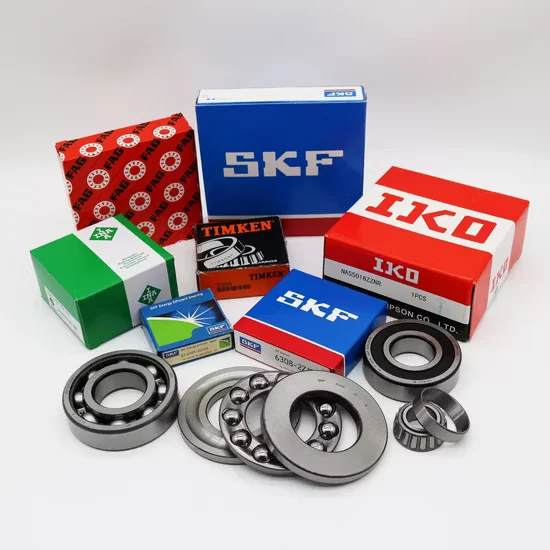
This is where a specialized supplier adds value. By sourcing genuine bearings from multiple mainstream brands and domestic lines through a single channel, buyers can ensure that all documentation is unified. The supplier takes responsibility for verifying the FORM E for each brand, ensuring that the HS codes are consistent, and that the packaging meets Vietnamese labeling requirements. This reduces the administrative burden on the buyer and minimizes the risk of errors.
For example, a machinery manufacturer in Ho Chi Minh City needed deep groove ball bearings, tapered roller bearings, and thrust bearings from three different brands. By consolidating the order through a single supplier, they received one set of coherent documents. The FORM E covered all items, and the packaging was uniformly labeled. This streamlined the clearance process, allowing the bearings to reach the factory floor within days of arrival.
| Sourcing Model | Documentation Complexity | Clearance Risk |
|---|---|---|
| Multi-Supplier | High (multiple FORM Es) | High (inconsistent labeling) |
| One-Stop Consolidation | Low (single unified set) | Low (standardized compliance) |
Efficient consolidation is key to maintaining supply chain reliability. Shipping bearings to Vietnam becomes a strategic advantage when managed correctly.
Unified sourcing simplifies the entire import process.
Conclusion
Compliance is the cornerstone of successful bearing imports to Vietnam.
Avoiding port detentions requires strict adherence to FORM E requirements and Vietnamese labeling regulations. By prioritizing document accuracy and packaging compliance, buyers can ensure smooth clearance and timely delivery to OEM plants. Shipping bearings to Vietnam demands attention to these details to protect both cost and schedule.