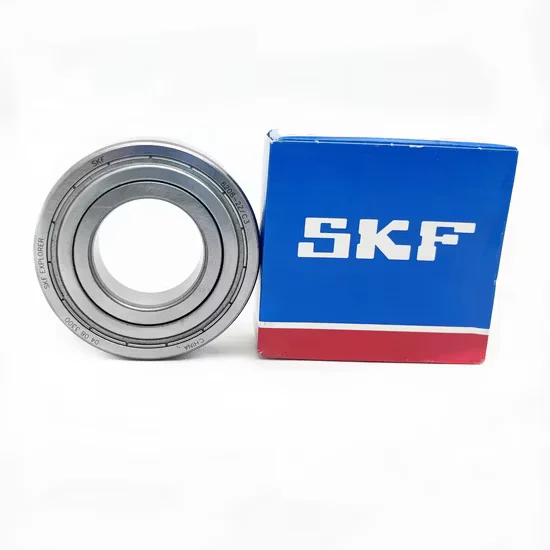
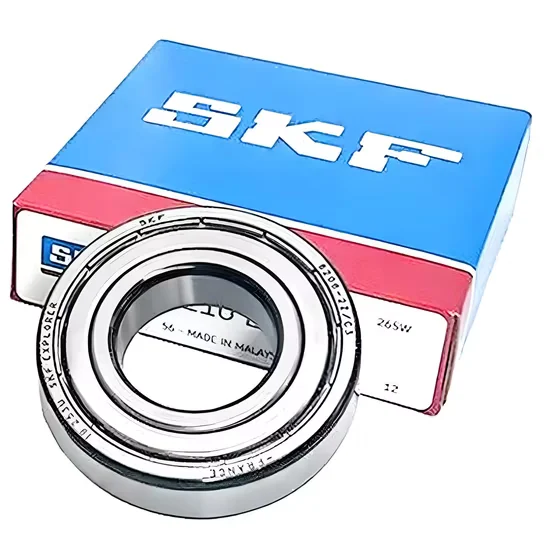
Low-Noise SKF Bearings Supplier: Genuine & Bulk for Quiet Products
- Buying Guide
- Sep 15, 2026
- author
"Special price" SKF bearings often cost ten times more in hidden downtime.
To select genuine low-noise SKF bearings for electric motors and quiet products, you must match specific noise suffixes like Z1 or Z2 with verified shaft tolerances and authenticate the supply chain to avoid counterfeit risks that lead to premature failure.
I still remember the sharp, grinding whine coming from the assembly line in Ho Chi Minh City. A client had sourced a batch of bearings labeled as premium SKF units at a fraction of the market rate. The procurement team celebrated the savings until the first test run. The noise was not just audible; it was piercing. We halted production, pulled the units, and found inconsistent grease fill and rough raceway finishes typical of counterfeits. The cost of replacing the assembled motors and the lost production time dwarfed the initial "savings" by a wide margin. This incident reshaped how I approach sourcing. It is not just about buying a part number; it is about verifying the acoustic integrity of the component.
Selecting the right component requires looking beyond the basic catalog number. Many buyers assume all deep groove ball bearings are created equal, but for applications where silence is critical, such as household appliances or precision medical devices, the internal geometry and surface finish matter immensely. As a Low-Noise SKF Bearings Supplier, we see many distributors struggle with this distinction. They order standard C3 clearance bearings expecting quiet operation, only to face complaints from end-users. The solution lies in understanding the specific designations that control vibration and noise levels.
Why Do "Genuine" Bearings Still Sound Noisy?
Lower noise relies heavily on shaft tolerances and housing fit, not just the bearing itself.
Even a authentic, high-precision bearing will generate excessive noise if installed on a shaft with poor geometric accuracy. The interaction between the rolling elements and the raceways is sensitive to misalignment and improper fits. When the inner ring is forced onto a shaft that is out-of-round or has surface imperfections, it distorts the circularity of the raceway. This distortion causes the balls to vibrate as they pass through the loaded zone, creating a humming or growling sound.
In one case, a European OEM switched to low-noise variants for their new pump series. The bearings were genuine, and the noise ratings were correct. However, the vibration levels remained high. Upon investigation, we found that the shafts were machined to a standard commercial tolerance rather than the tighter h5 or h6 classes recommended for quiet running. Once the machining process was adjusted, the noise floor dropped noticeably. This highlights that the bearing is only one part of the system. As a Low-Noise SKF Bearings Supplier, we often advise clients to review their entire assembly process, including the quality of the lubricant and the cleanliness of the housing, before blaming the component.
Another common culprit is the lubricant. Counterfeit bearings often use cheap, incompatible grease that degrades quickly under heat. Even in genuine units, using a grease with the wrong viscosity or base oil can increase churning losses and noise. For electric motors, a lithium complex grease with a consistent base oil viscosity is typically required. If the grease is too stiff, it creates drag; if it is too thin, it fails to dampen vibrations. Verifying the grease type is a simple step that prevents many noise-related failures.
Decoding the Noise Suffixes: Z1, Z2, and Beyond
SKF noise suffixes indicate specific vibration limits, not just general quality.
Understanding the manufacturer’s coding system is essential for specifying the right product. SKF uses suffixes to denote the vibration and noise class of deep groove ball bearings. The most common suffixes for quiet applications are Z1, Z2, and Z3. These are not arbitrary labels; they correspond to strict limits on vibration velocity measured in micrometers per second.
| Suffix | Vibration Class | Typical Application | Noise Level |
|---|---|---|---|
| Standard | Normal | General industrial machinery | Audible hum under load |
| Z1 | Reduced | Electric motors, fans | Noticeably quieter |
| Z2 | Low | Precision instruments, appliances | Very quiet operation |
| Z3 | Extra Low | High-speed spindles, medical devices | Near-silent |
A buyer once requested "quiet bearings" for a HVAC unit without specifying the suffix. We supplied Z1 class bearings, which are standard for motor applications. The client was satisfied, but when they tried to use the same stock for a high-end audio equipment turntable, the noise was unacceptable. For that application, Z3 or even P5 precision class bearings would have been necessary. This mismatch shows why precise specification is critical. As a Low-Noise SKF Bearings Supplier, we help clients map their application requirements to the correct suffix to avoid over-specifying or under-specifying.
It is also important to note that these suffixes apply to the bearing as delivered. Once installed, the noise level can change based on the factors mentioned earlier, such as fit and lubrication. Therefore, the suffix is a starting point, not a guarantee of final performance. Always verify the supplier’s ability to provide test certificates or traceability documents that confirm the vibration class. Counterfeiters often stamp fake suffixes on standard bearings, making visual inspection insufficient.
The Hidden Cost of Counterfeit Low-Noise Bearings
Fake bearings may look identical but fail to meet acoustic and lifespan standards.
The market is flooded with counterfeit bearings that mimic the packaging and markings of genuine brands. These fakes often use lower-grade steel with higher inclusion counts, leading to rougher raceway surfaces. While they might rotate smoothly when new, they degrade rapidly under load. The noise level increases significantly as the surface deteriorates, leading to early failure.
In a Southeast Asian motor assembly plant, we analyzed a batch of returned bearings. The outer rings looked perfect, but microscopic inspection revealed irregularities in the ball path. The noise profile was erratic, with spikes that indicated surface pitting. The plant had saved a small percentage on procurement but faced a much larger cost in warranty claims and brand reputation damage. The downtime cost was roughly ten times the procurement savings. This is a common pattern we see. Buyers focus on the unit price and ignore the total cost of ownership.
Authenticating the supply chain is the only way to mitigate this risk. Genuine products come with full traceability, including batch numbers and material certificates. As a Low-Noise SKF Bearings Supplier, we maintain strict documentation protocols. We do not just sell boxes; we provide the paper trail that proves authenticity. This is crucial for MRO replacements where identifying the root cause of failure is necessary to prevent recurrence. If a bearing fails prematurely, having the original certification allows for a proper failure analysis rather than guesswork.
Optimizing Procurement for Quiet Product Lines
Bulk sourcing requires balancing inventory costs with authenticity guarantees.
For distributors and OEMs, securing a reliable supply of genuine low-noise components is a strategic advantage. It reduces the risk of production stops and enhances the perceived quality of the final product. However, buying in bulk from unauthorized sources increases the risk of mixing counterfeit goods into the inventory. A single bad batch can contaminate an entire warehouse’s reputation.
We work with clients across multiple regions to consolidate their orders. This allows them to benefit from competitive pricing without compromising on authenticity. By combining orders for different brands and types, such as SKF, FAG, and NSK, buyers can achieve better logistics efficiency. For example, a Middle East distributor reduced their shipping frequency by consolidating mixed-brand container loads. This approach also simplifies quality control, as all items pass through a single verification checkpoint before shipment.
Technical support is another key element. Selecting the right bearing involves more than just picking a catalog number. It requires understanding the operating conditions, such as speed, load, and temperature. Our team provides cross-brand equivalent model consultation, helping clients find suitable alternatives if a specific SKU is unavailable. This flexibility ensures that production lines keep moving even during supply chain disruptions. As a Low-Noise SKF Bearings Supplier, we view ourselves as partners in our clients’ engineering success, not just vendors of parts.
Conclusion
Authenticity and precise specification are the foundations of quiet operation.
Selecting genuine low-noise SKF bearings requires a holistic approach that includes verifying suffixes, ensuring proper installation tolerances, and sourcing from trusted channels. Cutting corners on procurement leads to higher long-term costs through downtime and reputation loss. By focusing on traceability and technical accuracy, buyers can secure the performance their applications demand.
Related Applications
This article connects to the application areas below. Open one to see the bearing categories used there.