Genuine Bearing Price Reviews & Annual Reductions from Wholesale Supplier
- Procurement & Trade FAQs
- Sep 15, 2026
- author
Annual price reductions are rarely a gift; they are often a shift in inventory quality.
Genuine bearing annual discount offers must be backed by verifiable traceability documentation, including customs declarations and original mill certificates. Without these documents, low prices typically indicate refurbished stock or counterfeit products that carry severe operational risks. Procurement decisions should prioritize verified supply chains over unverified cost savings to avoid catastrophic equipment failure.
The first time I saw a wind turbine gearbox fail, it wasn’t because of poor maintenance. It was because someone signed off on a batch of deep-groove ball bearings that looked perfect on the outside but had been repackaged from scrap. I was there for a procurement review in Chicago, trying to cut costs for a client who believed he had secured a miracle deal on SKF units. The savings were real on paper. The downtime cost, however, wiped out years of margin. That incident changed how I view every quote that comes across my desk. Now, when I see a wholesale bearing price analysis that looks too good to be true, I don’t look at the bottom line first. I look for the paper trail.
This approach isn’t about being difficult. It’s about understanding that the global bearing market is flooded with products that mimic genuine parts but lack the metallurgical integrity required for heavy industry. If you are sourcing for mining, construction, or energy sectors, the risk of accepting unverified discounts is not just financial—it is operational survival.
Why Do Bearing Prices Drop Annually?
Price fluctuations are driven by raw material markets and logistics optimization, not by manufacturers lowering quality standards.
Many buyers assume that an annual price drop means the manufacturer has found a way to produce cheaper goods. In reality, genuine brands like SKF, FAG, and NSK maintain strict control over their production processes. They do not compromise on steel purity or heat treatment to meet a quarterly sales target.
The primary drivers for legitimate price adjustments include:
- Raw Material Volatility: The cost of high-carbon chromium steel fluctuates globally. When steel prices dip, manufacturers may pass on some savings, but this is usually marginal.
- Logistics Efficiency: Consolidated shipping and optimized container loads can reduce freight costs, allowing suppliers to offer better terms without touching the product price.
- Inventory Clearance: Brands may discount older batches to make room for new production runs, but these units are still genuine and come with full warranties.
What often masquerades as an "annual reduction" is actually the influx of refurbished or counterfeit stock into the wholesale market. These sellers buy used bearings, clean them, repackage them, and sell them at a fraction of the genuine price. To the untrained eye, they look identical. Under load, they fail prematurely.
I once reviewed a quote for a large mining project in South America. The supplier offered a twenty percent discount compared to the official channel. When I asked for the batch-specific mill certificate, they hesitated. They claimed the documents were "in transit." In the bearing world, if the papers aren’t with the goods, the goods are suspect. We declined the offer. Six months later, that same supplier was implicated in a fraud case involving relabeled industrial scrap.
Understanding this distinction is critical. A genuine bearing annual discount is a strategic opportunity. A fake low-price trap is a liability. The difference lies in the source.
How to Verify "Discounted" Bearings?
Demand customs declarations and factory warranties, not just commercial invoices.
Verifying the authenticity of discounted bearings requires a rigorous check of the supply chain documentation. An invoice proves you paid money; it does not prove what you bought. To ensure you are receiving genuine products, you must demand a complete traceability package.
Key documents to request include:
- Customs Declarations: These show the origin of the goods and the importer of record. For genuine imports, the declared value and description must match the invoice. Discrepancies here are a major red flag.
- Mill Certificates: Also known as material test certificates, these documents provide the chemical composition and mechanical properties of the steel used in the bearings. Each batch should have a unique number that can be traced back to the manufacturer’s production records.
- Factory Warranty Cards: Genuine brands provide warranty cards that validate the product’s authenticity and coverage period.
A US buyer once shared a story about a shipment of tapered roller bearings that arrived with perfect packaging. The boxes looked authentic, and the seals were intact. However, upon inspection, the batch numbers on the bearings did not match the numbers on the provided certificates. When pressed, the supplier admitted they had mixed old stock with new to fulfill the order. This practice compromises the reliability of the entire batch.
To avoid this, implement a verification checklist before payment:
- Check if the supplier can provide photos of the actual stock with visible batch numbers.
- Verify the supplier’s authorization status with the brand manufacturer.
- Request a sample inspection report from a third-party agency if the order volume is significant.
This process may seem tedious, but it is far less expensive than replacing a failed gearbox. In the world of wholesale bearing price analysis, documentation is your insurance policy.
What is the Real Cost of Fake Low Prices?
Calculate hidden downtime and replacement costs, not just the unit price difference.
The allure of a cheap bearing is powerful. But the true cost of a fake or refurbished bearing is never reflected in the purchase order. It is reflected in the hours of lost production, the cost of emergency repairs, and the damage to surrounding components.
Consider the cost-of-failure model. When a bearing fails in a critical application, such as a wind turbine or a steel mill conveyor, the consequences are immediate and severe.
| Failure Scenario | Direct Cost | Indirect Cost | Total Impact |
|---|---|---|---|
| Genuine Bearing Failure | Replacement part cost | Scheduled maintenance labor | Low |
| Fake Bearing Failure | Replacement part cost + Emergency shipping | Unplanned downtime + Collateral damage | High |
In a recent case involving a European wind farm operator, a single failed main shaft bearing caused a turbine to shut down for weeks. The bearing itself cost a few thousand dollars. The lost revenue from power generation, however, amounted to a mid-six-figure loss. The investigation revealed that the bearing was a refurbished unit sold as new. The savings on the initial purchase were negligible compared to the operational disruption.
Another example comes from the automotive aftermarket. A repair group in Southeast Asia switched to a cheaper supplier for wheel hub bearings. Within months, warranty claims spiked. The cost of handling returns, rework, and customer compensation far exceeded the initial savings. They eventually returned to verified genuine sources, accepting the higher unit price for the lower total cost of ownership.
These stories highlight a crucial truth: cheap bearings are expensive. They consume resources, time, and reputation. When evaluating a wholesale bearing price analysis, always factor in the risk of failure.
How to Secure Genuine Annual Discounts?
Partner with suppliers offering full traceability and mixed-batch consolidation.
Securing genuine discounts requires building relationships with suppliers who prioritize transparency. These suppliers understand that their value lies not just in the product, but in the assurance of its authenticity.
Look for partners who offer:
- Full Traceability Documentation: As discussed, this includes customs docs and mill certificates. A trustworthy supplier will provide these proactively.
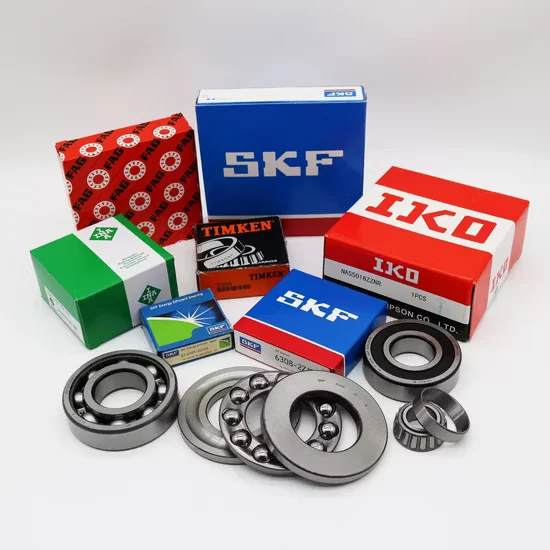
- Mixed-Brand Consolidation: For MRO and distribution clients, the ability to consolidate orders from multiple brands like SKF, FAG, NSK, and TIMKEN into a single shipment reduces logistics costs. This efficiency allows for better pricing without compromising on quality.
- Spot Inventory Availability: Suppliers with large spot inventories can offer competitive pricing on standard part numbers. They buy in bulk during favorable market conditions and pass on the savings.
I work with a network of distributors who operate this way. They don’t just move boxes; they manage supply chains. For a client in the Middle East, we consolidated a container load of spherical roller bearings and cylindrical roller bearings from three different premium brands. By optimizing the mix and leveraging our volume, we secured a price point that was competitive with local unauthorized dealers, but with full genuine backing. The client received all the necessary paperwork for customs clearance and internal audit.
This approach works for both large OEMs and smaller MRO operators. Whether you need a single emergency spare or a full container for stock, the principle remains the same: verify the source, check the docs, and consolidate for efficiency.
By focusing on traceability and consolidation, you can access genuine bearing annual discount opportunities that are safe, reliable, and cost-effective. It turns procurement from a gamble into a strategic advantage.
Conclusion
Verify before you buy.
Genuine bearing price reviews and annual price reductions are only valuable if the products are authentic. Always demand traceability documentation to avoid the hidden costs of counterfeit failures. Partner with suppliers who prioritize transparency and consolidation to secure safe, cost-effective sourcing for your industrial needs.
Related Applications
This article connects to the application areas below. Open one to see the bearing categories used there.