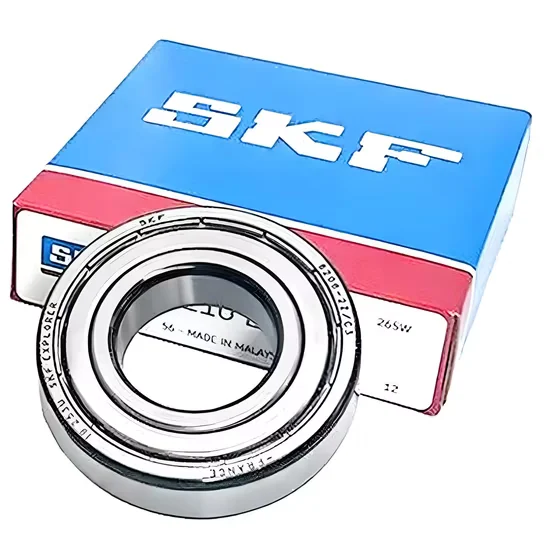
SKF Bearings for Fan & Blower OEMs: Wholesale Supplier
- Buying Guide
- Sep 15, 2026
- author
Tighter clearance does not mean better precision in high-temperature fans; it often leads to thermal locking.
For fan and blower OEMs, selecting the correct SKF bearing internal clearance (C3 or C4) and appropriate seal suffix is the critical factor in preventing premature seizure in harsh environments. Standard open bearings fail primarily due to thermal expansion exceeding internal play and micro-dust ingress destroying lubrication.
I still remember the dry heat of the Atacama Desert in Chile. The air was so thin and dusty that it felt like breathing sandpaper. I was there for a ventilation project at a copper mine, a job that should have been routine. The local OEM had opted for a cost-saving alternative, using standard clearance bearings in high-speed exhaust fans. Within months, the entire ventilation line seized. The bearings hadn’t worn out; they had locked up. The heat generated by friction combined with the ambient temperature caused the inner rings to expand more than the available internal clearance could accommodate. That failure taught me that in industrial fan applications, the drawing’s dimensional tolerance is only half the story. The real engineering happens when the metal heats up and the dust settles in.
Understanding why standard specifications fail is the first step toward reliable sourcing. When you are evaluating options as an SKF fan bearing selection guide, you must look beyond the basic part number.
Why Do Standard Bearings Fail in Fan OEM Applications?
Premature failure in fan and blower systems is rarely due to material fatigue; it is almost always a result of environmental mismatch.
In many general-purpose applications, a standard deep-groove ball bearing with normal clearance (CN) works perfectly. However, fans and blowers operate in a unique stress profile. They run continuously, often at high speeds, and are frequently exposed to temperatures far above room level. When a fan handles hot air, such as in cement kilns or steel mill exhausts, the inner ring heats up faster than the outer ring. This differential expansion reduces the internal clearance. If the initial clearance was already tight, the bearing effectively preloads itself during operation. This generates excessive heat, which further reduces clearance, creating a vicious cycle that ends in seizure.
Another primary culprit is contamination. Fans move air, and that air carries particles. In mining or cement production, these particles are abrasive. Standard open bearings rely on external housing seals, which are often insufficient against fine, airborne dust. Once microscopic particles enter the raceway, they act like grinding paste, destroying the smooth surface finish and leading to early vibration and noise.
Consider a case from a cement plant in Southeast Asia. The facility used standard open bearings on their main ID fans. Despite regular greasing, the bearings failed every few months. The issue wasn’t lubrication quantity; it was lubrication quality. Ash ingress had contaminated the grease, turning it into an abrasive slurry. Switching to bearings with integrated seals designed for dusty environments extended the service life noticeably. This highlights why a blower OEM bearing supplier must offer more than just the basic component; they must provide a solution matched to the operating environment.
How to Choose the Right SKF Internal Clearance?
Match C3 or C4 clearances to specific operating temperatures to avoid thermal locking, rather than assuming tighter is better.
Selecting the right internal clearance is a balancing act. Too loose, and the bearing vibrates, causing noise and premature fatigue. Too tight, and it seizes under thermal load. For most industrial fans operating at elevated temperatures, standard CN clearance is risky. Instead, C3 or C4 clearances are typically required. These designations indicate greater internal radial play, allowing room for the inner ring to expand without creating harmful preload.
The choice between C3 and C4 depends on the temperature differential between the inner and outer rings, as well as the fit between the bearing and the shaft/housing. A tighter shaft fit also reduces internal clearance, which must be accounted for.
| Operating Condition | Recommended Clearance | Reason |
|---|---|---|
| Ambient Temperature, Normal Speed | CN (Normal) | Standard performance, minimal thermal expansion. |
| Elevated Temperature (>80°C) | C3 | Compensates for moderate thermal expansion of inner ring. |
| High Temperature (>120°C) or Tight Fits | C4 | Provides ample room for significant thermal expansion and interference fits. |
| High-Speed Precision Spindles | C2 | Minimal expansion, requires precise temperature control (rare for fans). |
A high-speed blower manufacturer in Europe once faced issues with noise and vibration in their test rigs. They had specified C2 clearance for "precision," assuming it would reduce runout. However, the friction heat generated at high RPMs reduced the clearance to zero, causing erratic behavior. Switching to C3 clearance resolved the issue, providing enough play to handle thermal growth while maintaining stability. This counter-intuitive result underscores that precision in rotating machinery is not just about static tolerances but dynamic stability under load.
When sourcing from an SKF fan bearing selection guide, ensure your supplier can verify the clearance class. Genuine products will have the clearance suffix clearly marked on the packaging and often on the bearing itself. This traceability is vital for OEMs who need batch-to-batch consistency.
Which Seal Suffixes Protect Against Harsh Environments?
Select contact or non-contact seals based on dust concentration and speed, as standard shields are insufficient for micro-dust.
Seals are the first line of defense against contamination. In fan applications, the choice of seal suffix determines whether the bearing survives or succumbs to dust ingress. SKF offers various sealing options, each with trade-offs between protection and friction.
Rubber contact seals (typically suffix 2RS1 or RSH) provide excellent protection against dust and moisture because they physically touch the inner ring. However, this contact generates friction and heat, which can be problematic in high-speed fans. Non-contact seals (suffix Z or ZZ, usually metal shields) generate less heat but leave small gaps that fine dust can penetrate. For harsh environments like mining or cement, specialized labyrinth seals or hybrid designs offer a middle ground, providing robust protection without excessive heat generation.
A mining ventilation project in Africa demonstrated the value of proper seal selection. The initial design used standard metal shields. The fine, abrasive dust in the mine air penetrated the shields, contaminating the grease and causing rapid wear. By switching to bearings with heavy-duty rubber seals designed for dirty environments, the maintenance downtime dropped noticeably. The seals kept the contaminants out, preserving the lubricant’s integrity for extended periods.
It is crucial to match the seal material to the temperature. Standard nitrile rubber seals have temperature limits. If the fan operates in very high heat, fluoroelastomer seals may be necessary. An experienced blower OEM bearing supplier will ask about the specific environmental conditions, not just the dimensions, to recommend the correct suffix.
How to Ensure Genuine SKF Sourcing for OEM Projects?
Verify traceability and use consolidated global suppliers for batch consistency to avoid counterfeit risks.
The market for industrial bearings is flooded with counterfeits. For an OEM, using a fake bearing can lead to catastrophic field failures, damaging your brand’s reputation. Ensuring authenticity requires more than just checking the price. It demands a supply chain with full traceability.
Genuine SKF bearings come with documentation that traces the product back to the manufacturer. This includes material certificates and quality inspection reports. When dealing with a global full-range bearing supplier, you should expect transparent access to these documents. Counterfeit products often lack this paper trail or have forged documents that do not match the batch numbers.
Consolidating your sourcing with a reliable partner also ensures batch consistency. Mixing bearings from different sources, even if they are all genuine, can introduce variations in manufacturing tolerances that affect performance in sensitive applications. A professional supplier maintains strict quality control, ensuring that every unit in a container meets the same high standards. This is particularly important for large OEM projects where thousands of bearings are used.
Our approach involves verifying every shipment against original manufacturer records. We support OEMs with flexible MOQs, allowing for trial orders before committing to large volumes. This flexibility helps manufacturers test the performance of specific clearance and seal combinations in their actual operating conditions. Technical selection support is also key; having engineers who understand the nuances of fan dynamics can prevent costly mistakes before production begins.
Conclusion
Correct clearance and seal selection are non-negotiable for reliability in harsh fan applications.
Standard bearings fail in fans due to thermal locking and dust ingress, not material defects. By choosing C3 or C4 clearances for high-temperature operations and selecting appropriate seals for dusty environments, OEMs can significantly extend service life. Partnering with a trusted SKF fan bearing selection guide and a verified blower OEM bearing supplier ensures authenticity and technical accuracy. This proactive approach minimizes downtime and protects your brand’s reputation in demanding industrial sectors.
Related Applications
This article connects to the application areas below. Open one to see the bearing categories used there.