Uncategorized
SKF ball, roller and mounted bearings for machine builders, distributors and project buyers

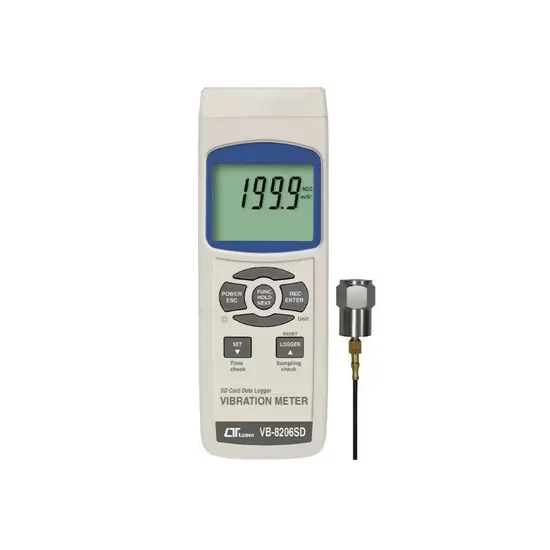


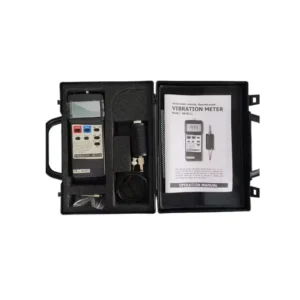
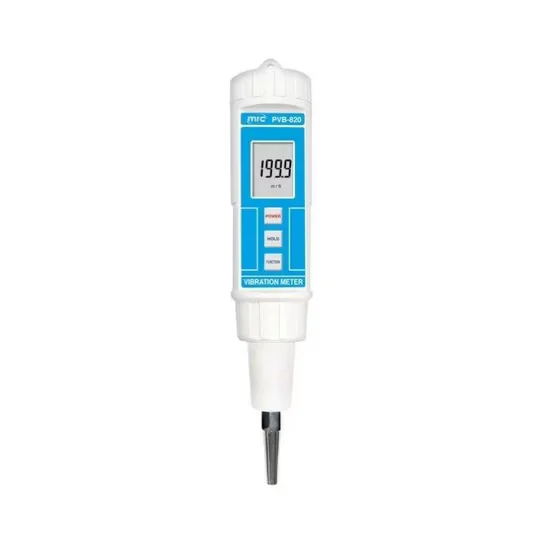
Vibration Meter Testing Equipment for Industrial Machinery Condition Monitoring — high accuracy grade ensures reliable measurement data for predictive maintenance and rotating equipment failure detection.
Applications
Product Details
Cross-Reference Alignment — We rigorously verify sensor compatibility and measurement ranges against official Lutron catalogs to ensure accurate diagnostic readings for complex machinery.
| Parameter | Value |
|---|---|
| Product Type | Vibration Meter Testing Equipment |
| Accuracy Grade | 2% |
| Load Way | Electronic Load |
| Loading Method | Dynamic Load |
| Display | Digital |
| Control | Computer Control |
| Velocity Range | 0.5 to 199.9 mm/s |
| Frequency Range | 10 Hz - 1 kHz |
| Origin | China |
| Warranty | 1 Year Warranty |
| Industry | Typical Applications |
|---|---|
| Industrial Equipment MRO | Machinery vibration analysis and dynamic balancing |
| Predictive Maintenance | Post-installation failure analysis for rotating equipment |
| Manufacturing | Equipment condition monitoring and fault detection |
True diagnostic accuracy requires matching the sensor frequency response to the specific fault signature of the rotating assembly.
During my years servicing paper mills and heavy processing plants in Southeast Asia, I witnessed catastrophic downtime caused by ignoring high-frequency vibration spikes. Maintenance teams often rely on generic overall readings, completely missing the subtle cage fracture frequencies and harmonic overlaps that precede total bearing failure. When technicians use under-specified tools, they mistake structural resonance for simple imbalance, leading to endless cycles of ineffective repairs. Securing data from a trusted vibration meter testing equipment supplier ensures your diagnostic instruments capture the exact spectral profiles needed for root cause analysis, preventing unnecessary component replacements and protecting critical production schedules.
When evaluating rotating machinery health, the diagnostic instrument must seamlessly integrate with your existing maintenance protocols and data management systems. This digital interface allows technicians to log dynamic load variations directly into computer-controlled analysis software, creating a continuous historical record of equipment degradation. By partnering with an experienced vibration meter testing equipment supplier, facilities gain access to specialized tools that translate raw velocity data into actionable maintenance schedules. The ability to export frequency spectrums enables remote engineering teams to review complex fault signatures without needing to travel to the physical plant location, drastically reducing response times for critical equipment anomalies.
Industrial plant floors present severe acoustic noise and electromagnetic interference that can easily distort delicate sensor signals and corrupt diagnostic data. High-speed rotating shafts generate complex harmonic vibrations requiring a broad frequency capture range to isolate specific defect modes from background plant noise. Furthermore, elevated ambient temperatures and heavy particulate contamination demand ruggedized probes and stable electronic load processing to maintain measurement integrity over long shifts. Proper sensor placement and secure magnetic mounting are absolutely critical to avoid signal attenuation and phase shifting during dynamic load testing. If the coupling between the sensor and the machine housing is compromised by oil or debris, the resulting data will mask early-stage bearing defects.
Selecting the right diagnostic instrument involves evaluating how its internal components handle diverse operational stresses and environmental exposures. The sensor housing materials must be chosen based on specific environmental conditions, with stainless steel variants available for corrosive washdown areas and standard alloys for general manufacturing environments. The 10 Hz to 1 kHz frequency range comprehensively covers the fundamental rotational frequencies and early-stage defect harmonics of most industrial motors, pumps, and gearboxes. A strict 2% accuracy grade ensures that marginal increases in vibration velocity are reliably detected before they escalate into destructive structural resonance. Computer control capabilities enable sophisticated long-term trend analysis, which is essential for establishing reliable baseline signatures and setting accurate alarm thresholds for automated condition monitoring systems.
Deploying an under-specified testing device frequently leads to misdiagnosed equipment health, resulting in unplanned downtime and catastrophic damage to adjacent drivetrain components. When low-frequency sensors fail to detect high-speed cage instabilities or lubrication starvation, maintenance teams replace perfectly serviceable bearings while entirely missing the actual root cause of the vibration. Such diagnostic blind spots directly contradict the predictive maintenance frameworks outlined in modern reliability standards, leading to inefficient resource allocation. Ultimately, warranty voidance on critical machinery frequently stems from improper installation verification caused by inadequate measurement tools that fail to confirm correct seating and alignment.
Our deep expertise in rotating equipment failure analysis ensures we only supply diagnostic instruments that accurately reflect critical bearing health indicators. We provide complete traceability documentation for every testing unit, guaranteeing authentic Lutron calibration standards and protecting your facility from counterfeit diagnostic tools. Our engineering team offers cross-brand equivalent model consultation, helping you match sensor specifications to the exact dynamic load profiles and operating speeds of your specific machinery. We maintain massive spot inventory, allowing for single-unit emergency dispatches when a critical pump or compressor requires immediate vibration assessment to prevent a total line shutdown. Furthermore, our long-term after-sales technical support includes failure analysis guidance, bridging the gap between raw vibration data and correct bearing replacement strategies.
To ensure the selected testing instrument perfectly matches your predictive maintenance strategy, please provide the specific equipment models, operating speeds, and typical fault signatures you intend to monitor. Detailing the environmental conditions, such as exposure to corrosive agents, extreme temperatures, or heavy dust, allows our engineering team to recommend the appropriate sensor housing materials and mounting accessories. Share your existing data logging protocols and software preferences so we can verify the computer control integration and ensure seamless compatibility for your facility's condition monitoring program.
Q: How do I determine the correct vibration meter model for my specific machinery parameters?
A: Selecting the appropriate model requires analyzing the rotational speeds and expected fault frequencies of your equipment. Our engineering team reviews your machinery specifications and operational environment to recommend a sensor with the correct frequency range and sensitivity. This ensures accurate detection of early-stage bearing defects without signal saturation.
Q: What common rotating equipment failure modes can be detected through this vibration analysis?
A: This diagnostic tool effectively identifies fundamental imbalances, shaft misalignment, and mechanical looseness within the standard frequency range. It also captures early indicators of rolling element bearing degradation, such as cage instabilities and outer race defects. Detecting these specific fault signatures allows maintenance teams to schedule interventions before catastrophic failure occurs.
Q: What are the calibration cycles and maintenance requirements for these precision testing instruments?
A: Precision diagnostic instruments typically require annual calibration to maintain the specified accuracy grade across all measurement ranges. Regular maintenance involves inspecting sensor cables for wear, cleaning magnetic mounting bases, and verifying the digital display functionality. Adhering to these schedules ensures reliable data collection for long-term predictive maintenance trending.
Q: How does this standalone vibration meter differ from integrated dynamic balancers?
A: A standalone meter focuses exclusively on capturing and analyzing vibration velocity and frequency data for condition monitoring. Integrated dynamic balancers combine measurement capabilities with automated weight calculation algorithms to physically correct rotor imbalances on-site. Standalone units offer greater portability and are ideal for routine route-based inspections across multiple machines.
Q: What certification and compliance standards apply to industrial MRO testing equipment?
A: Industrial testing equipment must comply with international safety and electromagnetic compatibility directives to operate safely in plant environments. Calibration certificates verify that the instrument meets specific accuracy classifications required for condition monitoring standards. Ensuring compliance guarantees that the diagnostic data is legally and technically valid for reliability reporting.
Before You Enquire
A complete enquiry ties every price to the right execution, drawing and project stage. It also catches the sleeves and locking components that BOMs often leave out.
Send Your BOMSame Product Family
These bearings share a category with this model, so you can review them together when one BOM covers several lines.
Uncategorized

Uncategorized
Preguntas Frecuentes
The exact execution is confirmed before you accept a product quote. Share the BOM line and drawing revision. If the marking on an old bearing is incomplete, send a clear photo and note what still needs checking.
List each stage as its own quantity with its own required date. Prototype, production and spare quantities can then appear separately in one project quote, so planners can schedule each stage on its own timing.
State the BOM line, the drawing revision and whether alternatives are allowed. A separately identified alternative is settled before the product quote is accepted. Technical changes require buyer approval, so your design engineer keeps control of the specification.
Product documents are confirmed at the written quote stage, order by order. List the documents your project requires in your enquiry. Transport documents are confirmed with the shipping arrangements for the order.
Request a Quote
SKF Mechanical and Electrical Equipment supplies SKF ball, roller and mounted bearings to buyers worldwide. Your written quote states model, quantity, price and currency, availability, estimated lead time and validity.