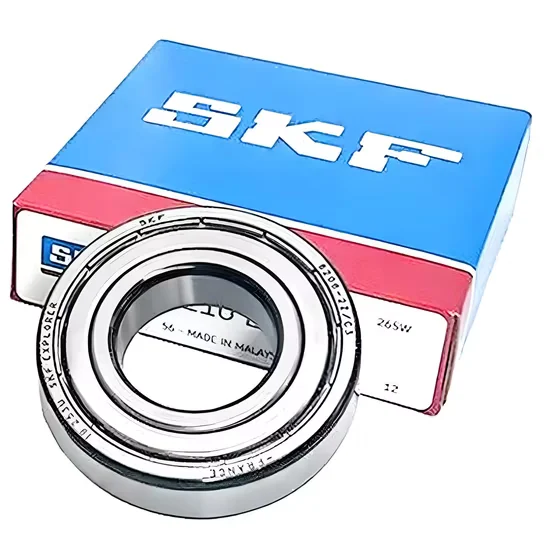
Long-Life Sealed SKF Bearings for Maintenance-Free Designs Wholesale Supplier
- Buying Guide
- Sep 15, 2026
- author
Sealed does not mean sealed forever.
Selecting long-life sealed SKF bearings for maintenance-free designs requires matching specific seal materials and internal grease fill to the exact operating temperature and contamination level, rather than assuming any sealed unit will survive harsh environments indefinitely. Proper selection prevents premature failures caused by lubricant breakdown or contaminant ingress, which are the primary drivers of unplanned downtime in heavy industry.
The humidity in Southeast Asian ports is not just uncomfortable; it is corrosive. Years ago, I watched a shipment of crane equipment destined for Indonesia sit on the dock. The bearings, though sealed, were standard units with basic protection. Within months, the high heat and salt-laden air breached the seals. The grease emulsified, the rollers rusted, and the client refused payment. That loss was not due to bad luck. It was due to a mismatch between the bearing specification and the environmental reality. This experience shifted my focus from moving boxes to understanding the engineering behind long-life sealed SKF bearings. Today, when clients ask for maintenance-free solutions, I do not just send a price list. I ask about the dust, the moisture, and the access points.
Why Choose Long-Life Sealed SKF Bearings for Maintenance-Free Designs?
Standard seals fail because they are designed for clean, moderate conditions, not the abrasive reality of mining or agriculture.
Long-life sealed variants integrate advanced sealing geometries and specialized grease fills that resist washout and contamination ingress far better than standard rubber shields. The core advantage lies in the synergy between the seal lip design and the internal lubricant. Standard bearings often use simple contact seals that generate heat at high speeds or allow fine dust to penetrate under pressure. In contrast, long-life sealed SKF bearings utilize multi-lip seals that create labyrinthine paths for contaminants while retaining grease under thermal expansion.
Consider a conveyor system in a mining operation. The environment is saturated with fine particulate matter and vibration. A standard sealed bearing might last a few months before the seal lip wears or the grease is pushed out. Switching to a long-life sealed variant extends maintenance intervals significantly. The robust seal design withstands the constant bombardment of dust, while the optimized grease formulation remains stable despite the frictional heat generated by heavy loads. This is not merely about extending life; it is about stabilizing operations. For MRO operators, the cost of a bearing is negligible compared to the cost of stopping a production line to replace it.
The decision to use long-life sealed SKF bearings should be driven by the inaccessibility of the mounting position. If a bearing is located deep within a gearbox or atop a high crane boom, the labor cost of replacement dwarfs the component cost. These bearings are engineered to last the design life of the machine without regreasing. This eliminates the risk of human error during maintenance, such as over-greasing or using incompatible lubricants. By specifying these units upfront, OEMs and distributors ensure that the end-user experiences true maintenance-free operation, reducing the total cost of ownership across the asset’s lifecycle.
How to Compare Standard vs. Long-Life Sealed SKF Bearing Specifications?
Do not compare only the outer dimensions; the critical differences lie in seal type, friction torque, and grease compatibility.
When evaluating options, buyers must look beyond the basic part number. The suffix codes on SKF bearings indicate specific seal types and internal modifications that define performance. A standard bearing might have a Z or ZZ shield, which is non-contact and offers limited protection. A long-life sealed unit typically features RS1, RS2, or RSH suffixes, indicating contact seals made from durable elastomers like nitrile rubber or fluorocarbon, depending on the temperature range.
The following table outlines the qualitative differences between standard and long-life sealed variants. Note that exact numerical values for friction or load ratings vary by size and series, so the comparison focuses on performance characteristics relevant to selection.
| Feature | Standard Sealed Bearing | Long-Life Sealed SKF Bearing |
|---|---|---|
| Seal Type | Non-contact metal shield or basic rubber | Contact multi-lip elastomer seal |
| Contamination Protection | Basic dust protection | Robust protection against mud, water, and fine dust |
| Grease Retention | Moderate | High, resistant to centrifugal force and thermal expansion |
| Friction Torque | Low (non-contact) | Slightly higher (contact), but optimized for stability |
| Operating Temperature | Limited by standard grease | Extended range with specialized high-temp or low-temp grease |
| Maintenance Requirement | Periodic regreasing often needed | Designed for maintenance-free life |
A European wind farm operator once struggled with frequent generator bearing failures. The initial specification called for standard sealed bearings to minimize friction. However, the variable loads and temperature fluctuations caused the grease to migrate, leading to dry running. By switching to long-life sealed SKF bearings with enhanced seal retention and a wider temperature-rated grease, the failure rate dropped noticeably. The slight increase in initial friction was irrelevant compared to the reliability gain. This case highlights that the "best" bearing is not always the one with the lowest friction, but the one that maintains its integrity under specific stress conditions.
Buyers should also verify the grease fill quantity. Long-life sealed bearings are often filled to optimize life rather than speed. Overfilling can cause churning and overheating, while underfilling leads to starvation. Manufacturers pre-fill these units with the precise amount required for the intended service life. When sourcing long-life sealed SKF bearings, ensure that the supplier provides documentation confirming the grease type and fill percentage, as this is critical for validating the maintenance-free claim.
What Operating Conditions Require Maintenance-Free Sealed Bearings?
If you can easily reach the bearing to grease it, you might not need a premium sealed unit. If you cannot, you do.
Harsh environments demand sealed solutions that go beyond basic protection. High humidity, heavy contamination, and inaccessible mounting positions are the three primary drivers for specifying long-life sealed SKF bearings. In tropical climates, humidity penetrates standard seals through microscopic gaps, leading to corrosion of the raceways. In agricultural machinery, mud and crop debris create an abrasive paste that grinds away standard seal lips. In both cases, the solution is not more frequent maintenance, but a better seal.
Consider agricultural equipment operating in muddy fields. The wheels and pivots are constantly exposed to wet soil and plant matter. A standard bearing will ingest this mixture, causing rapid wear. A long-life sealed unit with a ruggedized outer seal profile deflects large particles while the inner lip retains the grease. This design reduces unplanned downtime significantly. Farmers do not have time to stop harvesting to grease a pivot point. The bearing must work for the entire season, regardless of the weather.
In marine and shipbuilding applications, salt spray is a relentless enemy. Standard steel bearings corrode quickly if the seal is compromised. Long-life sealed variants often incorporate stainless steel components or specialized coatings alongside advanced seals to resist corrosion. The key is to match the seal material to the chemical environment. Nitrile rubber works well for oils and general dust, but fluorocarbon seals are necessary for high temperatures or aggressive chemicals. Misidentifying the environment leads to premature seal hardening or cracking, which defeats the purpose of the sealed design.
For MRO operators in steel plants or cement mills, the combination of heat and dust is deadly. Heat thins the grease, making it easier for dust to enter. Dust acts as an abrasive, wearing the seal lip. Long-life sealed bearings address both issues by using high-viscosity index greases that resist thinning and seals that maintain contact pressure even as temperatures fluctuate. Specifying these units for hard-to-reach areas in a mill ensures that maintenance teams can focus on critical tasks rather than routine bearing replacement.
How to Verify Authenticity and Avoid Premature Failures?
A genuine part number means nothing if the supply chain lacks traceability.
The market is flooded with counterfeit bearings that look identical to genuine products but lack the metallurgical quality and precise sealing geometry. Using a fake long-life sealed SKF bearing in a critical application is a recipe for disaster. The seal may appear intact, but the internal grease could be inferior, or the steel purity may be low, leading to early fatigue. Verification starts with documentation. Genuine suppliers provide full traceability, including batch numbers and certificates of conformity.
When sourcing, request the original packaging and check for holographic labels or QR codes that link to the manufacturer’s database. Do not rely solely on the appearance of the bearing. Counterfeiters have become sophisticated in replicating external markings. Instead, focus on the supplier’s ability to provide technical support and consistent batch quality. A reliable supplier will not hesitate to share proof of origin. They will also offer guidance on selecting the correct suffix code for your specific application, ensuring that you do not accidentally order a standard sealed unit when a long-life variant is required.
Premature failures often stem from incorrect installation rather than product defects. Even the best long-life sealed SKF bearings will fail if mounted with excessive force or misalignment. Ensure that your team uses proper tools and follows the manufacturer’s mounting instructions. Heating methods should be controlled to avoid damaging the seal material. Cold mounting is preferred for smaller sizes, while induction heaters with temperature control are necessary for larger units. Training your maintenance staff on these procedures is as important as buying the right bearing.
Our inventory includes a wide range of genuine long-life sealed SKF bearings with complete traceability documentation. We support clients in verifying the authenticity of their purchases and provide technical assistance to ensure the correct model is selected for their operating conditions. This approach minimizes the risk of counterfeit parts entering your supply chain and ensures that your maintenance-free designs perform as intended.
Conclusion
Maintenance-free is a design choice, not a marketing slogan.
Selecting the right sealed bearing requires a deep understanding of the operating environment and the specific capabilities of the seal technology. By choosing long-life sealed SKF bearings that match your contamination and temperature profiles, you eliminate the hidden costs of unplanned downtime and frequent maintenance. Trust in traceability, verify your supply chain, and prioritize engineering fit over initial price.
Related Applications
This article connects to the application areas below. Open one to see the bearing categories used there.