Genuine Bearings for Robot Reducers – Wholesale Supplier
- Applications & Industries
- Sep 16, 2026
- author
Cutting costs on bearings destroys robot repeatability.
Genuine, high-precision bearings are the non-negotiable foundation of robot reducer performance. Compromising on authenticity or selecting standard industrial grades instead of reducer-specific precision bearings leads to immediate losses in positioning accuracy and premature mechanical failure. For OEMs and distributors, verifying micron-level tolerances and securing full traceability documentation is the only viable path to ensuring long-term operational stability in robotic joints.
I still remember the smell of burnt grease in a client’s assembly workshop in Dongguan. An automation integrator had rushed a batch of RV reducers to meet a deadline, sourcing what they believed were cost-effective angular contact bearings. Within months, the entire batch required rework. The issue was not just wear; the bearing cages had fractured under cyclic loads that genuine components would have handled effortlessly. This was not a case of bad luck. It was a direct result of ignoring the extreme precision demands of robot reducers. The difference between a functioning robot and a scrap pile often comes down to a few microns of radial clearance and the metallurgical integrity of the steel.
Understanding why these components fail requires looking beyond the price tag. The market is flooded with options, but only a select few meet the rigorous standards required for harmonic drives and RV reducers. As a supplier who has spent years navigating the complexities of global bearing sourcing, I have seen how easily "compatible" parts can become catastrophic liabilities. This guide breaks down the critical selection criteria, verification methods, and sourcing strategies necessary to secure genuine bearings for robot reducers.
Why Do Robot Reducers Demand Extreme Bearing Precision?
Micron-level deviations ruin repeatability.
Robot reducers, particularly RV (Rotary Vector) and harmonic drives, operate under conditions that standard industrial bearings are never designed to withstand. They face high torsional rigidity requirements, frequent start-stop cycles, and significant moment loads. A standard deep-groove ball bearing might suffice for a conveyor belt motor, but it will fail rapidly in a robot joint. The core issue lies in precision grades. While general machinery might operate acceptably with P0 or P6 grade bearings, robot reducers typically demand P5 or even P2 precision levels.
The internal geometry of these bearings must be perfect. Any deviation in roundness or surface finish translates directly into vibration and noise. In a robotic arm, this vibration degrades the end-effector’s positioning accuracy. If a bearing has excessive radial clearance, the joint will exhibit "backlash," causing the robot to miss its target position. This is not a minor inconvenience; in automated welding or assembly lines, such errors lead to defective products and costly downtime.
Consider the material science involved. Genuine bearings from brands like SKF, NSK, or FAG use high-purity vacuum-degassed steel. This process removes impurities that act as stress concentrators. Counterfeit or lower-tier alternatives often skip this step, leading to subsurface fatigue cracks that propagate quickly under the high Hertzian contact stresses found in reducer gears.
| Feature | Standard Industrial Bearing | Reducer-Specific Precision Bearing |
|---|---|---|
| Precision Grade | P0 / P6 | P5 / P4 / P2 |
| Radial Clearance | Standard (CN) | Controlled (C2/C3) or Preloaded |
| Steel Purity | Standard Air-Melt | Vacuum-Degassed / High Purity |
| Cage Material | Stamped Steel | Machined Brass or Polymer |
| Noise Level | Acceptable for General Use | Ultra-Low for Precision Motion |
A European wind farm operator once faced similar issues with gearbox bearings, where slight imperfections led to premature spalling. While the scale is different, the principle remains: precision matters. In robotics, the margin for error is virtually zero. Sourcing genuine bearings for robot reducers means prioritizing these technical specifications over initial cost savings.
What Happens When Non-Genuine Bearings Are Used?
Cage fractures and joint overheating occur within months.
The consequences of using non-genuine or inappropriate bearings are rarely subtle. They manifest as specific, diagnosable failures that can halt production lines. The most common issue is cage fracture. In high-speed robotic applications, the centrifugal forces acting on the bearing cage are significant. Genuine bearings use machined cages made from high-strength brass or specialized polymers designed to withstand these forces. Counterfeit parts often use stamped steel cages that are brittle and prone to cracking.
I recall a case involving a Middle East steel mill that retrofitted some of its handling robots with cheaper alternative bearings. Within a short period, multiple joints began to overheat. The root cause was improper internal clearance. The non-genuine bearings had wider tolerances, leading to increased friction and heat generation. This heat degraded the lubricant, further accelerating wear. The result was a complete seizure of the joint.
Another frequent failure mode is noise and vibration. As the rolling elements pass over imperfections in the raceways, they generate acoustic emissions. In a quiet factory environment, this whining or grinding noise is a clear indicator of distress. For OEMs, this is a brand reputation risk. For end-users, it signals impending failure.
| Failure Mode | Root Cause | Consequence |
|---|---|---|
| Cage Fracture | Weak material / Poor design | Catastrophic seizure / Debris contamination |
| Overheating | Excessive clearance / Poor lubrication | Lubricant breakdown / Raceway damage |
| Premature Spalling | Low steel purity / Surface defects | Increased vibration / Noise |
| Loss of Preload | Incorrect assembly / Soft seats | Backlash / Loss of positioning accuracy |
These failures are not just maintenance headaches; they are financial drains. The cost of replacing a failed bearing is negligible compared to the cost of dismantling a robot, recalibrating the system, and losing production time. Sourcing genuine bearings for robot reducers is an insurance policy against these expensive disruptions.
How to Verify Authenticity and Clearance?
Traceability docs and strict inspection protocols are essential.
Verifying the authenticity of bearings is a critical skill for any buyer. The market is sophisticated, and high-quality counterfeits can look convincing at first glance. However, there are reliable methods to distinguish genuine products from fakes. The first line of defense is documentation. Reputable suppliers provide full traceability, including material certificates and inspection reports. These documents should link the specific batch of bearings to the manufacturer’s production records.
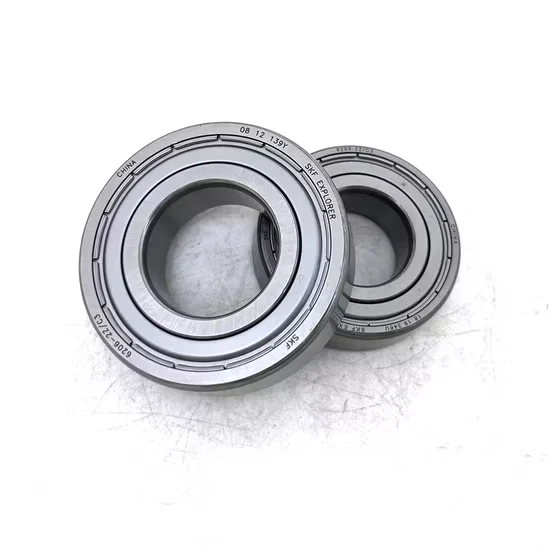
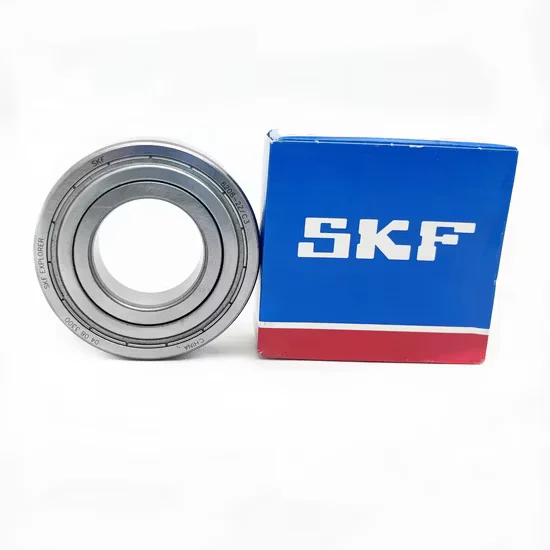
Physical inspection is also vital. Genuine bearings from brands like NSK, FAG, or SKF have precise laser etching or stamping that is clean and uniform. Counterfeits often have fuzzy or uneven markings. The packaging is another clue; genuine boxes are sturdy, with high-quality printing and specific security labels. However, packaging can be faked, so it should not be the sole criterion.
Measuring internal clearance requires specialized tools. A dial indicator or feeler gauge can provide a basic check, but for P5 or P2 grade bearings, more precise measurement equipment is necessary. The radial clearance must fall within the tight limits specified by the manufacturer. Any deviation suggests that the bearing is either out of spec or has been improperly stored.
| Verification Step | Method | Expected Outcome for Genuine Parts |
|---|---|---|
| Documentation Check | Review Material Certs | Full batch traceability / ISO compliance |
| Visual Inspection | Examine Markings / Packaging | Clean, precise etching / High-quality box |
| Dimensional Check | Measure OD / ID / Width | Within P5/P2 tolerance limits |
| Clearance Check | Use Dial Indicator / Feeler Gauge | Matches specified C2/C3/C4 clearance |
| Rotation Test | Manual Spin | Smooth, silent rotation / No roughness |
A distributor in Southeast Asia once consolidated a mixed-brand order for regional resale. By insisting on full traceability documents for each brand, they were able to verify the authenticity of every unit before shipping. This diligence protected their reputation and ensured their clients received reliable components. Sourcing genuine bearings for robot reducers requires this same level of scrutiny.
Where to Source Reliable Reducer Bearings Globally?
One-stop genuine sourcing with flexible MOQ.
Finding a reliable source for genuine bearings is challenging, especially for buyers who need mixed-brand inventories or small batch sizes. Many official brand channels have high minimum order quantities (MOQs) and long lead times, which do not suit the dynamic needs of MRO operations or smaller OEMs. This is where specialized global suppliers add value.
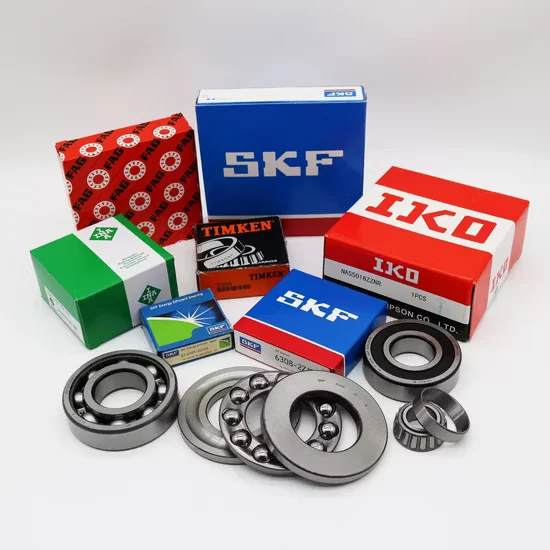
A professional supplier based in China, for instance, can offer access to genuine products from SKF, FAG, INA, NSK, NTN, TIMKEN, KOYO, NACHI, and IKO. These suppliers maintain massive spot inventories, covering thousands of standard and special part numbers. This allows for quick fulfillment of urgent spare-part orders, minimizing unplanned downtime.
Flexibility is key. Buyers may need a single unit for an emergency repair or a full container load for a new production line. A capable supplier accommodates both. They also provide technical support, helping clients select the correct equivalent models if a specific brand is unavailable. This cross-brand consultation ensures that the replacement bearing meets the original design specifications.
For distributors, the ability to consolidate mixed-brand shipments is a significant advantage. It reduces shipping costs and simplifies customs clearance. Full sets of customs and traceability documents are provided, ensuring smooth import processes in regions like the Middle East, Africa, Latin America, and Central Asia. Sourcing genuine bearings for robot reducers from such a partner streamlines the supply chain and reduces administrative burden.
| Sourcing Factor | Official Brand Channel | Specialized Global Supplier |
|---|---|---|
| MOQ Flexibility | Low / High Volume Only | Single Unit to Container Load |
| Lead Time | Long / Predictable | Short / Spot Inventory Available |
| Brand Variety | Single Brand | Multi-Brand (SKF, NSK, FAG, etc.) |
| Technical Support | Product-Specific | Cross-Brand Equivalent Consultation |
| Documentation | Standard | Full Traceability / Customs Ready |
By partnering with a supplier who prioritizes authenticity and flexibility, buyers can secure the high-precision components they need without compromising on speed or cost. Sourcing genuine bearings for robot reducers becomes a strategic advantage rather than a logistical hurdle.
Conclusion
Precision is not optional; it is operational survival.
Selecting the right bearings for robot reducers is a critical decision that impacts accuracy, lifespan, and total cost of ownership. Genuine, high-precision components prevent catastrophic failures like cage fractures and overheating. Verifying authenticity through traceability documentation and strict inspection protocols ensures that every bearing meets the required micron-level tolerances. Partnering with a reliable global supplier provides the flexibility and technical support needed to maintain efficient operations. Sourcing genuine bearings for robot reducers is the definitive step toward building robust, high-performance robotic systems.
Related Applications
This article connects to the application areas below. Open one to see the bearing categories used there.