Electric Motor OEM Bearing Demand: Wholesale Supplier
- News & Cases
- Sep 16, 2026
- author
Standard anti-rust oil is the silent killer of rotor dynamic balancing.
In 2026, the electric motor market has shifted from simple catalog sourcing to strict assembly-line integration. OEMs no longer buy bearings based solely on part numbers; they demand suppliers who understand how residual chemistry and thermal expansion affect final product quality. The core requirement for modern Electric Motor Market 2026 OEM Bearing Demand is not just availability, but verified compatibility with high-speed automated assembly processes.
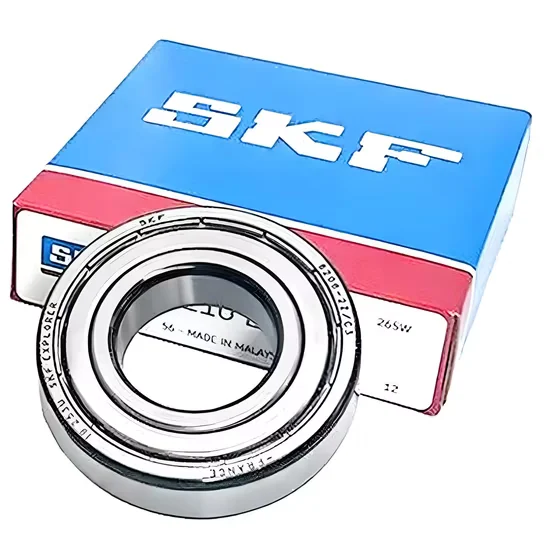
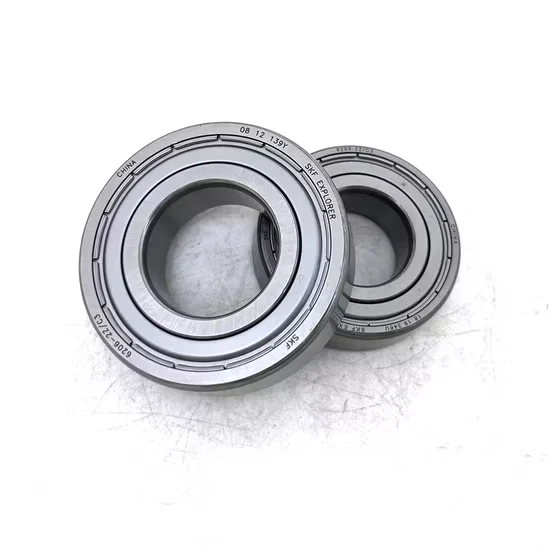
I learned this lesson the hard way on a factory floor in Monterrey. A major motor plant rejected an entire container of deep groove ball bearings because our standard anti-rust oil residue triggered false readings during their final dynamic balancing tests. The bearings were mechanically perfect, but chemically incompatible with their specific testing protocol. That failure taught me that wholesale suppliers must look beyond the SKU. We now verify assembly details and chemical compatibility before quoting, ensuring that every unit meets the rigorous standards of the Electric Motor Market 2026 OEM Bearing Demand.
Why Are Motor OEMs Rejecting Standard Bearing Batches?
Hidden chemical residues disrupt rotor dynamic balancing, causing massive rework costs that far exceed the price of the bearing itself.
Most engineers assume bearing failure is load-related or due to material fatigue. However, in high-volume electric motor production, the primary cause of batch rejection is often assembly-line chemical interference. When bearings arrive with heavy, uncontrolled anti-rust coatings, the residue does not evaporate cleanly during the initial run-in phase. Instead, it creates uneven mass distribution on the rotor shaft.
This imbalance triggers vibration alarms during end-of-line testing. For an OEM producing thousands of units daily, even a minor deviation means stopping the line for manual re-balancing or scrapping the rotor. The cost of this rework is substantial, often running into mid-six-figure losses for a single bad batch.
The issue is not the bearing quality but the surface treatment. Standard wholesale bearings often come with generic protective oils designed for long-term storage in humid warehouses. These oils are thick and sticky. In contrast, motors assembled in clean, climate-controlled facilities require light, volatile protection that disappears without leaving a film.
| Factor | Standard Wholesale Bearing | OEM-Integrated Bearing |
|---|---|---|
| Anti-Rust Coating | Heavy, non-volatile oil | Light, volatile film |
| Residue Impact | High risk of imbalance | Negligible mass effect |
| Cleaning Requirement | Manual degreasing needed | Ready for assembly |
| Batch Consistency | Variable | Controlled and verified |
A European wind farm operator once reported that their generator replacements failed vibration tests shortly after installation. The culprit was not the bearing design but the incompatible grease mixed with residual shipping oil. By switching to bearings with pre-validated lubrication and minimal residue, they eliminated the need for post-installation balancing. This shift is central to understanding the Electric Motor Market 2026 OEM Bearing Demand, where cleanliness is as critical as precision.
How Does Assembly-Line Reality Dictate 2026 Bearing Specs?
OEMs demand pre-validated lubrication and precise tolerances over generic catalog numbers to ensure seamless automated assembly.
The days of buying bearings based solely on a cross-reference chart are ending. Modern motor assembly lines operate at high speeds, using robotic press-fits and induction heaters. If a bearing’s internal clearance does not account for the thermal expansion of the motor housing, the result is premature seizure or excessive noise.
We analyze bearing clearance against motor thermal expansion curves to predict performance under load. For example, a C3 clearance might be standard for general industrial use, but a specific high-speed motor application may require a customized fit that balances heat generation with rotational stability.
Cross-brand equivalent selection is another critical area. An OEM might specify a premium brand for design purposes, but supply chain volatility forces them to seek alternatives. The challenge is not just finding a bearing with the same dimensions. It is about matching the tolerance class and internal geometry. A slight variation in raceway curvature can change the contact angle, affecting the motor’s efficiency and noise profile.
In one case, a Latin American motor manufacturer faced long lead times for their specified end-shield bearings. By providing a technically validated equivalent from our stock of reliable domestic lines, we reduced their lead time significantly without compromising performance. The key was verifying that the alternative bearing met the same ISO vibration standards and dimensional tolerances as the original. This technical selection support is a vital component of meeting the Electric Motor Market 2026 OEM Bearing Demand.
What Sourcing Strategies Secure LatAm Motor Production?
Flexible MOQs, mixed-brand consolidation, and detailed technical datasheets are critical for maintaining production continuity in regional plants.
Sourcing for the Latin American market presents unique logistical challenges. Customs clearance can be slow, and import duties vary widely by country. Motor plants in Brazil and Mexico often struggle with inventory management because ordering full containers of a single SKU ties up capital and warehouse space.
Mixed-brand container consolidation offers a solution. Instead of ordering separate shipments for SKF, FAG, and NSK bearings, distributors can combine various brands and sizes into a single container. This approach reduces shipping costs per unit and simplifies customs documentation. However, it requires a supplier with massive spot inventory and the ability to manage complex picking lists.
We have seen distributors in Southeast Asia and Central Asia adopt similar strategies. By consolidating orders for mining crushers and agricultural machinery bearings, they achieve better freight rates and faster turnaround. For motor OEMs, this means having access to a wide range of genuine products without the burden of managing multiple supplier relationships.
The key to success is transparency. Every bearing must come with complete traceability documentation. This includes material certificates and proof of origin. Without these documents, customs authorities may delay shipments or impose penalties. Our process ensures that every item in a mixed container is verified and documented, meeting the strict regulatory requirements of the region. This reliability is essential for addressing the Electric Motor Market 2026 OEM Bearing Demand in emerging markets.
How to Verify Bearing Integration Before Quoting?
Suppliers must check assembly details and chemical compatibility, not just push SKUs, to prevent costly production failures.
Before providing a quote, we engage in a technical dialogue with the buyer. We ask about the assembly process: Is the bearing pressed in cold or heated? What type of lubricant is used in the final assembly? Are there specific vibration limits for the finished motor? These questions help us identify potential risks before they become problems.
For instance, if a motor uses a synthetic grease with high viscosity, we ensure the bearing’s internal clearance allows for proper flow. If the assembly line uses induction heating, we verify that the bearing material can withstand the thermal shock without losing hardness.
This proactive approach prevents the kind of failure I experienced in Monterrey. By understanding the client’s specific environment, we can recommend bearings that are not just compatible but optimized for their application. This level of service distinguishes a true partner from a simple box-mover.
We also provide sample support for critical applications. Allowing the OEM to test a small batch in their actual production line validates the choice before committing to a large order. This step minimizes risk and builds trust. It shows that we stand behind our technical recommendations and are committed to the success of their production process. This verification process is the cornerstone of satisfying the Electric Motor Market 2026 OEM Bearing Demand.
Conclusion
Assembly-line compatibility is the new standard for bearing procurement.
The Electric Motor Market 2026 OEM Bearing Demand is defined by integration, not just transaction. Success requires understanding the chemical, thermal, and mechanical realities of modern motor manufacturing. Suppliers who offer only parts will be replaced by those who provide solutions.
Related Applications
This article connects to the application areas below. Open one to see the bearing categories used there.