Cost-Down Analysis Template for Bearings Wholesale Supplier
- Technical Resources
- Sep 16, 2026
- author
The cheapest unit price often results in the highest total cost.
To accurately reduce procurement expenses, buyers must abandon single-item price comparison and adopt a Total Landed Cost model. This approach integrates freight consolidation, customs duties, maintenance cycles, and downtime risks into a single evaluation framework. By shifting focus from the sticker price to the operational lifecycle cost, distributors and MRO operators can identify hidden savings in logistics and brand substitution without compromising equipment reliability.
Standing on the exhibition floor in Chicago, I watched a heavy machinery buyer hesitate over a quote for deep-groove ball bearings. The unit price from a premium European brand was significantly higher than a local alternative. He was ready to walk away, convinced the discount offered by a cheaper source was the only metric that mattered. I asked him to pause and look beyond the invoice line item. We pulled out a notebook and started calculating the mixed-container freight ratios, the expected maintenance intervals based on load ratings, and the potential downtime costs if the cheaper bearing failed prematurely. The math revealed a different story. The "expensive" option, when paired with strategic sourcing from reliable domestic lines for non-critical positions, actually lowered the overall expenditure. That conversation shifted his perspective from simple price hunting to comprehensive cost management. It highlighted a critical gap in how many procurement teams evaluate suppliers.
This realization drives the need for a structured Cost-Down Analysis Template for Bearings Wholesale Supplier. It is not just about finding a lower price tag; it is about understanding the full financial impact of every bearing that enters your inventory or installs into a machine.
Why Unit Price Is a Trap in Bearing Procurement?
Focusing solely on the purchase price ignores the substantial hidden costs embedded in global supply chains.
When sourcing bearings for industrial or automotive applications, the initial quote is merely the entry point. The true cost emerges only after the product clears customs, reaches the warehouse, and enters service. Many buyers overlook how freight inefficiencies and customs duties can erase the savings gained from negotiating a lower unit price. For instance, ordering small batches of high-premium brands separately often incurs disproportionate shipping fees compared to consolidating them with standard items in a mixed container.
Furthermore, the risk of premature failure carries a financial weight that rarely appears on a purchase order. A bearing that fails months earlier than expected does not just require replacement; it triggers unplanned downtime, labor costs for emergency repair, and potential production losses. In heavy industries like mining or steel manufacturing, these indirect costs can dwarf the initial savings from choosing a cheaper, less reliable component. Therefore, a holistic view is essential. Buyers must evaluate the supplier’s ability to provide genuine products with traceable documentation, ensuring that the quality matches the specified standards. This reduces the variance in performance and extends the predictable service life of the equipment.
By adopting a broader perspective, procurement teams can better leverage the capabilities of a Cost-Down Analysis Template for Bearings Wholesale Supplier. This template forces a comparison based on value rather than just price, revealing opportunities where slightly higher upfront costs lead to significant long-term savings.
Step 1: Calculate Direct Costs and Freight Consolidation
Logistics efficiency is a primary driver of cost reduction that often outweighs minor unit price differences.
The first step in the analysis involves breaking down the direct costs associated with acquiring the bearings. This includes the base price, but more importantly, it factors in the logistics strategy. Shipping bearings individually or in small, disjointed shipments is financially inefficient. Instead, optimizing mixed-brand container consolidation allows buyers to spread fixed freight and customs costs across a larger volume of goods.
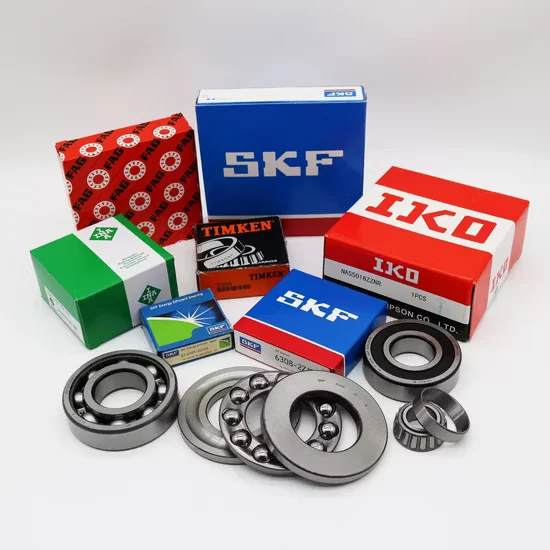
Consider a regional wholesaler stocking multiple brands for local resale. By combining premium international brands with reliable domestic lines in a single shipment, they can achieve a lower per-unit freight cost. This approach requires a supplier who can handle complex mixed-batch orders and provide complete traceability documentation for all items. The ability to source from a single partner who offers both global premium brands and cost-effective alternatives simplifies the consolidation process. It reduces administrative overhead and minimizes the risk of customs delays due to incomplete paperwork.
| Logistics Factor | Inefficient Approach | Optimized Approach |
|---|---|---|
| Shipment Volume | Small, frequent batches | Consolidated container loads |
| Brand Mix | Single-brand orders | Mixed-brand and mixed-size packages |
| Documentation | Fragmented invoices | Unified customs and traceability docs |
| Freight Cost Per Unit | High | Noticeably reduced |
This table illustrates how structural changes in ordering habits can lead to tangible savings. The optimized approach leverages the flexibility of a Cost-Down Analysis Template for Bearings Wholesale Supplier to identify the most economical shipping configuration. It turns logistics from a cost center into a strategic advantage.
Step 2: Evaluate Maintenance Cycles and Downtime Risks
Aligning bearing selection with actual operating conditions prevents costly premature failures.
The second step focuses on the operational lifespan of the bearing. Not every application requires the highest precision grade or the most expensive brand. Using a premium bearing in a low-load, non-critical position is an unnecessary expense. Conversely, using a standard bearing in a high-stress environment can lead to frequent replacements and unplanned downtime. The key is to match the bearing specification to the actual working conditions.
For example, a mining site operator might extend replacement intervals by selecting bearings with the correct clearance and load ratings for their specific crushers. This reduces the annual procurement frequency and minimizes the risk of unexpected breakdowns. A supplier with technical selection support can help buyers make these informed decisions. They can provide cross-brand equivalent consultations, suggesting reliable alternatives that meet the required performance standards without the premium price tag of a top-tier brand.
This technical alignment ensures that the maintenance cycle is predictable and manageable. It reduces the burden on MRO teams who often struggle with urgent spare-part requirements. By having a supplier who understands the nuances of different applications, from wind power generators to agricultural machinery, buyers can optimize their inventory levels. They stock what they need, when they need it, avoiding both overstocking and stockouts.
Integrating this technical evaluation into the Cost-Down Analysis Template for Bearings Wholesale Supplier allows buyers to quantify the value of reliability. It shifts the conversation from price per unit to cost per operating hour.
Step 3: Apply the Brand Substitution Matrix
Strategic brand substitution in standard applications cuts costs without compromising reliability.
The final step involves applying a brand substitution matrix. This tool helps buyers identify where they can safely replace premium international brands with reliable domestic alternatives. For non-critical positions, such as general manufacturing equipment or auxiliary systems, high-quality domestic bearings often provide comparable performance at a fraction of the cost.
A heavy machinery MRO provider successfully used this strategy to reduce their total landed cost. By comparing premium brands with reliable domestic lines for specific applications, they achieved significant savings. The key was ensuring that the domestic bearings met the necessary quality standards and came with complete traceability documentation. This gave them the confidence to substitute without risking equipment integrity.
| Application Criticality | Recommended Brand Tier | Cost Impact | Reliability Risk |
|---|---|---|---|
| High (Critical Safety) | Premium Global Brands | Higher | Low |
| Medium (Production Line) | Mix of Premium and Reliable Domestic | Moderate | Low to Moderate |
| Low (Auxiliary/Non-Critical) | Reliable Domestic Brands | Noticeably reduced | Low |
This matrix guides buyers in making informed substitution decisions. It balances cost savings with risk management. A supplier who offers a full spectrum of bearing types, from deep-groove ball bearings to tapered roller bearings, across both premium and domestic lines, is essential for executing this strategy. They provide the variety needed to implement the substitution matrix effectively.
Using the Cost-Down Analysis Template for Bearings Wholesale Supplier, buyers can systematically apply this matrix to their entire inventory. It transforms brand selection from a habit into a strategic decision.
Conclusion
Total landed cost, not unit price, defines true procurement efficiency.
Shifting focus to a holistic cost model reveals hidden savings in logistics and maintenance. Strategic brand substitution and freight consolidation drive meaningful reductions in overall expenditure. Implementing a structured analysis framework empowers buyers to make data-driven decisions that enhance reliability and minimize downtime.
Related Applications
This article connects to the application areas below. Open one to see the bearing categories used there.